
Hands On Keys: The Piano Department’s Legacy
This article first appeared in the Spring 2026 issue of NOTES, Eastman’s alumni magazine.
…
For more than a century, the Eastman School of Music piano department has lived at the meeting point of discipline and imagination—where fingers meet ivory and ideas become sound. The result has been a lineage of pianists and pedagogues whose influence reaches far beyond Rochester. From Cécile Genhart and Barry Snyder to Nelita True, Alexander Kobrin, and the thriving faculty of today, Eastman’s legacy is carried forward by generations of students who go on to teach, perform, and shape musical life around the world.
Pillars of the Early Years
The foundations of Eastman’s piano legacy were laid by a remarkable group of early faculty whose personalities, convictions, and artistry defined the department for decades. One of the very first members to join the piano faculty was Raymond Wilson in 1921—the year of the school’s founding. He played a crucial role in Eastman’s formative years, serving briefly as acting director before Howard Hanson’s appointment in 1924. Wilson then went on to lead the Preparatory Department, which would become the Eastman Community Music School, extending the institution’s reach well beyond its degree programs. Notably, Wilson also performed the first piano recital to be broadcast live on the newly formed WHAM radio station, then operated from the top floor of the school.
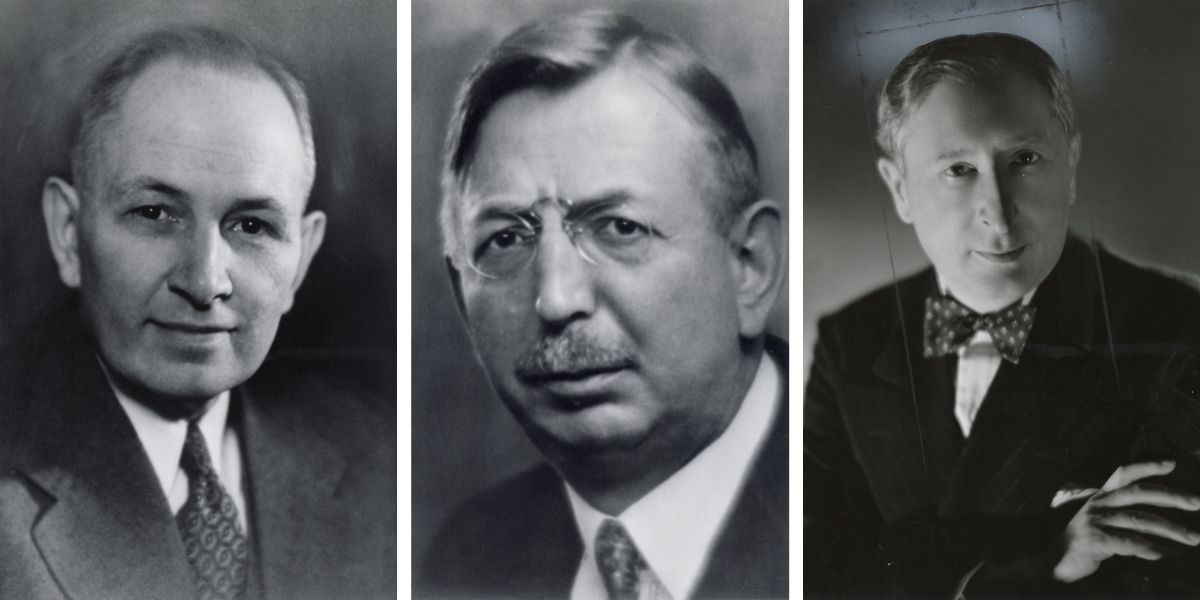
EARLY FACULTY: Left: Raymond Wilson was among the first to join the piano faculty in 1921. Center: Max Landow was hired by George Eastman himself. Right: Sandor Vas was a frequent soloist with the Rochester Philharmonic Orchestra.
In the years that followed, many illustrious names joined the ranks. Among them was Max Landow. Born in Germany and hired in 1922 by George Eastman himself, Landow possessed an international reputation as a virtuosic recitalist and a formidable teacher. He remained on the faculty until his death, embodying the continuity and devotion that became hallmarks of the department.
Another was Hungarian Sándor Vas, who joined a year later. A frequent soloist with the Rochester Philharmonic Orchestra, Vas helped introduce audiences in the region to the music of Béla Bartók. His legacy endures not only in performance history, but in the rich archival record preserved in the Sibley Music Library, containing personal and professional papers, photographs, sheet music, concert programs, and press clippings.
And then there was Cécile Staub Genhart—arguably the most influential piano teacher in Eastman’s history. Born in Switzerland into a musical household—her father was both a professor and a pianist—Genhart’s path to Eastman was shaped by pedagogy from the start. She met her future husband, Hermann Genhart, when he was a student of her father in Zurich. When Hermann was invited by Hanson to join Eastman’s faculty in 1924, he soon asked Cécile to join him in Rochester, where she arrived as his wife and, in 1926, as a member of the piano faculty. Genhart taught until her retirement in 1971, then returned in 1973 for another decade at the invitation of Director Robert Freeman, himself a pianist.
Though a gifted performer, Genhart found her deepest fulfillment in the studio, where her intensity, precision, and unwavering dedication shaped generations of pianists. She did not seek the spotlight; instead, she cultivated artistry one student at a time. “She would encourage us to perfect our pieces to the most minute details,” recalls alumna Aiko Onishi ’53E. “She could sense how to treat each one of us differently, some with utmost tender care, some more sternly. When I teach, I often say ‘Mrs. Genhart used to say…’ In this way, her teaching has been carried over to the next generation and so on to the present.”
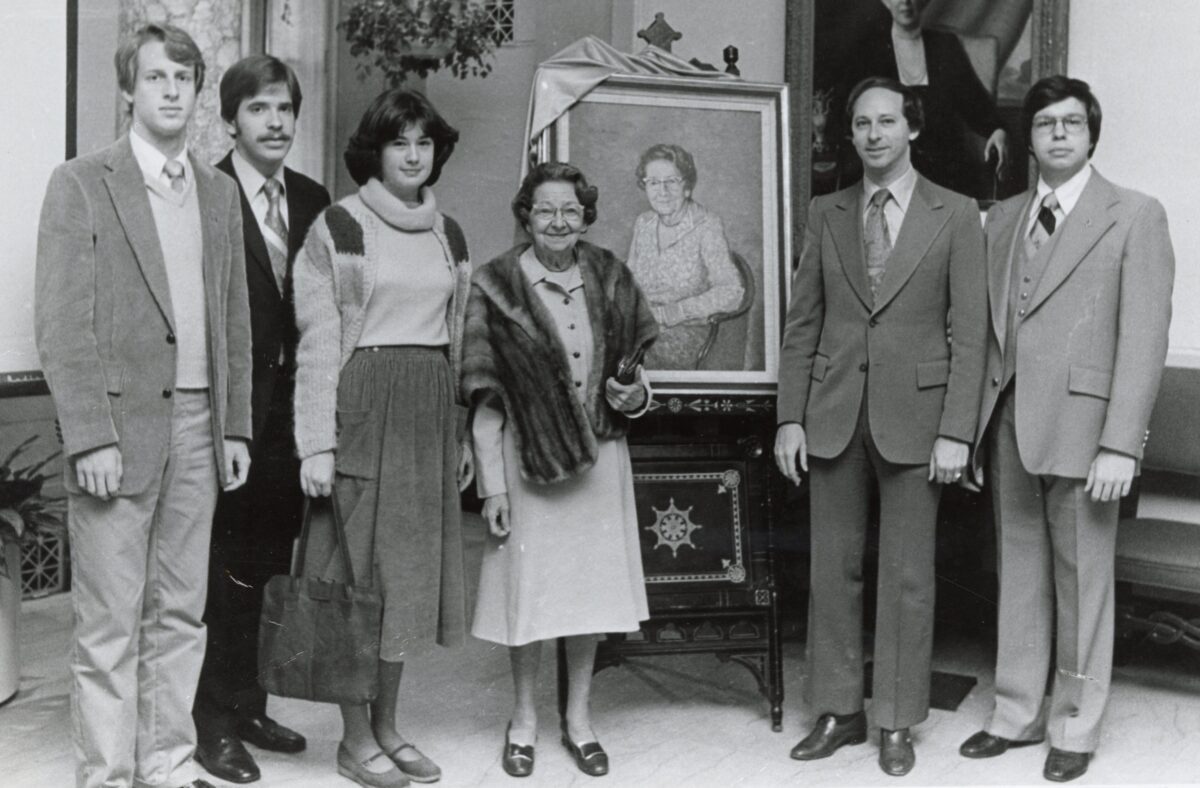
SHAPING GENERATIONS: Genhart (center) at the unveiling of her retirement portrait, alongside some of her students; from left to right: Stephen Wogaman ’82E; Brian Peterson ’77E, ’79E (MM); Jean Lee ’82E; Barry Snyder ’66E, ’68E (MM); and Randall Fusco ’81E, 83E (MM).
These early leaders were formidable figures—pillars who dominated the scene and, at times, sparked rivalry or friction. Yet it was precisely that intensity, that healthy competition of ideas and ideals, that forged Eastman’s distinctive piano culture.
At this time, the Eastman faculty (including members of the piano department) operated without academic rank, creating a faculty of equals. Until the 1960s, every teacher—regardless of reputation or resume—was simply a member of the piano faculty. Although specific duties differed, all were united by a shared commitment to students. That egalitarian structure reflected the priorities of founding director Howard Hanson, who believed Eastman’s strength lay not in individual celebrity. Collectively, the faculty shaped young students into the very best musicians, one lesson at a time.
A Tradition of Pedagogy
By mid-century, Eastman’s reputation rested not only on individual teachers, but on the success of its alumni. The department became known for producing pianists who themselves went on to teach at major conservatories and universities nationwide. Genhart’s students alone—including John Perry ’56E, ’58E (MM), Stewart Gordon ’65E (DMA), and Neil Rutman ’77E (MM)—helped disseminate Eastman’s pedagogical DNA across the country.
Faculty such as José Echániz, who joined Eastman in 1944 after an already astonishing career that began with a professorship at age 14 in Havana, Cuba, reinforced the department’s rigor. Echániz insisted on deep immersion in the classical repertoire; students might tackle the entire Well-Tempered Clavier or, collectively, all 27 Mozart piano concertos.
This emphasis on teaching excellence found institutional expression in 1953–54, when Eastman became the first school in the United States to offer the Doctor of Musical Arts (DMA) degree—a professional doctorate centered on performance and pedagogy. From the beginning, Eastman positioned piano not merely as a performing art, but as a scholarly and educational pursuit.
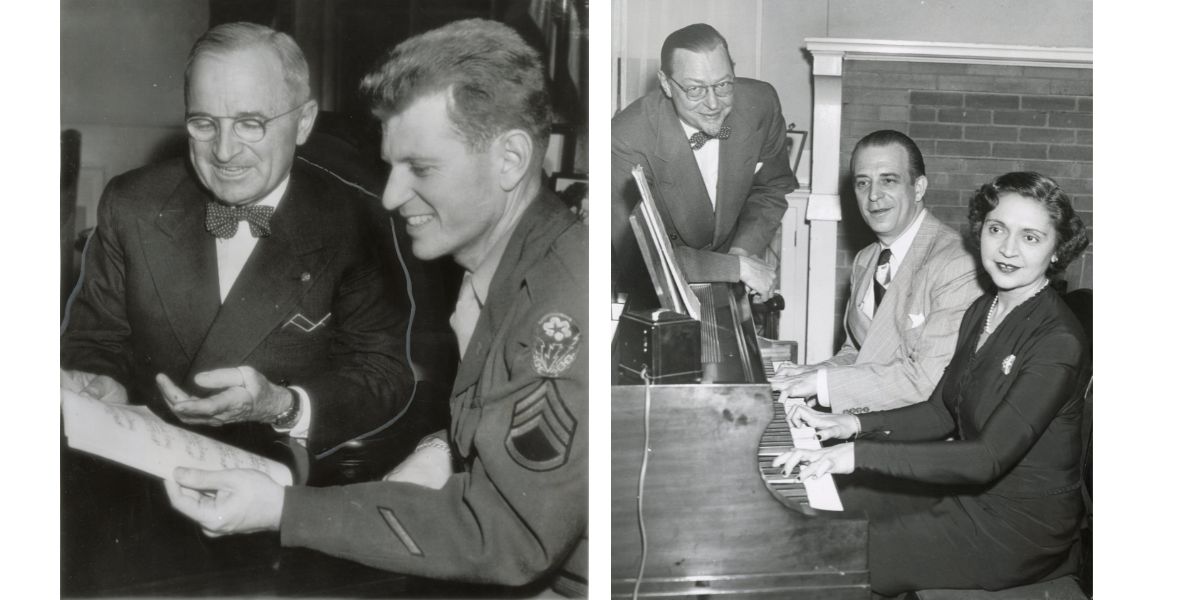
PIANIST OF THE PRESIDENTS: Left: Staff Sergeant Eugene List (pictured right) with President Harry S. Truman in 1946. Right: Cuban-born José Echániz (pictured center) with Dean Howard Hanson and Spanish pianist Amparo Iturbi.
The years surrounding Howard Hanson’s retirement marked a further turning point. Hanson famously discouraged extensive touring—Eastman historian Vincent Lenti ’60E, ’62E (MA), himself a full-time member of the piano faculty for 57 years and one of Hanson’s last hires, recalls Hanson’s firm insistence that faculty be present for the first day of teaching. Faculty like Orazio Frugoni, for example, who taught at Eastman from 1952 to 1967, recorded frequently and held a busy performance schedule. Once, whilst touring South America, Frugoni had the opportunity to extend his trip by three weeks. “He sent a telegram to Hanson and said something like, ‘Will be 10 days late, but be assured I’ll make up all the lessons,’” Lenti recalls. “Hansen fired back with a telegram that said, ‘You WILL be at school on the first day of teaching.’ So, it was not just the fact that Hansen didn’t encourage his faculty to get out to perform, but he, in a subtle way, discouraged them.” Lenti confirms that Frugoni was indeed at school on the first day.
In the years that followed Hanson’s retirement, the school gradually began to embrace a new model. As pianists with international careers, recording profiles, and global reputations joined the faculty, their professional activity was seen as an asset to prospective students and the community.
Figures such as Frank Glazer, a student of Artur Schnabel and Arnold Schoenberg; Eugene List, once dubbed the “Pianist of the Presidents” following a performance before President Harry S. Truman, Joseph Stalin, and Winston Churchill in Germany shortly after the Nazis’ surrender in 1945; and Barry Snyder ’66E, ’68E (MM), a former pupil of Genhart and triple prize winner in the 1966 Van Cliburn International Competition, further expanded Eastman’s artistic reach. Snyder taught at Eastman from 1970 until his retirement in 2017 and, among many accolades, was included in the book The Most Wanted Piano Teachers in the United States.
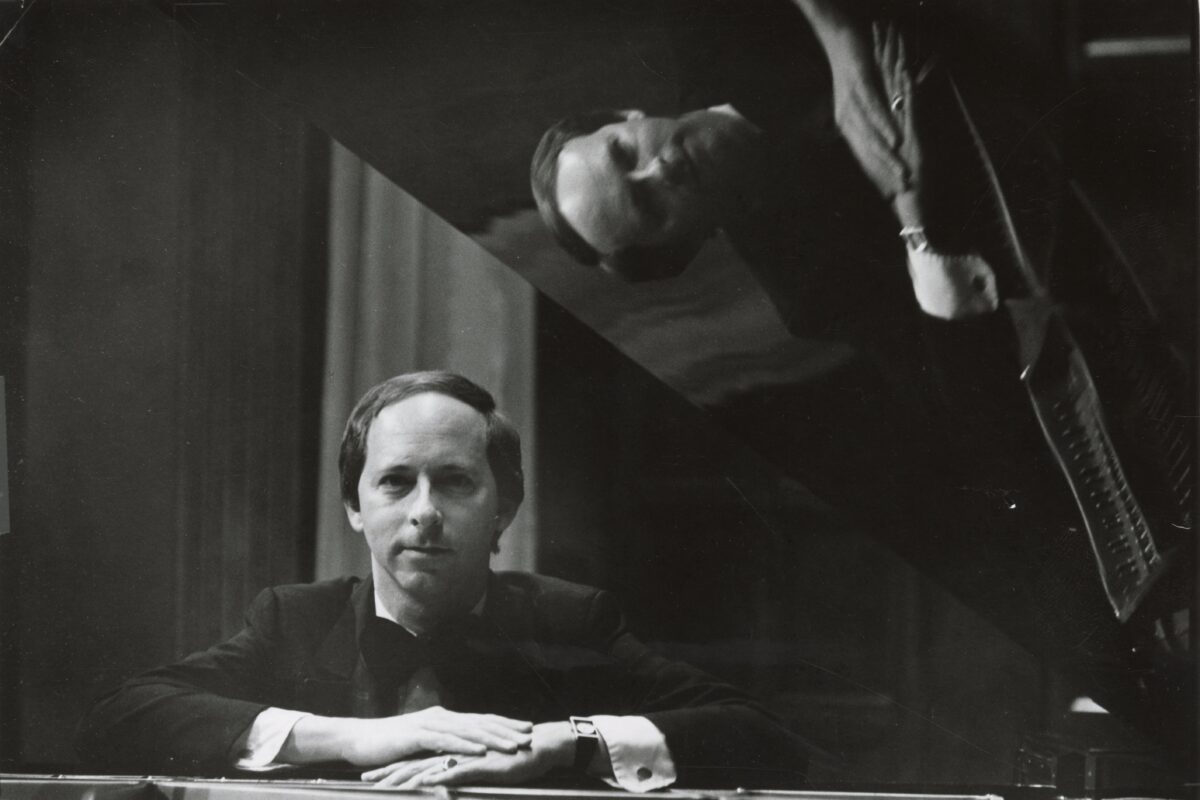
TRIPLE PRIZE WINNER: Barry Snyder taught at Eastman for almost 50 years, from 1970 to 2017.
With the appointment of David Burge ’56E (DMA) in 1975, the school responded to further changes in the musical world. “Burge brought with him a big interest in contemporary music that certainly was not here before,” Lenti says. As the job market began to adapt, so, too, did the focus of what should be taught and how.
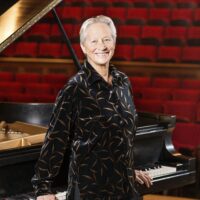
PRODIGIOUS TALENT: Professor Emerita Rebecca Penneys remained on faculty for more than 35 years.
Later, Rebecca Penneys and Nelita True brought expansive musical experience into Eastman’s studios. Penneys, who joined the faculty in 1980, had made her recital debut at age nine and performed as soloist with the Los Angeles Philharmonic Orchestra when she was 11. At 17, after winning many young artist competitions in the United States, she was awarded the unprecedented Special Critics’ Prize at the Seventh International Chopin Piano Competition in Warsaw, Poland. She remains a professor emerita of piano at Eastman.
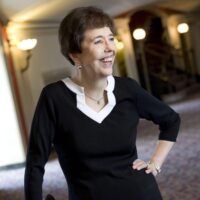
GREAT WISDOM: Nelita True chaired the department following David Burge.
Nelita True became a central figure in this next chapter of Eastman’s piano legacy, serving on the faculty from 1987 to 2018 and chairing the department for many years after Burge. “She showed great wisdom in the way she ran the department and the way she treated her colleagues,” says Lenti. “I can’t say enough good things about her.” True was a constant presence at student recitals and a tireless advocate for pedagogy as a living, shared practice. During her career, True traveled extensively around the world to play and teach and performed in all 50 states in the United States. She was joined on the piano faculty by her husband Fernando Laires until his retirement in 2004.
Yet even as the department evolved, the underlying value remained unchanged: performance mattered, but teaching mattered more.
The Department Today
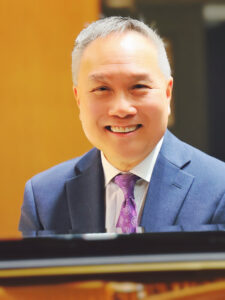
DOING THE WORK: Alan Chow served as chair of the piano department for five years until the summer of 2026.
Today’s piano faculty, until recently chaired by Alan Chow, reflects what Lenti calls “the world of piano as it is now.” Professionally active, pedagogically engaged, and stylistically diverse, the current roster includes Douglas Humpherys ’95E (DMA); Joseph Rackers ’01E (MM), ’05E (DMA); Marina Lomazov ’93E, ’00E (DMA); new chair Alexander Kobrin; Elinor Freer; Ran Dank; and, until recently, Tony Caramia, who concluded a 35-year Eastman career at the end of the 2025-26 academic year.
Chow, who joined the faculty in 2017 alongside Kobrin during True’s final year as chair, describes that moment as transformative. “Nelita was an incredibly well-known pedagogue,” he says. “She had this special gift of communication—not just with students, but with teachers about how to teach.”
The department’s present also carries resonant echoes of its past. Kobrin, like Snyder before him, is a winner of the Van Cliburn International Piano Competition, taking home the gold medal in Fort Worth, TX, in 2005. “That performer profile is a unique asset for any faculty,” Chow says. “And besides that, he is a really remarkable teacher.”
Lomazov is a former student of Barry Snyder and Natalya Antonova, while Rackers traces his pedagogical lineage back through Antonova and Eastman alumni via Raymond Herbert ’62E, ’64E (MM) who was in turn a student of José Echániz. Lomazov and Rackers now perform internationally as a duo, while continuing Eastman’s tradition of producing competition winners and artist-teachers.
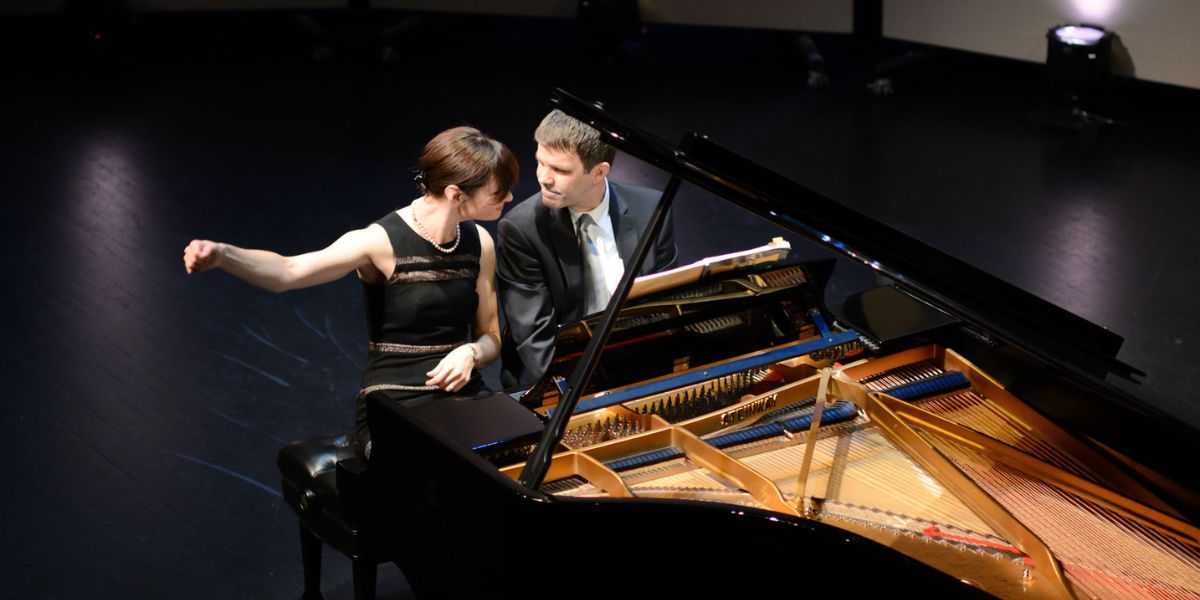
THE DUO: Marina Lomazov and Joseph Rackers met at Eastman and have performed as a duo for many years.
Carrying the Sound Forward
For more than a century, Eastman’s piano faculty have taught students not only how to play, but how to listen and how to think. Each generation has balanced artistry with pedagogy, individuality with lineage. “The strength of Eastman will continue in its graduates,” Chow reflected. “We do our work here, but it’s the students who carry on that legacy.”
From its earliest studios to today’s concert stages, the piano department’s story is one of continuity and renewal—hands on keys, minds engaged, and a shared belief that the truest measure of excellence is what endures long after the final note fades.
LEARN MORE:
This article offers only a glimpse into Eastman’s rich piano legacy. To learn more about faculty members from all departments who have shaped the school over the years, follow this link.