

Published on Apr 18th, 2022
1980: An outstanding guest performer with the EJE, trumpeter Clark Terry
Forty-two years ago this week, one of the nation’s most renowned jazz performers appeared at Eastman on Wednesday, April 23rd, 1980, when trumpeter Clark Terry was the featured guest soloist with the Eastman Jazz Ensemble. Professor Rayburn Wright, BM ’43, was the conductor. The concert marked Mr. Terry’s second appearance at the Eastman School of Music; he had previously appeared in the 1969 Arranger’s Holiday, when he was the featured Guest Artist on both trumpet and flugelhorn, assisted by Ed Shaughnessy on drums and by the Arranger’s Holiday Orchestra conducted by Ray Wright. Later on, he would return to Eastman for another appearance with the Eastman Jazz Ensemble in February, 1990, this time conducted by Bill Dobbins. On that occasion Mr. Terry performed on both trumpet and flugelhorn.
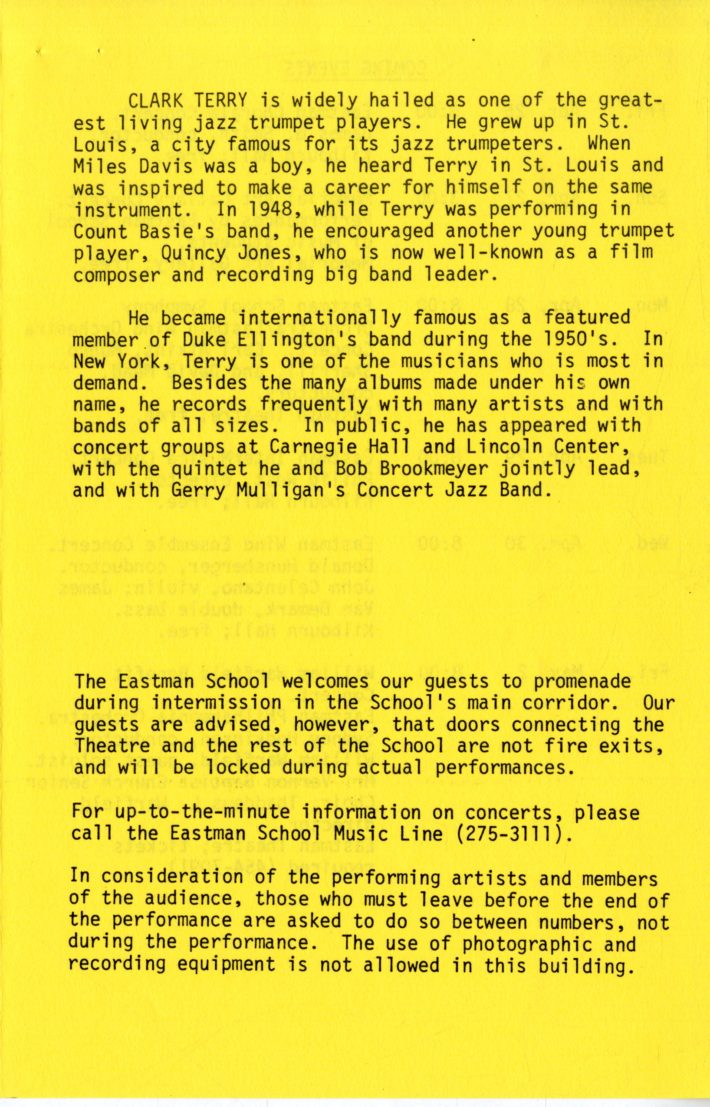
Mr. Terry (1920-2015) was another of those highly accomplished performing artists whose enumerated credits and contributions, both professional and personal, run to considerable length. Noted swing and bebop trumpeter, hugely successful recording artist, a perennially featured soloist, composer in his own right, pioneer on the flugelhorn in jazz, and member of such high-profile ensembles as the Count Basie Orchestra (1948-51), Duke Ellington’s orchestra (1951-59), and The Tonight Show band (1962-72). He was a native of St. Louis, historically one of the focal points of jazz and also the hometown of numerous renowned jazz artists, including saxophonist Oliver Nelson (1932-1975) and trumpeter Lester Bowie (1941-1999). By the time of his 1980 Eastman School appearance, Mr. Terry had won three Grammy nominations (1964, 1965, 1976); had received the first of what would eventually number more than one dozen honorary doctorates (the first was from the University of New Hampshire in 1978); had received numerous media awards, recognitions from professional associations, hall of fame awards from states and municipalities; and other accolades besides. The selective discography published in his autobiography indicates nearly 300 commercial recordings released up through March, 1980.[1]

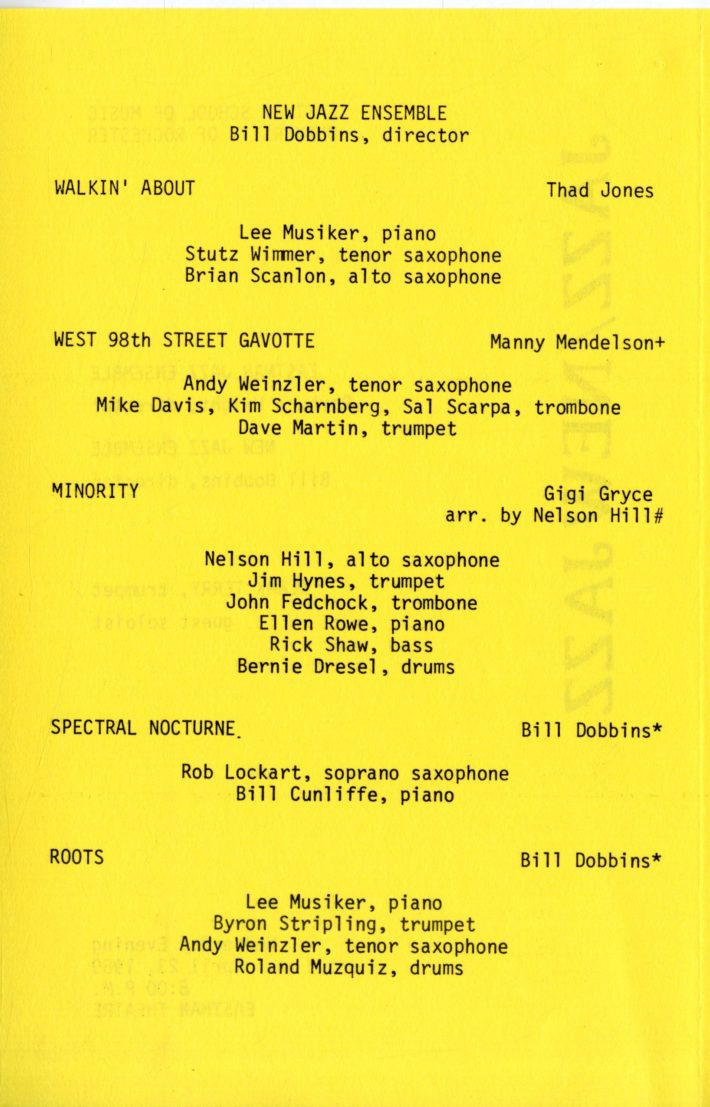
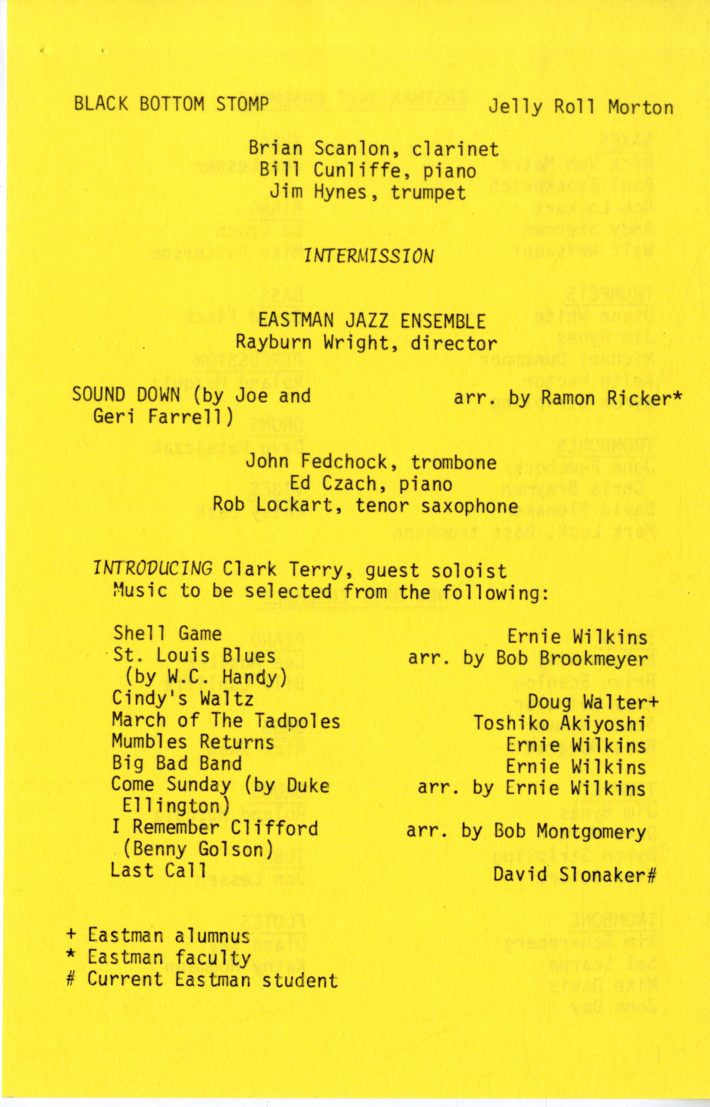
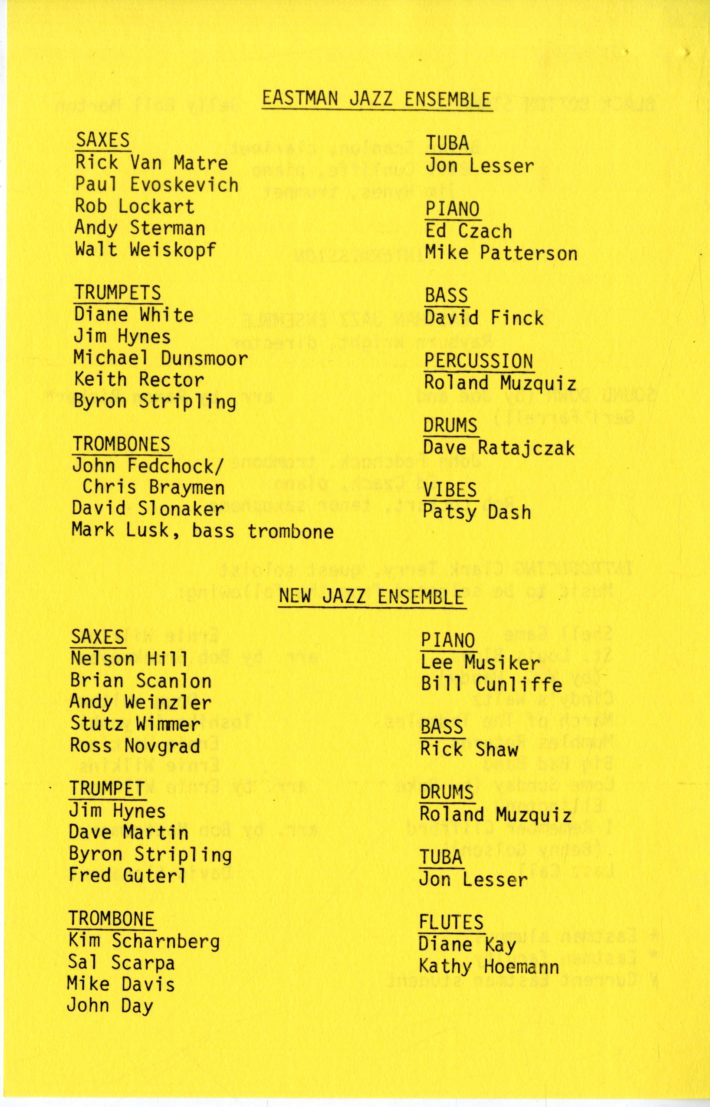
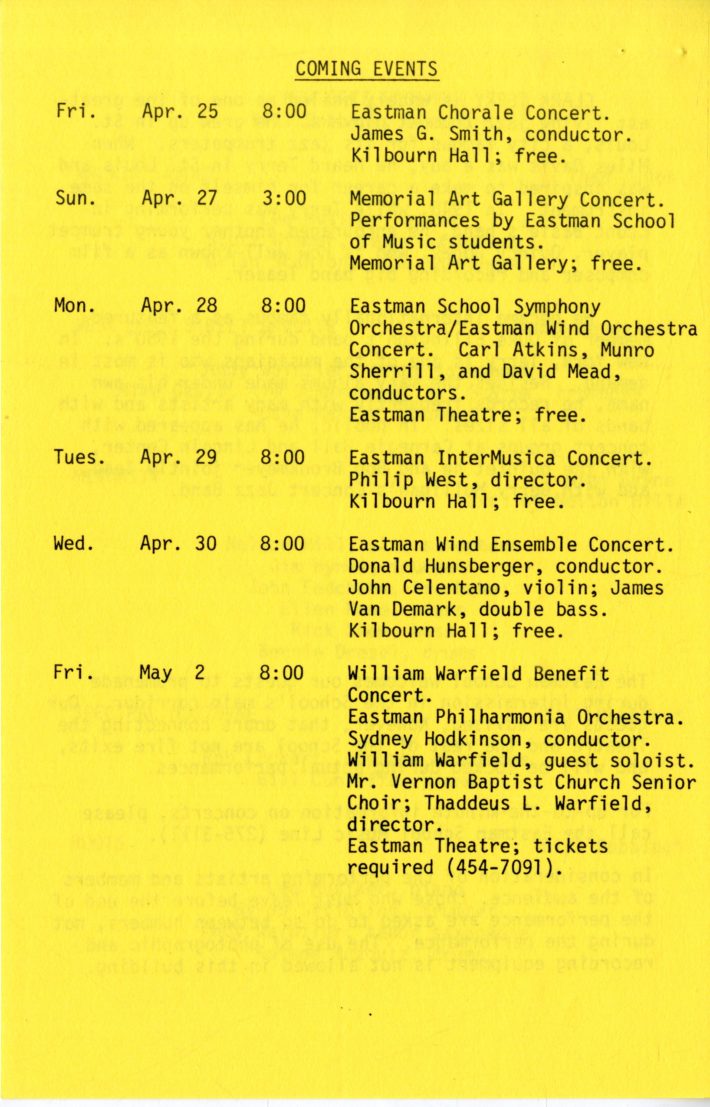
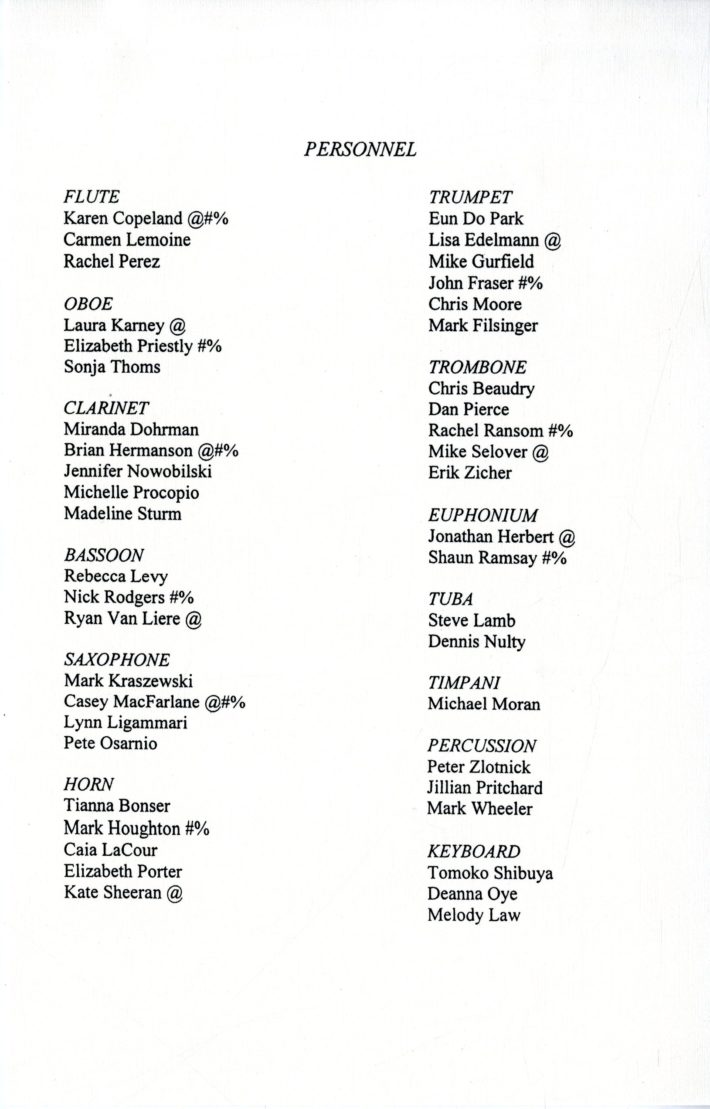
The program of April 23, 1980 was a joint concert by both the Eastman Jazz Ensemble and the Eastman New Jazz Ensemble. Note that the program promoted the original work of two Eastman student-composers. Mr. Terry together with the Eastman Jazz Ensemble performed “Last Call” by then-student David Slonaker, MM ’80, and also “Cindy’s Waltz” by an Eastman alumnus, Doug Walter, BM ’74, MM ’76. Further of note, another number on the program, W. C. Handy’s St. Louis Blues, was represented in an arrangement by one of Mr. Terry’s colleagues and a talent well known to Eastman, the hugely prolific Bob Brookmeyer (1929-2011). The original manuscripts of Mr. Brookmeyer’s arrangement of St. Louis Blues, together with the Advance Music publication of same, reside in the Bob Brookmeyer Collection at the Sibley Music Library. The collaboration of Mr. Brookmeyer with Mr. Terry was a particularly vibrant one; it included their having formed a Quintet that performed both domestically and internationally and that had been recognized with several NARAS and Downbeat awards in the 1960s. Further of interest regarding the Bob Brookmeyer Collection, a series of arrangements performed by the Clark Terry–Bob Brookmeyer Quintet were transferred from the ESM Ensembles Library to the Bob Brookmeyer Collection last year.
In the year 1980 the Jazz Studies and Contemporary Media department was marking its first decade. The appearance of so celebrated a guest soloist with the Eastman Jazz Ensemble represented yet another milestone for the department under the leadership of Rayburn Wright.
► Photos by Louis Ouzer.
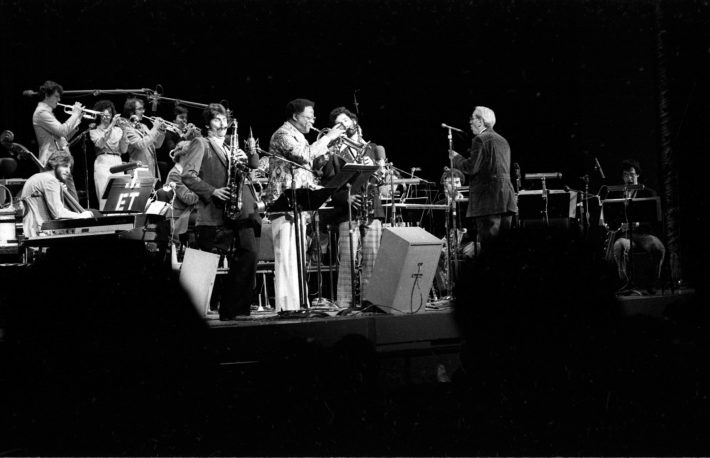
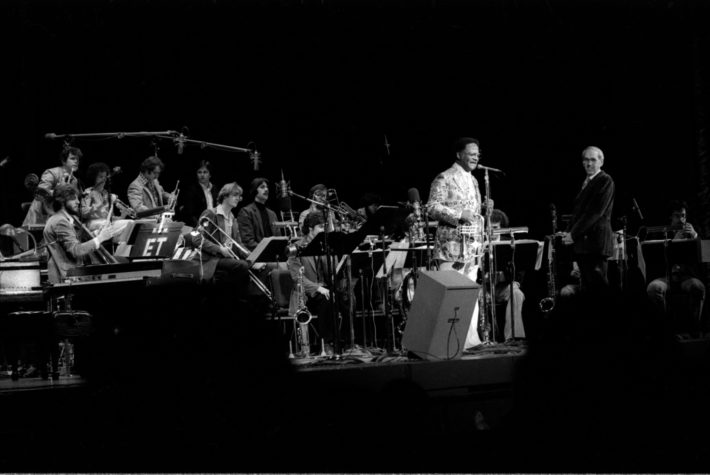
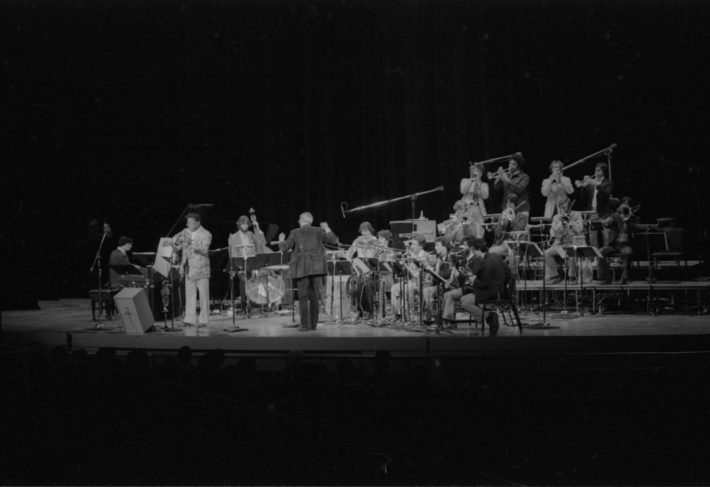
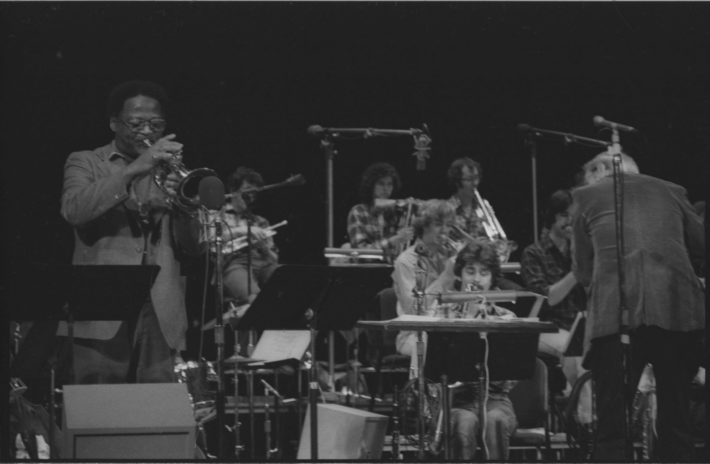
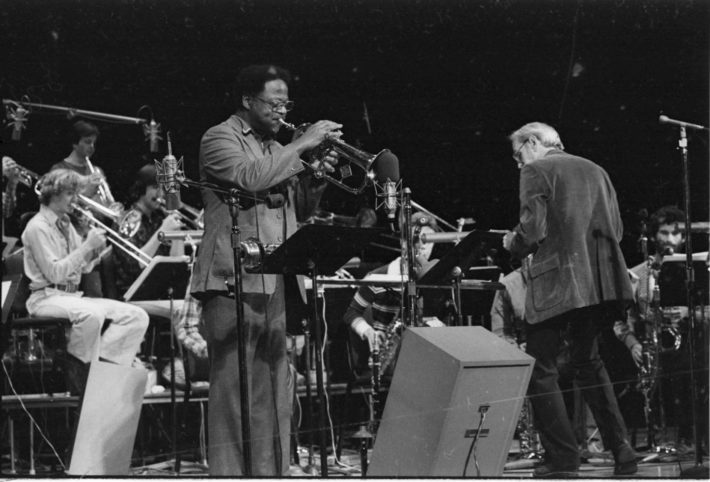
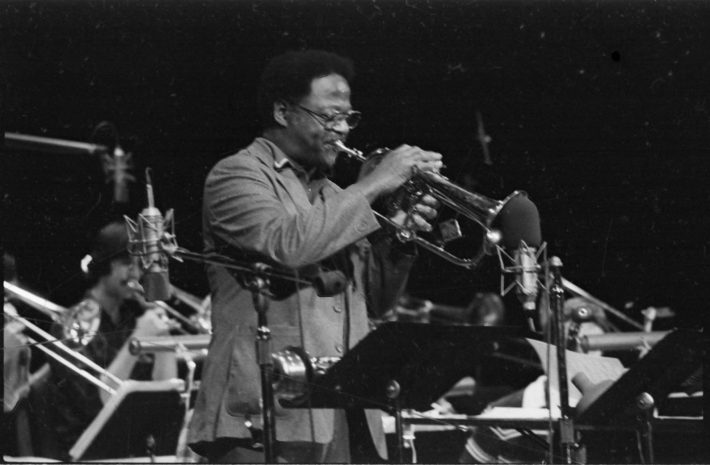
Clark Terry appearing as the featured soloist on-stage in the Eastman Theater, April 23, 1980. Rayburn Wright conducts the members of the Eastman Jazz Ensemble. R2824-24A, R2824-25A, R2824-27A, R2825-31, R2825-32, R2825-33
[1] Clark: the autobiography of Clark Terry. With Gwen Terry; preface by Quincy Jones; introduction by David Demsey. Berkeley: University of California Press, c2011. This book is a thoroughly engrossing read.
The Weekly Dozen
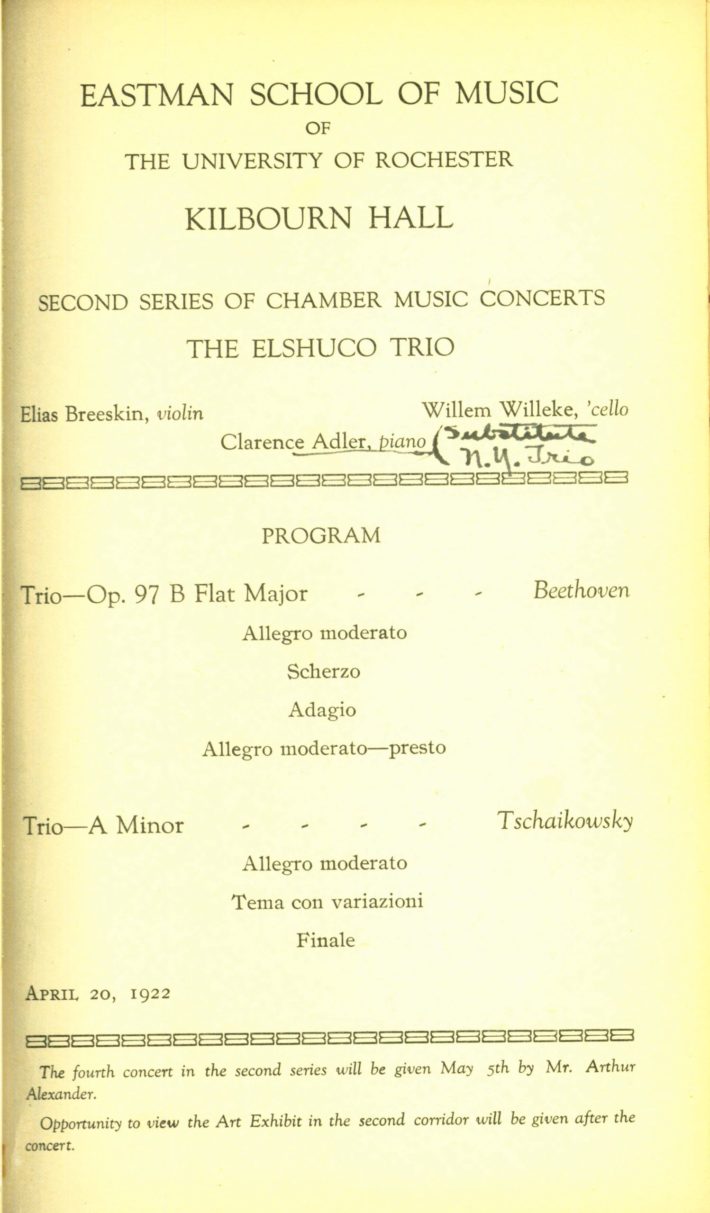
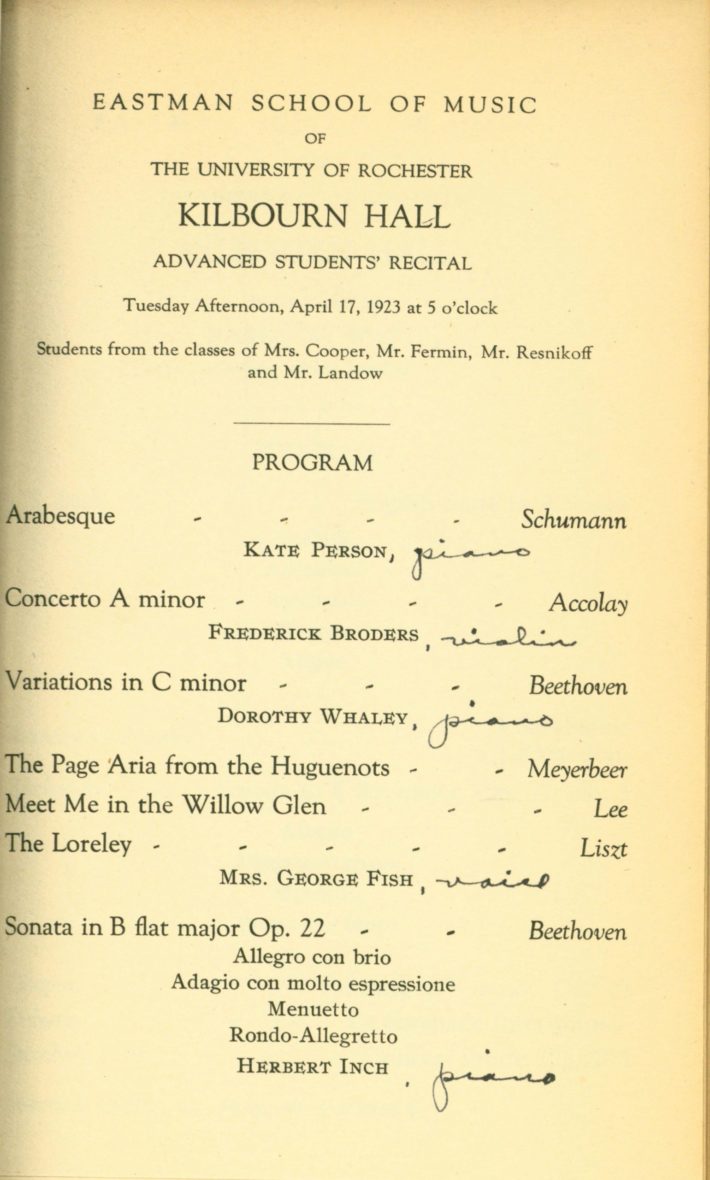
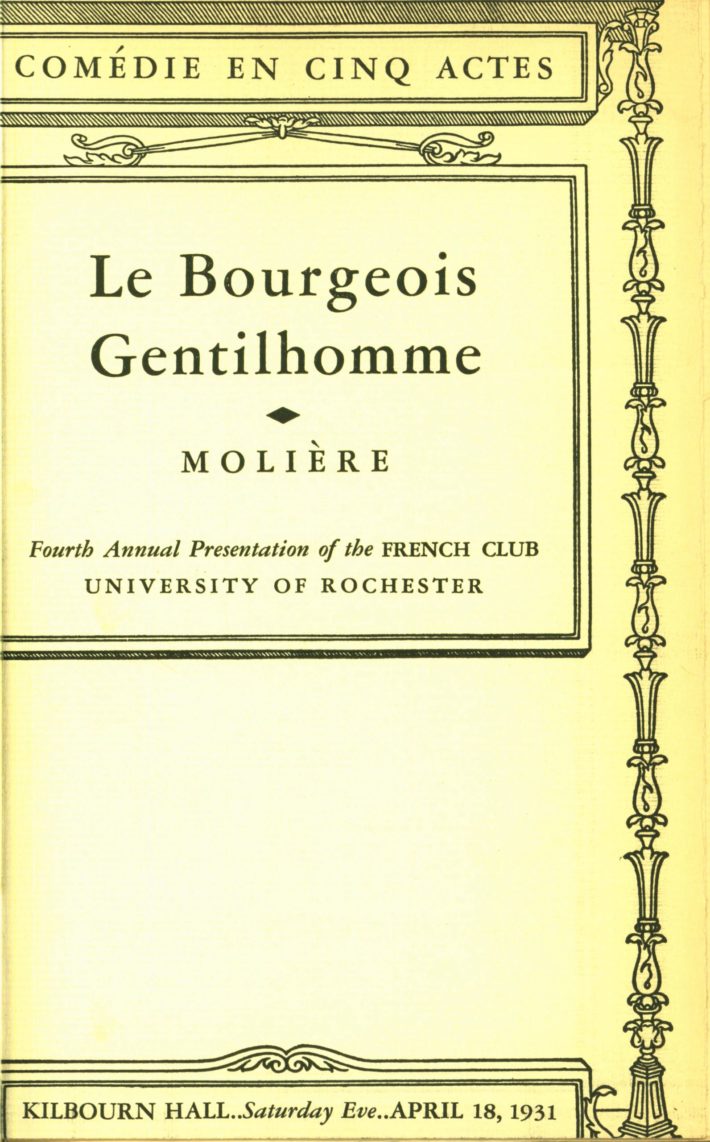
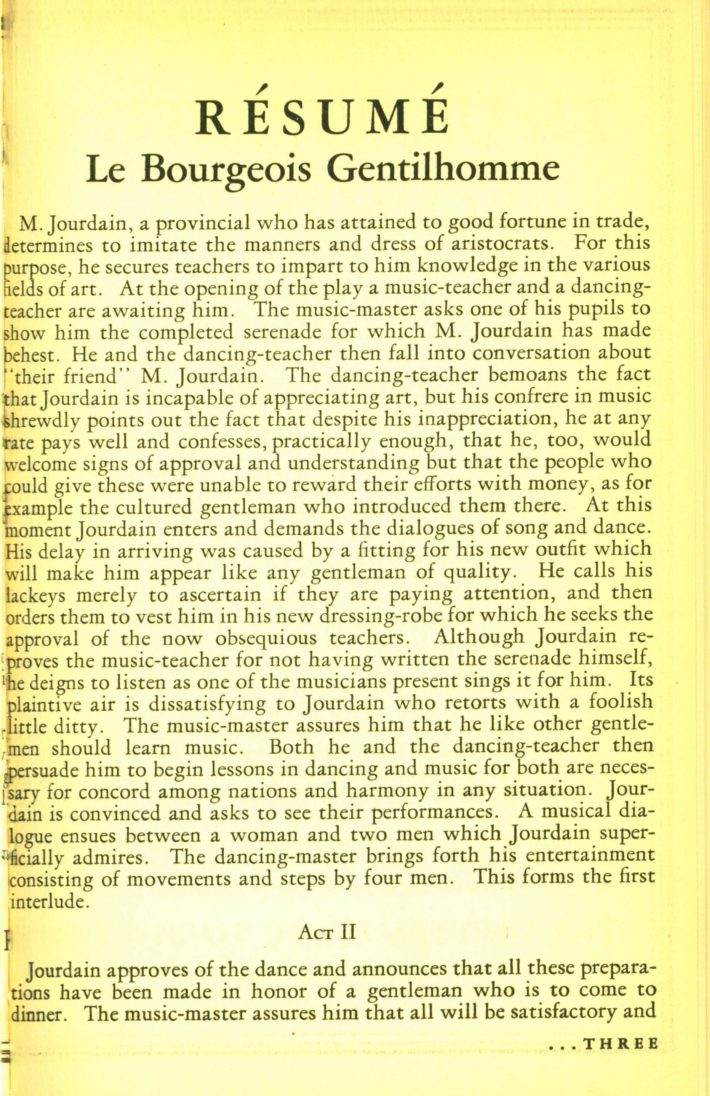
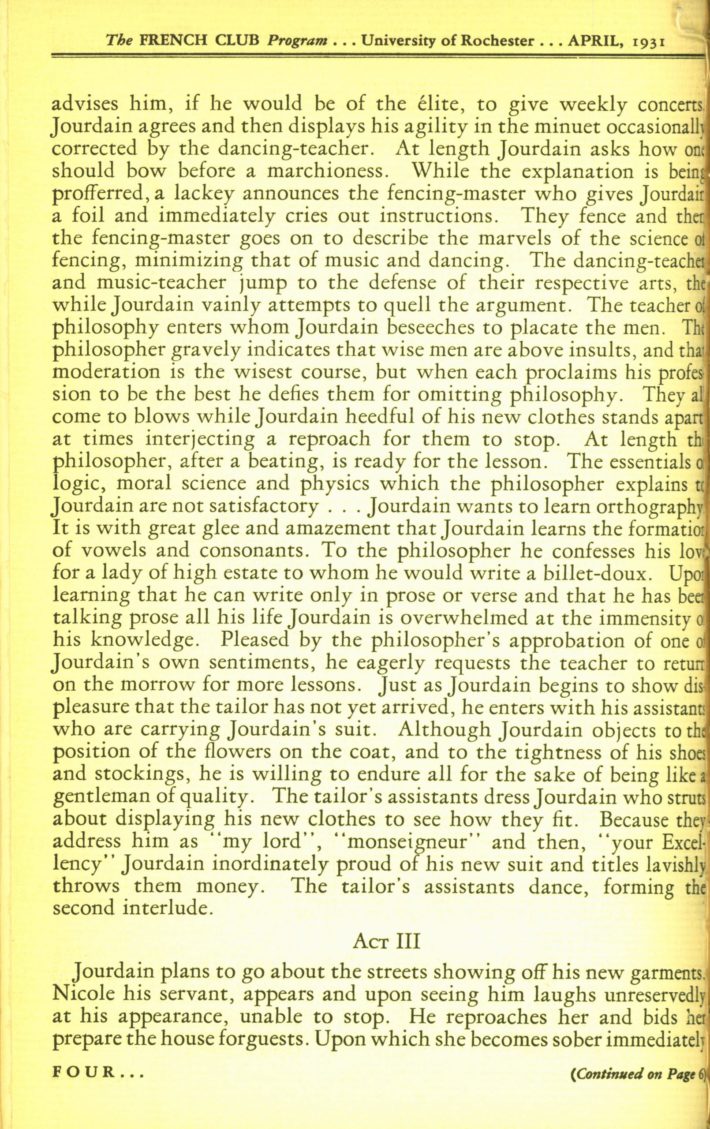
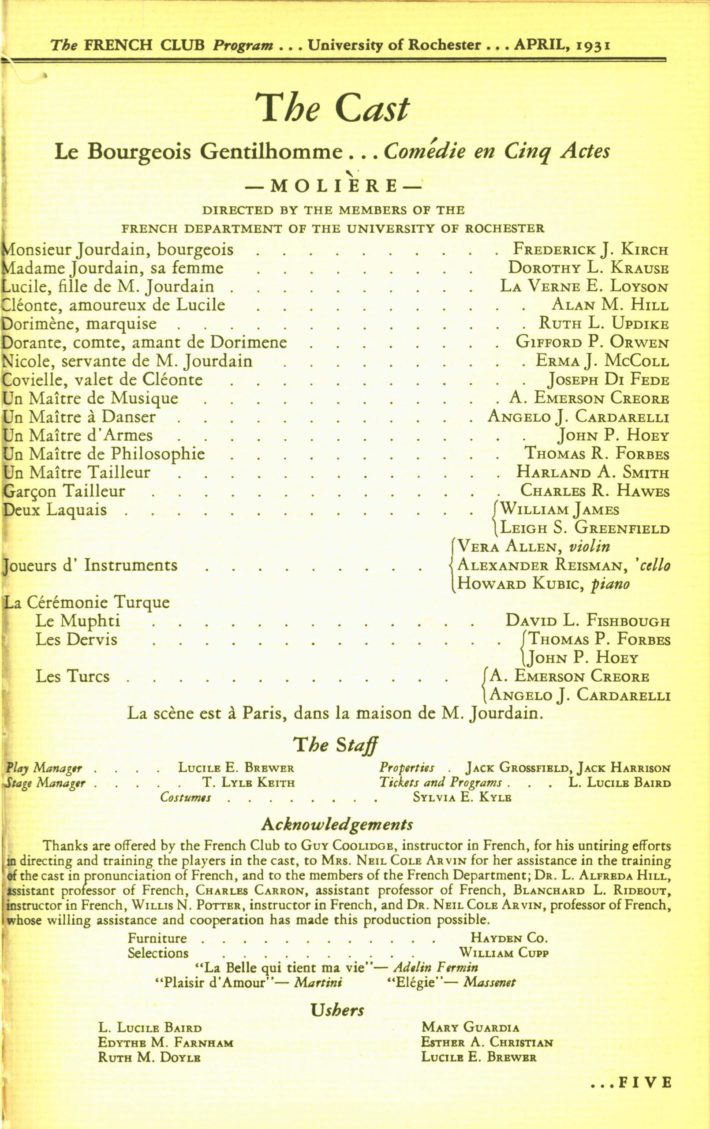
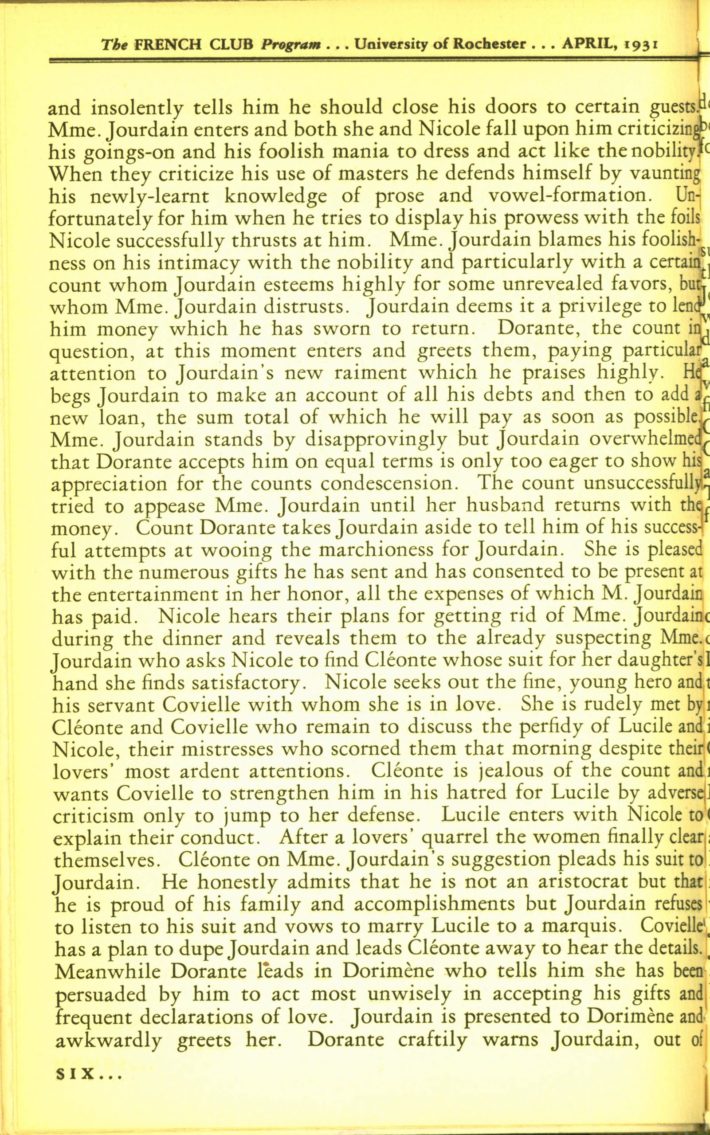
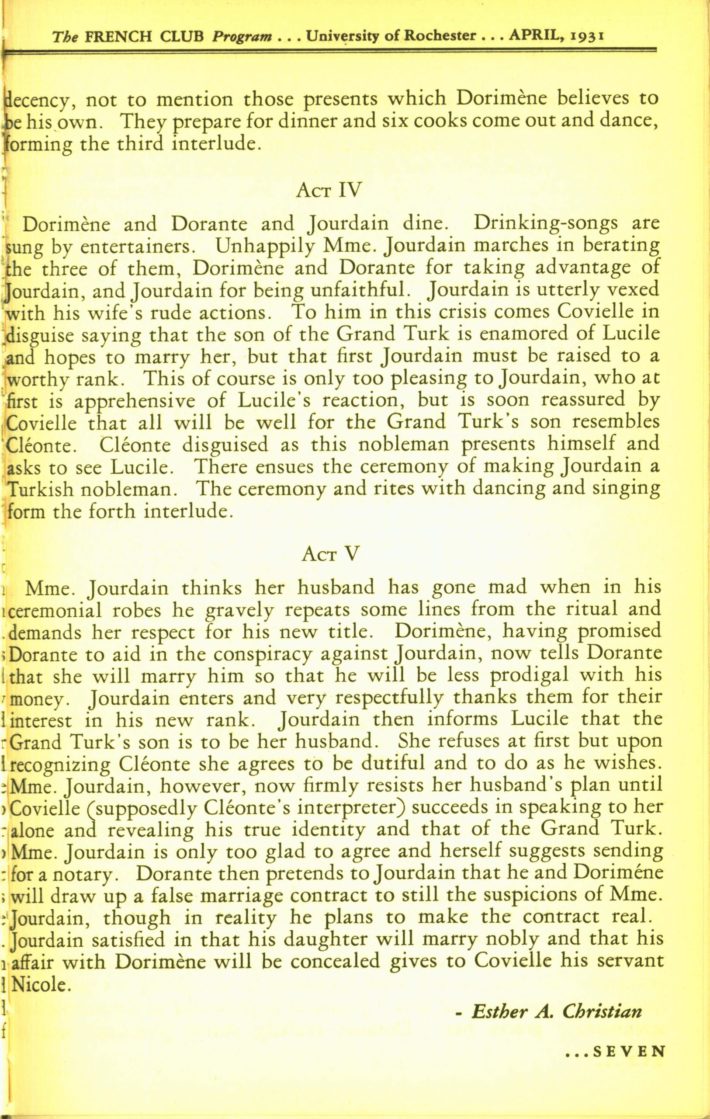
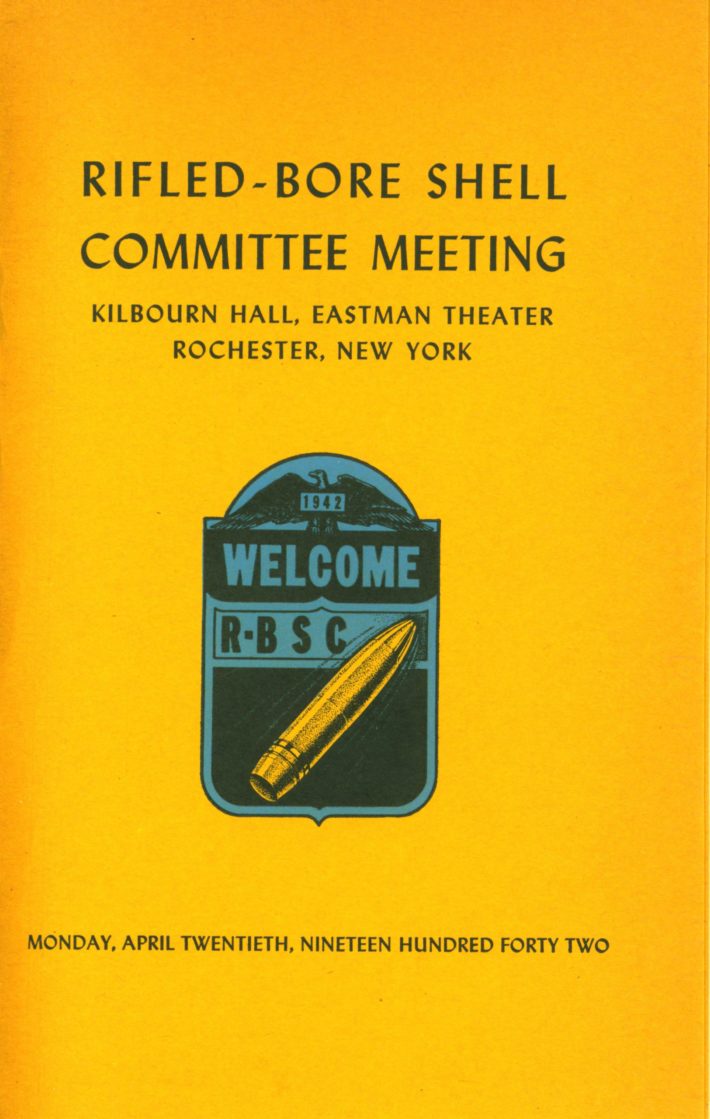
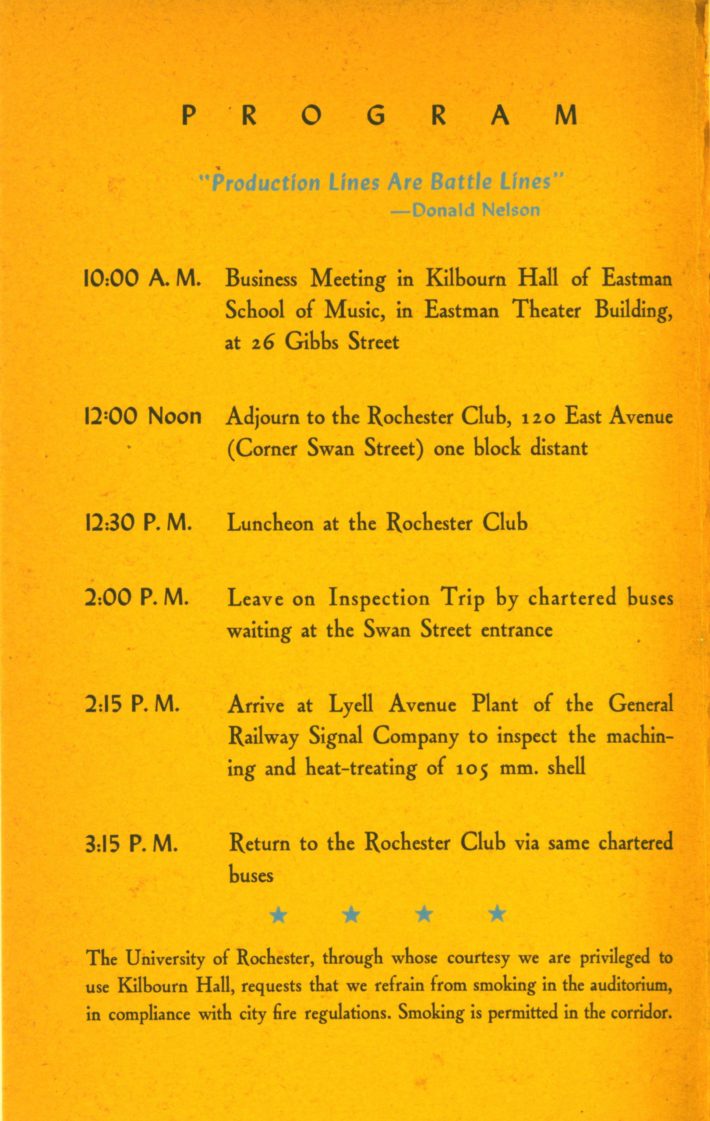
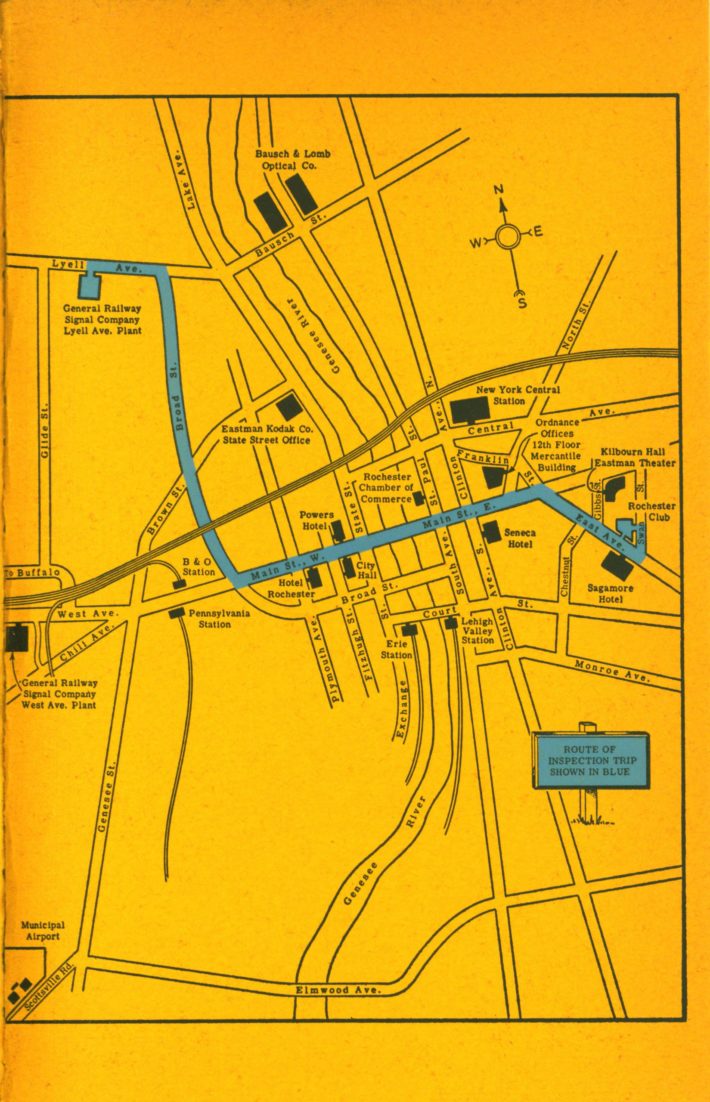
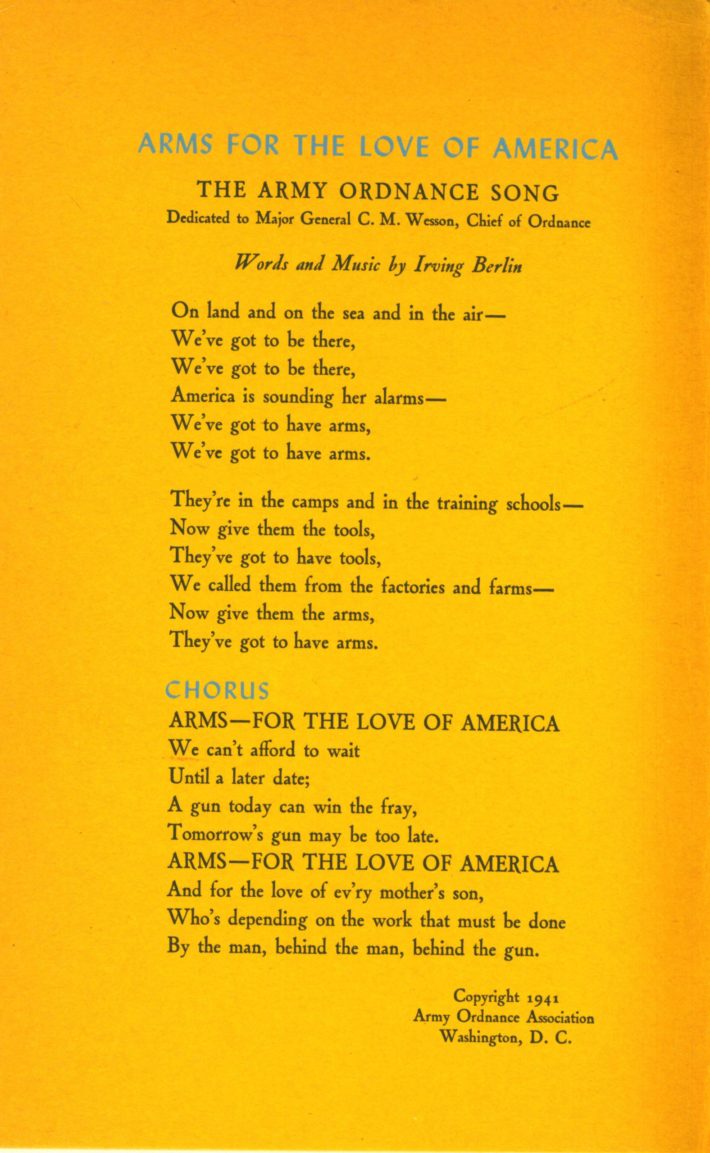
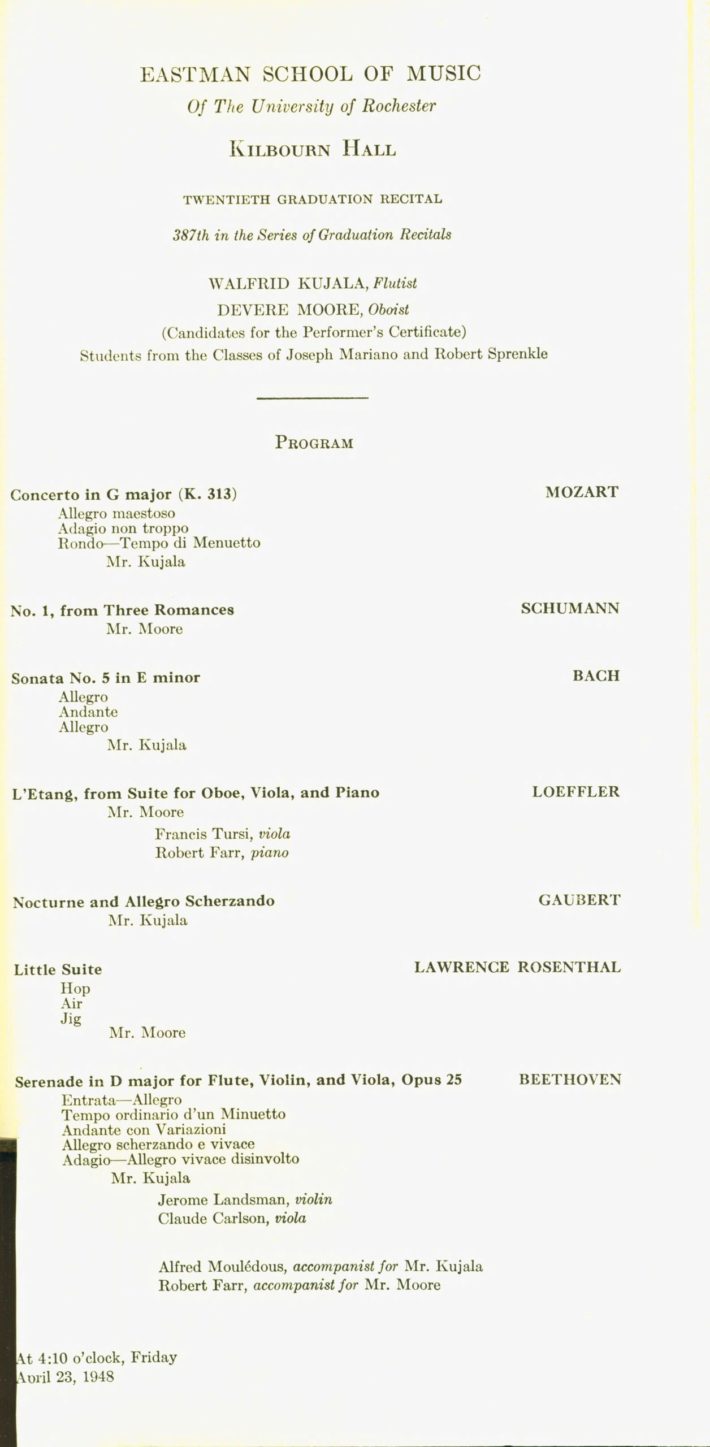
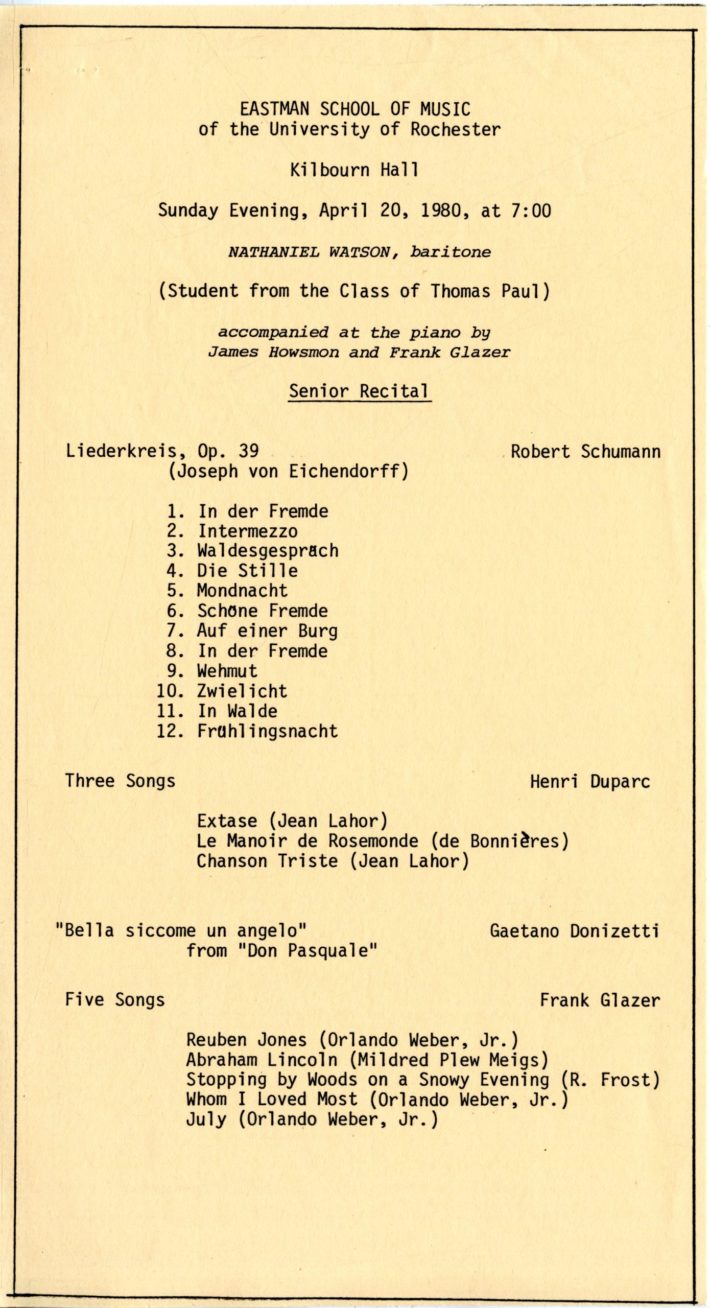
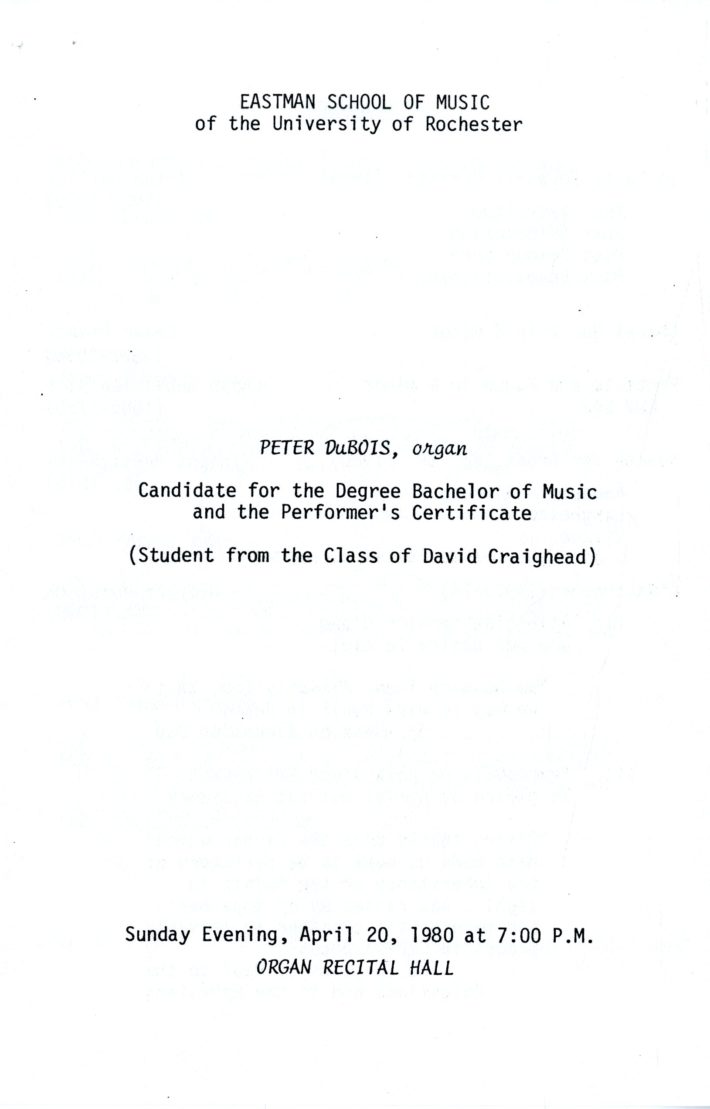
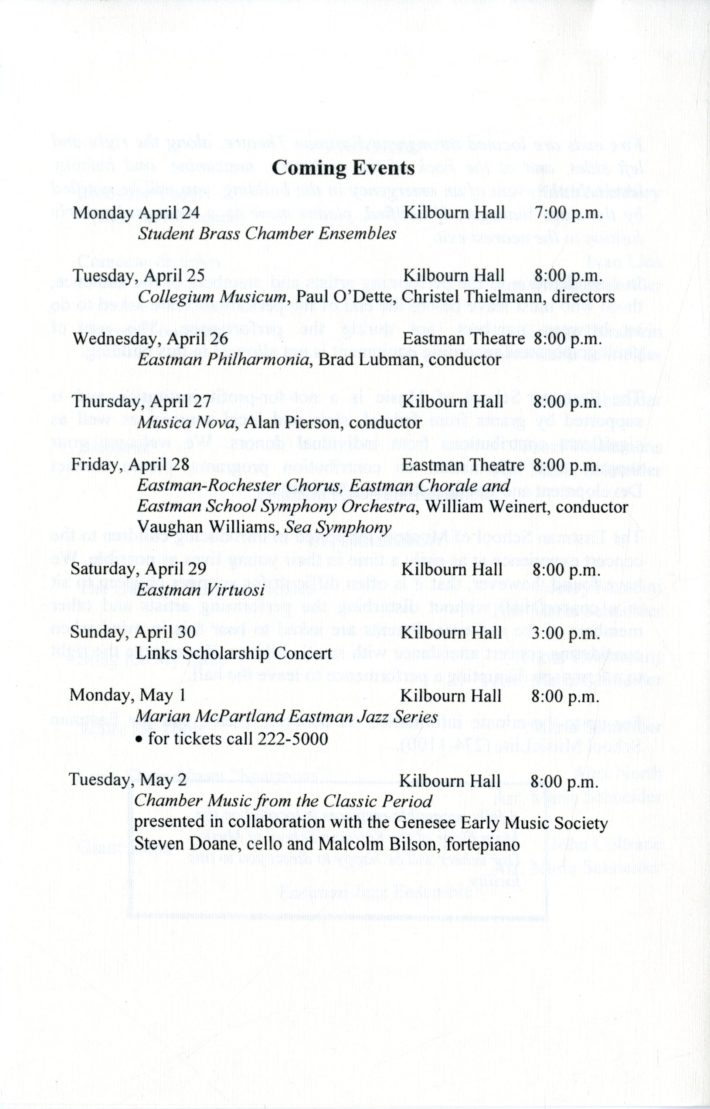
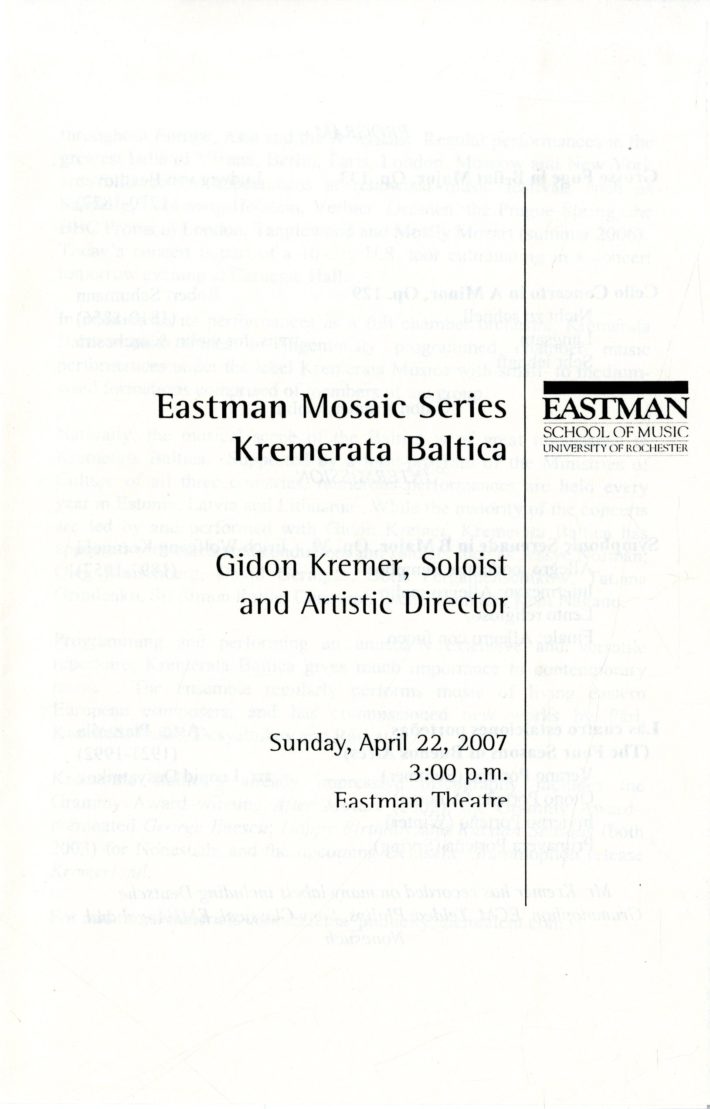
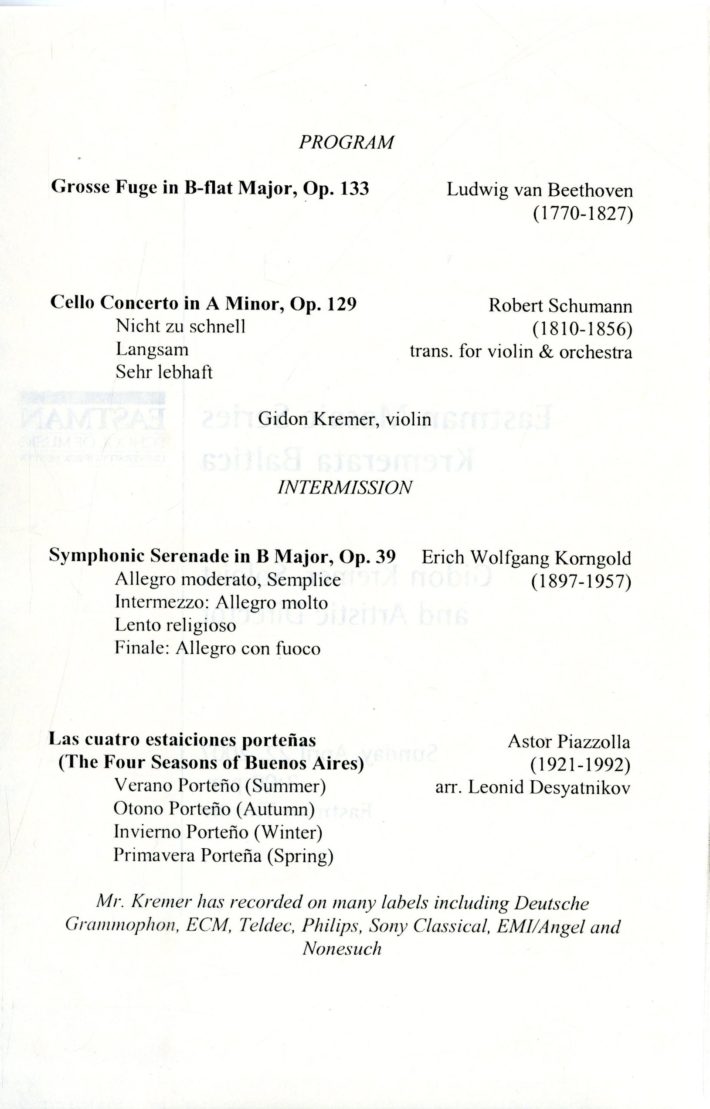
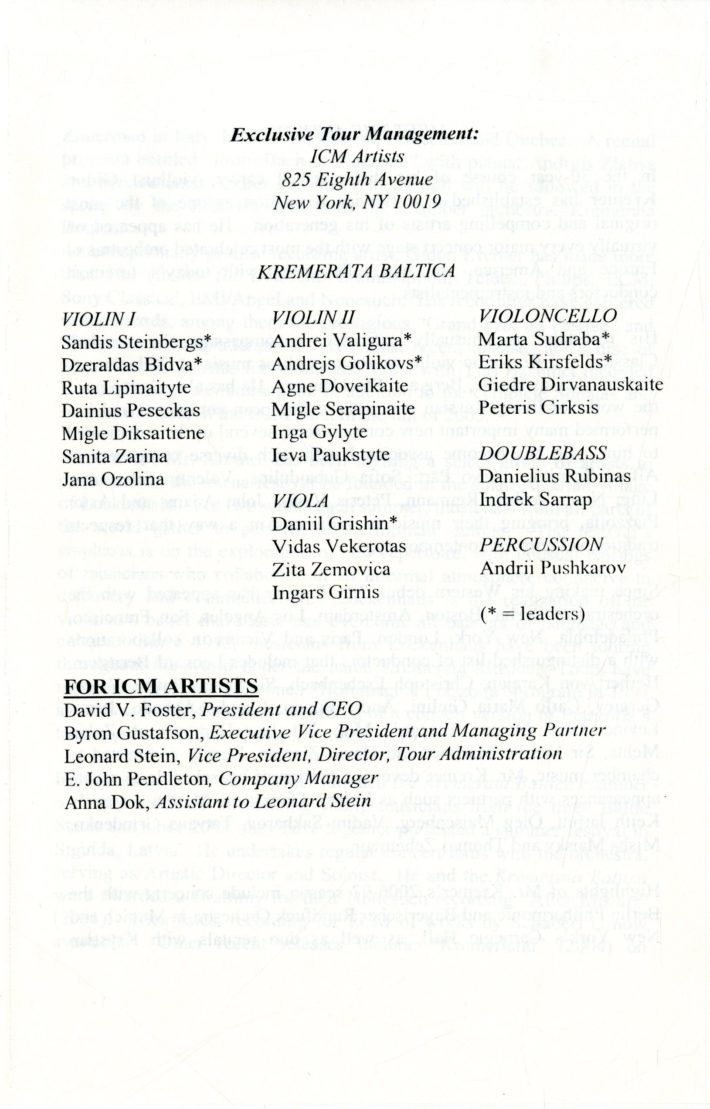
In this week’s “Weekly Dozen” we recognize a dramatic production a production by the University’s French Club, back in the years when student plays were staged in Kilbourn Hall; a meeting of the Rifled-Bore Shell Committee, signifying that Eastman School venues were pressed into civic service during the World War II years; a guest appearance by the Kremerata Baltica (! you can listen to a CD service copy of this recital in the Sibley Music Library); and as always, some superlative student performances such as grace the Eastman concert calendar each week of the semester.
Sep 21st- Sep 27th: Howard Hanson delivers the ESM’s first wartime Convocation address
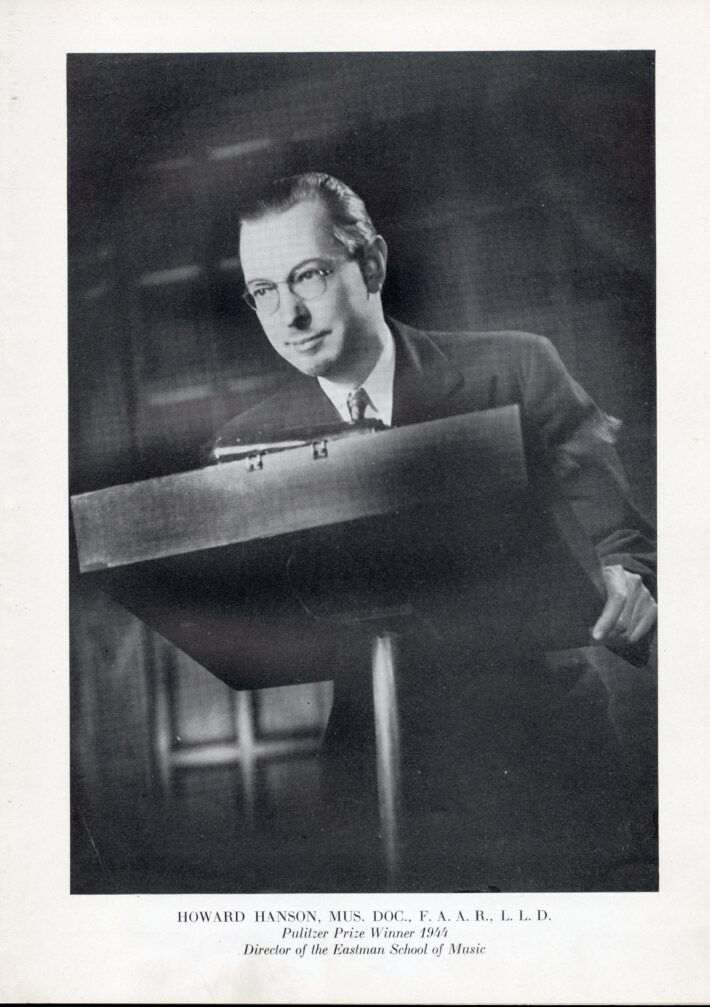
On Monday, September 21st, 1942, Director Howard Hanson addressed the student body at Convocation in Kilbourn Hall, marking his first Convocation address in wartime.
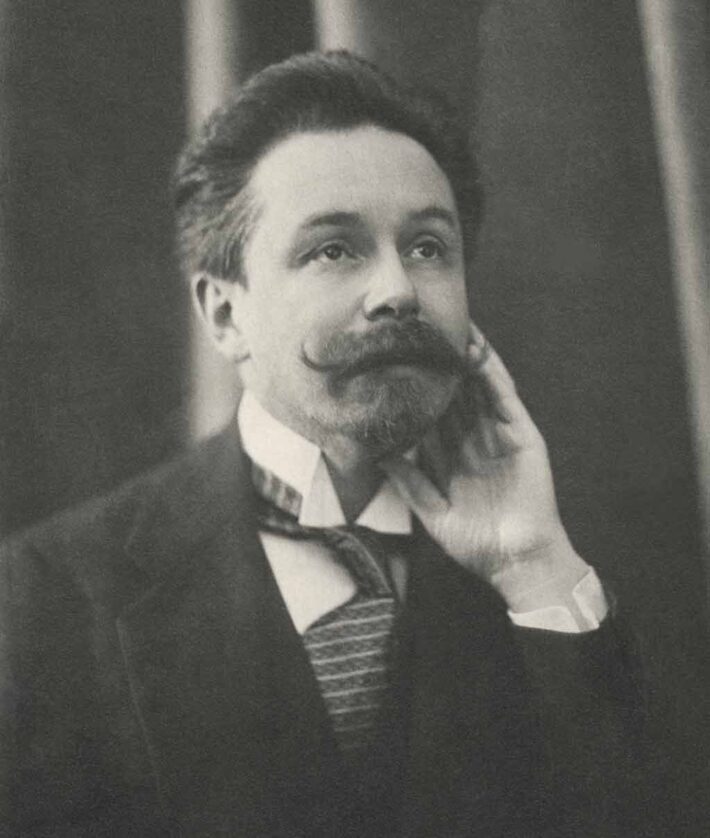
Sep 14th- Sep 20th: Accessioning of the SML’s first Scriabin Concerto manifestation
On September 14th, 1924, the M. P. Belaieff edition of the piano reduction score of A. N. Scriabin’s Concerto for Piano and Orchestra, opus 20, was formally accessioned in the Sibley Music Library
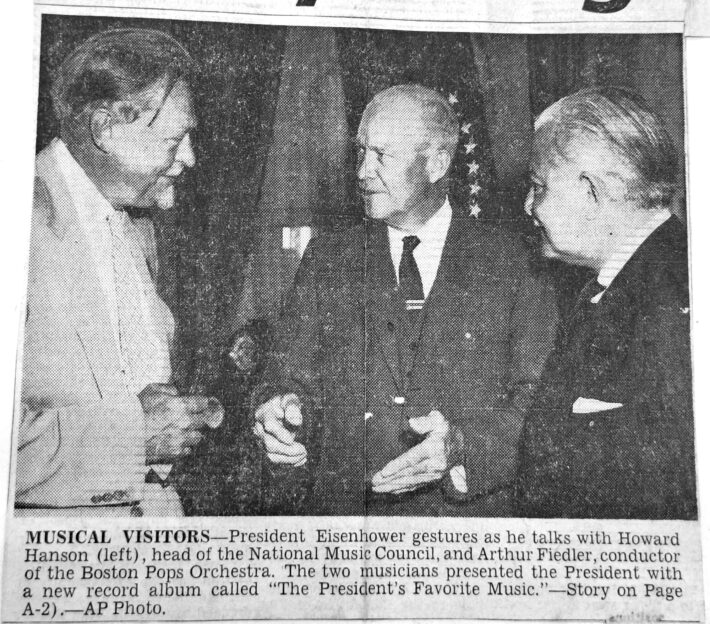
Sep 7th- Sep 13th: Howard Hanson met President Eisenhower at the White House
On Monday, September 10th, 1956, Howard Hanson met President Dwight D. Eisenhower in the Oval Office at the White House, marking the first time that an Eastman School Director had met the President of the United States.
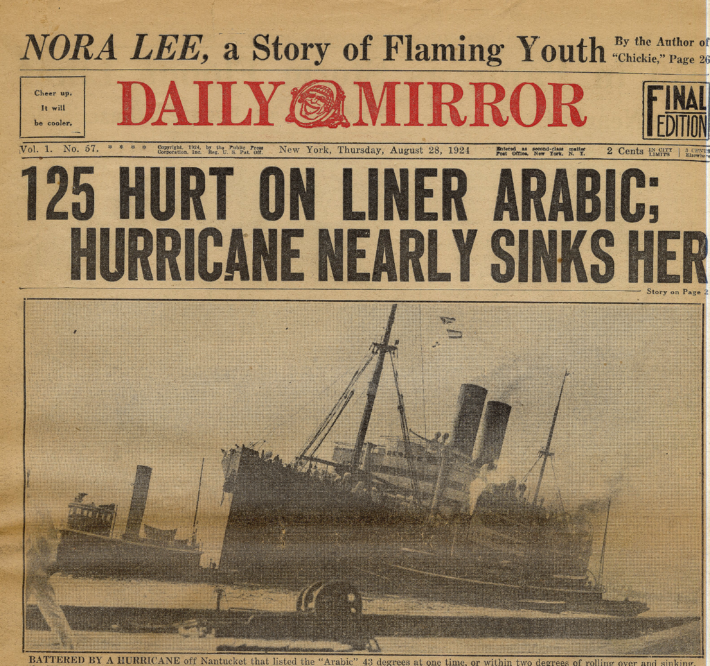
Aug 31st- Sep 6th: Howard Hanson has a close call at sea
In 1924, while in transit to Rochester to assume his position at the Eastman School of Music, Howard Hanson had a close call at sea on board the White Star liner S. S. Arabic.