The Musicology Department provides students across the Eastman community with creatively designed courses that explore the intricacies of musical meaning and aesthetics in widely divergent historical, cultural, and geographical settings. Undergraduates learn to think critically about the history of music in courses that blend temporal breadth with topical focus, while graduate students receive broad training in a range of musical traditions and critical methodologies. We look forward to helping you design an intellectually invigorating course of study in musicology!
Musicology
About Our Program
Undergraduate Core
Music history is full of surprises—from the shock of recognition you experience when reading passionate commentary on music from hundreds of years ago to the sense of strangeness you feel when hearing a piece that challenges your understanding of what “music” is. At Eastman, music history courses emphasize the lived experience of music alongside the development of critical thinking and writing skills. Three semesters of history are required for all undergraduates. Recent courses include “Experiments at the Edges of Twentieth-Century Music,” “Music and the Literary Imagination from Classicism to Romanticism,” “Performing Politics in the Musical Marketplace,” “Musical Bodies from Pergolesi to Puccini,” and “Citation and Authority, 800-1750.”
Graduate Studies
Musicology at Eastman is intensely interdisciplinary and intimately informed by the rich musical environment of the school. The department offers a PhD degree, with an emphasis in historical and critical studies or ethnomusicology, and an MA degree in musicology or ethnomusicology. With eight full-time faculty plus affiliated faculty at the University of Rochester, the Musicology Department features expertise in subjects ranging from opera, jazz, and Renaissance sacred music to gender studies, ecomusicology, and intersections between music and politics. Recent seminars have focused on early opera, Romanticism and improvisation, sound and media studies, Black vocal music, Hildegard von Bingen, post-humanist aesthetics, and South Asian music.
Ethnomusicology
Eastman’s Ethnomusicology Program offers students rigorous training in the history and methodology of the discipline, and engages cutting-edge approaches to studying music across diverse cultural and geographical settings.
Sibley Music Library
Central to the work of music scholars at Eastman is the remarkable Sibley Music Library, the largest music library affiliated with any college or university in the United States. With nearly three-quarters of a million items, the Library offers vast resources for performance and research. Indeed, the holdings of the Ruth T. Watanabe Special Collections have launched more than one dissertation in recent years.
Events
The Musicology Department sponsors two series of presentations:
- The Colloquium series offers talks by current faculty and graduate students.
- The Symposium series presents prominent guest speakers from other institutions.
Both series are open to the Eastman community. All events take place on Thursdays at 4:00 p.m. in NSL 404 (Sibley Library seminar room) unless otherwise noted.
Offerings
UNDERGRADUATE
Part of Curricular Core
for all Eastman students
GRADUATE
Musicology
(MA)
Musicology
(PhD)
Department Chair
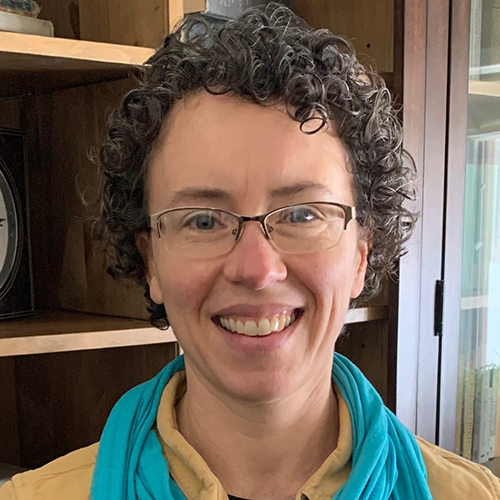
Holly Watkins
Chair, Musicology Department, Professor of Musicology
From improvisation to idiophones, Hildegard to Husa, and Mannheim to Mumbai, the study of music history and ethnomusicology at Eastman encourages the open exploration of musics, musicians, and listeners across time and space. Our courses challenge students to probe how musical meaning is made—and to what ends—and to consider how their own musicianship contributes to this rich, ongoing process. Join us to listen to and critically examine the sound world around us.
Faculty



Affiliate Faculty

Emeritus Faculty