
Since it was established in the 1960s, the mission of Eastman’s Musica Nova ensemble has been to expose Eastman students to hearing and performing the music of their time. The styles of “new music” have changed a lot in nearly 60 years, and the ensemble, under its current director Brad Lubman, has kept pace with the newest music.
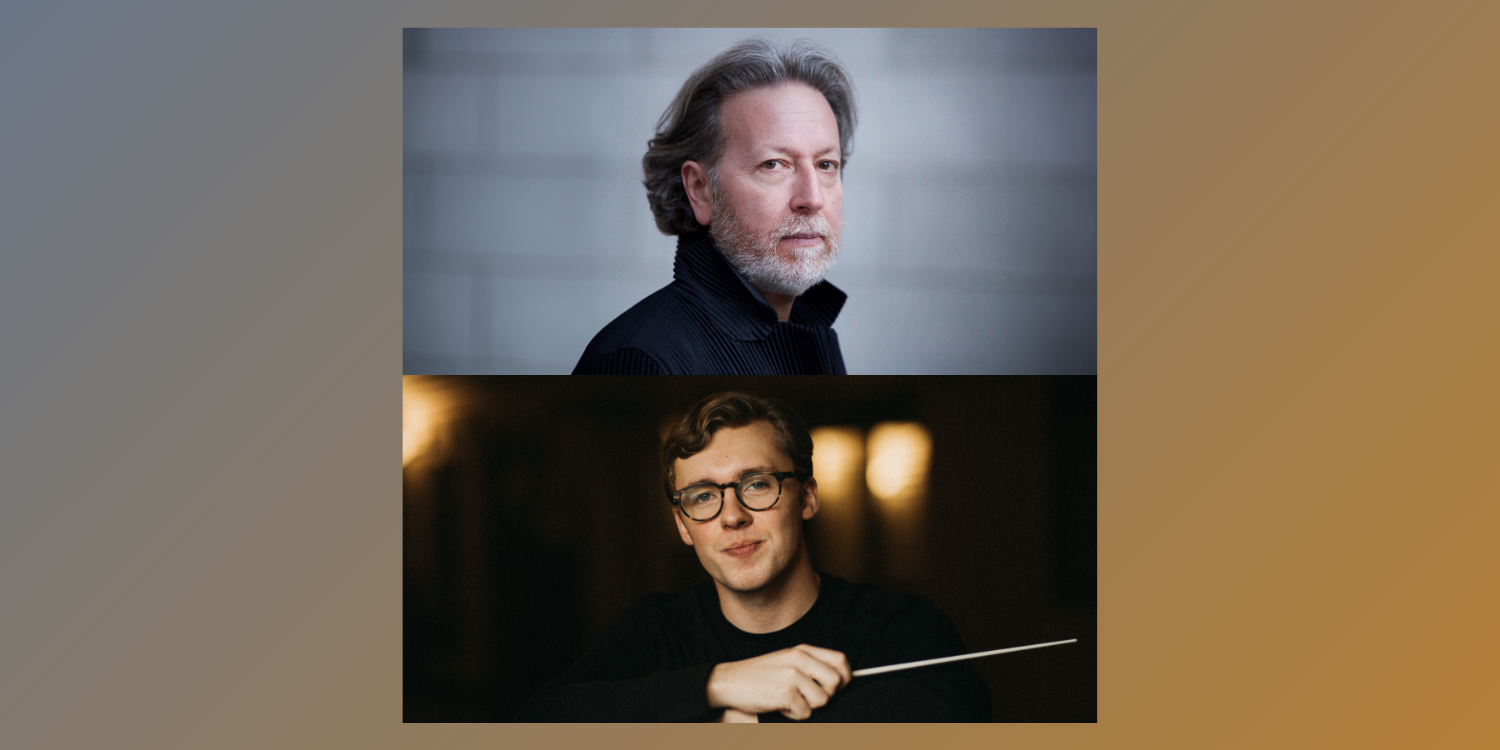
Musica Nova’s February 14 program exemplifies that mission, and promises to be a colorful adventure. It includes two works by the highly respected European composers Tristan Murail and Giacinto Scelsi as well as new pieces by Brad Lubman and by recent Eastman graduate Zihan Wu ’23E, now a student at Yale. Graduate conducting student Luke Poeppel will lead the works by Wu, Murail, and Scelsi; Lubman will lead his own music.
Wu’s Oiseau mécanique (Mechanical Bird), which opens the concert, is inspired by a Chinese folk tale, and pays some homage to Messaien and Stravinsky, who also wrote colorful music inspired by birds. Luke Poeppel, who has worked closely with the composer in preparing her piece, finds it imaginative and assured.
“In reading it,” he says, “I would come across passages and musical effects that I didn’t think would come off. But Zihan knows how to play them, and knows exactly how they work. As she told me, ‘It’s not nonsense!’” (You can read more about Zihan Wu and her music here.)
The program concludes with Brad Lubman conducting the New York State premiere of his composition …to quiet the mind. This piece was premiered last September in Chicago by its commissioners, the Grossman Ensemble, a group of formidable new-music virtuosi whose pianist is Eastman assistant professor of composition Daniel Pesca.
Lubman says, “Knowing I’d be writing for such great musicians, I was tempted to start the piece with music in a style I like to write in: loud, busy, fast, and complex. There is some of that, and some unexpected changes, in the finished piece. But I also had some ideas that were floaty, drifty music, and those predominated. Hence the work’s title.”
The French composer Tristan Murail, born in 1947, and the Italian composer Giacinto Scelsi (1905-1988) are both widely respected figures in contemporary music.
Murail’s La chambre des cartes was premiered in 2011. Luke Poeppel thinks the best way for an initiated listener to enjoy it the first time is simply to revel in the sounds of the instruments (which are often used in unexpected ways). And, he mentions, there may be a clue in the work’s subtitle, “An invitation to a journey.”
Giacinto Scelsi’s many musical and intellectual interests included atonality, improvisation, and Eastern philosophy. His 1965 composition Anahit calls for solo violin (performed by Jiaqi Yu) and chamber orchestra. (This work is subtitled “Lyric Poem on the name of Venus,” which is probably this February 14 concert’s sole connection to Valentine’s Day.)
What do all these very different composers and works have in common? Lubman ventures a guess: “a shared interest in color and atmosphere.”
Contemporary composers often exploit innovative, arcane compositional styles and extended instrumental techniques (i.e., playing a flute or violin in a manner that doesn’t sound like a flute or violin). These four composers certainly do, and both conductors agree the best way to approach their upcoming program is by enjoying the atmosphere and the colors the composers create.
Says Brad Lubman: “For contemporary music – for all music, really – knowing everything, or anything, about the structure in detail before you listen doesn’t matter. The impact of the music does. When you hear the finale of Mozart’s ‘Jupiter’ Symphony for the first time, you don’t need to know that he’s written a five-voice fugue to hear the energy and excitement of that music.”
On the surface contemporary music may sound “difficult,” but as Lubman says, “music is just music, and the music of contemporary composers is just as expressive as Mozart, Tchaikovsky, or Shostakovich.”
Eastman Musica Nova presents Wu’s Oiseau mécanique, Murail’s Chambre des cartes, and Scelsi’s Anahit, conducted by Luke Poeppel; and Lubman’s …to quiet the mind, conducted by Brad Lubman on Wednesday February 14 at 7:30 p.m. in Kodak Hall. Admission is free. Learn more here.