

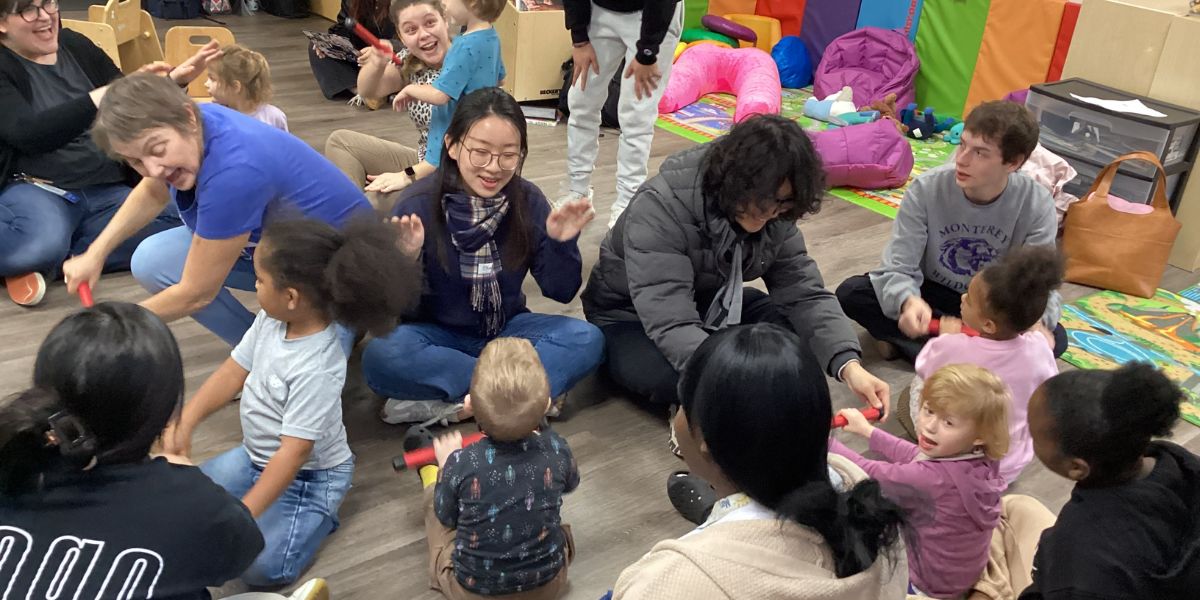
Each fall, Eastman students step beyond the classroom and into one of Rochester’s most impactful educational environments: the Mary Cariola Center. Through an ongoing partnership, students in Eastman’s Music Teaching and Learning (MTL) department gain hands-on experience working with preschool-aged children with disabilities—an opportunity that is as instructive as it is transformative. With musicianship at the fore, they are ready not just to teach, but to listen and discover—often in real time—that music is not a fixed performance, but a shared experience.
A regional leader in education and life skills solutions, the Mary Cariola Center serves hundreds of children and young adults each year through academic, residential, and community outreach programs. Its staff—special education teachers, therapists, nurses, and social workers—work with students who are medically fragile or navigating autism, cognitive delays, physical disabilities, and rare genetic syndromes. The environment is highly specialized, deeply collaborative, and, for Eastman students, profoundly eye-opening.
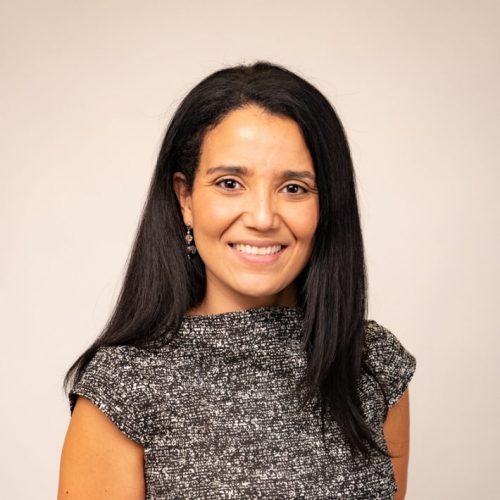
HANDS-ON WORK: Professor Mara Culp champions experiential learning.
The partnership, overseen by Associate Professor of Music Teaching and Learning Mara E. Culp, officially began in fall 2024 as part of Early Childhood Music Education, an MTL course focused on musical development in children through age eight. Designed to prepare students to work with young learners and families, the course integrates hands-on experience with careful observation, reflection, and guided teaching. “I’ve been interested in teacher preparation to work with children who have been identified with disabilities for nearly 20 years,” Culp says. “After visiting Mary Cariola and observing the work being done there, I knew this would be a powerful opportunity for our students.”
During the semester, Eastman students visit the center multiple times, observing and assisting before leading their own musical activities. They collaborate with Jennifer Trimble Ford and April Mounts, the center’s music therapists, to build on familiar routines and adapt their ideas to meet the individual needs of each child in the room.
For master’s student Yangcheng Zou, the experience reshaped her understanding of teaching. “Being in this setting allowed me to see students’ needs, responses, and ways of participating more clearly,” she says. “It also gave me a better sense of how music can support communication, movement, and social interaction.”
That kind of insight is an important takeaway from the experience. At Mary Cariola, Eastman students encounter music as a living tool for connection.
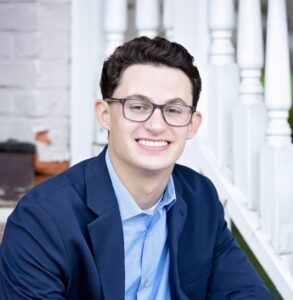
EXTRAORDINARY RESULTS: Recent alum Fletcher Leonard.
Fletcher Leonard ’25E, who recently graduated from Eastman, recalls both the challenge and the reward of that realization. “Because of the nature of their disabilities, it was a challenge to come up with activities that would be beneficial for the whole class,” he says. “But once we did, it was such a fulfilling experience. Seeing the joy on their faces as they heard, touched, and felt the music made a real impact on me.”
Leonard’s involvement extended beyond the classroom. As a member of the Rochester Philharmonic Orchestra Marimba Band, he returned to Mary Cariola to perform for students—an experience that underscored the broader reach. In one particularly memorable moment, shared by music therapist Jennifer Trimble Ford, a student who was prone to seizures when startled, was given the opportunity to explore the instruments up close before the performance began. Leonard introduced the sounds gradually, moving from the softest tones to the loudest, allowing the student to acclimate at her own pace.
The result was extraordinary. For the first time, the student remained for the entire performance—alert, engaged, and, most importantly, safe. “She was smiling, ‘dancing,’ and did not startle once,” Ford shared. “The best part—no seizures!”
Moments like these reveal the depth of what this partnership makes possible. They also reflect the kind of musician Eastman aims to cultivate: one who listens closely, responds thoughtfully, and understands the profound impact of their art. For Leonard, the experience reshaped his perspective on performance itself. “It showed me how music is more than the perfectionist craft that we often make it out to be,” he says. “It’s a way to connect with people on a deeper level.”
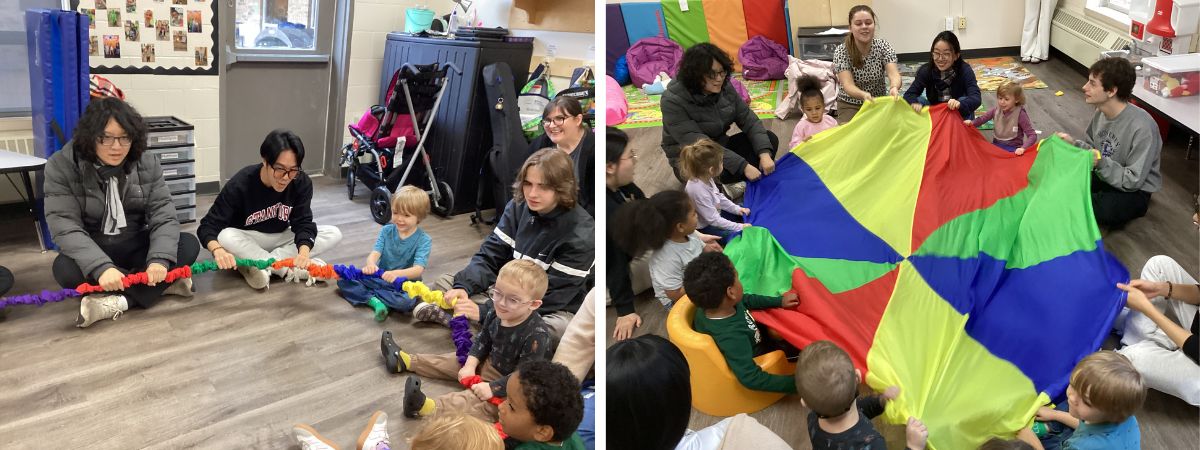
ALL SMILES: Eastman students find fun ways to interact with the children at Mary Cariola. Photos provided by the Mary Cariola Center.
That philosophy resonates throughout the program. Under the guidance of Culp, Ford, and Mounts, Eastman students learn to balance structure with flexibility, preparation with responsiveness. They discover their own teaching voices while developing the skills to support a wide range of learners. “It has been so rewarding to watch the Eastman students connect with children at Mary Cariola,” Culp says. “It has become a highlight of the course, and something I look forward to all year.”
Looking ahead, the partnership continues to grow. Plans include refining core activities that can be developed over successive years and expanding opportunities for reflection during visits. Together, Culp, Ford, and Trimble hope to not only sustain the partnership, but to deepen its impact—for all the students it serves.
At its core, this collaboration reflects a broader vision of what it means to be a musician today. At Eastman, students are not only trained to perform at the highest level, but also to engage meaningfully with new communities, to think creatively in complex environments, and to recognize the broader role of music in people’s lives. In classrooms like those at Mary Cariola, that philosophy comes into focus. Here, music is not measured in precision alone, but in presence. Not in perfection, but in possibility.
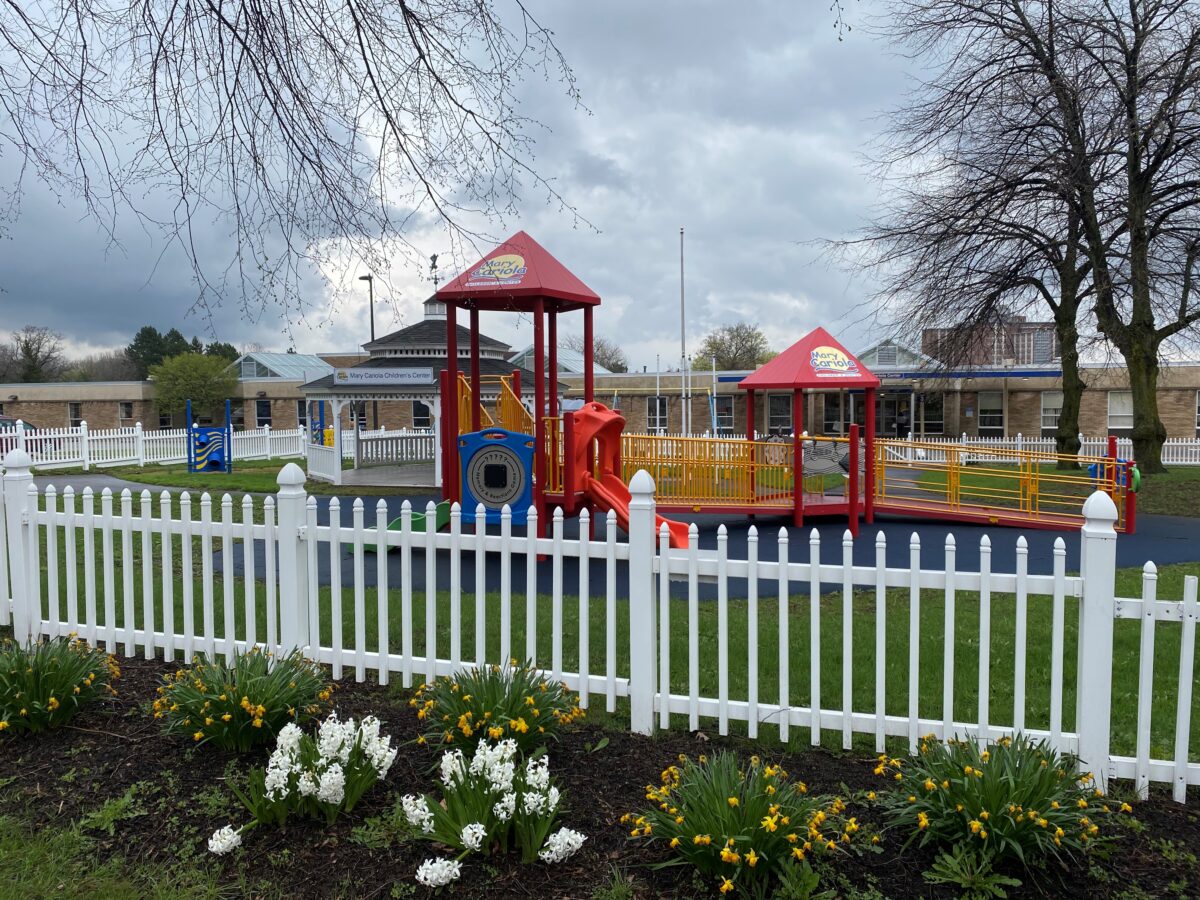
SETTING THE STANDARD: The Mary Cariola Center is a regional leader in personalized, interdisciplinary, evidenced-based education and life skill solutions. Photo provided by the Mary Cariola Center.