
Eastman School of Music to release “IN PLAIN SIGHT: The Black Anthology” on August 21, 2026
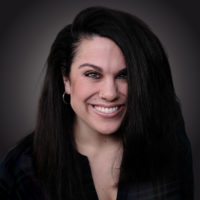

New double album of art songs by Black composers on Lexicon Classics, featuring Joshua Conyers, Nicole Cabell & Kiera Duffy
The University of Rochester’s Eastman School of Music expands its discography with the release of IN PLAIN SIGHT: The Black Anthology on Lexicon Classics. Featuring outstanding young students from all studios of Eastman’s Voice, Opera, and Vocal Coaching department, together with three stars of the school’s distinguished faculty – Grammy nominee Joshua Conyers, BBC Cardiff Singer of the World Nicole Cabell, and Marian Anderson Competition winner Kiera Duffy – the new double album showcases selections from the Anthology of Art Songs by Black American Composers, shining a light on one of the nation’s richest but most overlooked musical traditions. Produced by Conyers and Grammy nominee Jonathan Estabrooks, and engineered for Stereo and ATMOS Audio by Grammy winner and University of Rochester faculty member Stephen Roessner, this landmark recording is scheduled for release on August 21, 2026. Meanwhile, two tracks are already available as advance singles: Cabell’s interpretation of “Love, Let the Wind Cry…How I Adore Thee” by Undine Smith Moore, dubbed the “Dean of Black Women Composers,” and Eastman undergraduate Jordan Oney’s account of “The Negro Speaks of Rivers,” the Langston Hughes setting that helped launch the career of Howard Swanson. To celebrate the recording, Eastman presents Conyers, Cabell, Duffy, and students in live “In Plain Sight” recitals at the school’s Kilbourn Hall (Sep 15) and at Kaufman Music Center’s Merkin Hall in NYC (Oct 16).
Created at the Eastman School of Music and recorded at the University of Rochester’s Hajim School of Engineering and Applied Sciences, IN PLAIN SIGHT reflects the school’s exceptional collaborative spirit. Unusually for a major solo art-song album, the project draws on the talents of more than 40 students and faculty members from Eastman’s Voice, Opera & Vocal Coaching, Percussion, and Strings Departments, who approached the recording not only as performers, but also as stewards of a vital artistic legacy. Representing every stage of study, from first-year undergraduates to doctoral candidates, the 30-plus featured students addressed each song with maturity and conviction, producing performances of phenomenal musical and dramatic power.
Repertoire for the project is drawn from the Anthology of Art Songs by Black American Composers (1977), the seminal collection compiled and curated by the late Willis C. Patterson, a Marian Anderson Award-winning bass-baritone who also served as president of the National Association of Negro Musicians and Associate Dean of the University of Michigan School of Music, Theatre & Dance. Gathering together gems by underrepresented Black composers who worked within the classical vocal tradition, his collection was hailed as a “groundbreaking anthology of Black art songs” by The New York Times. The featured songs are works of extraordinary depth, sophistication, and emotional range that, despite having long been preserved in libraries, anthologies, and archives, are still only rarely studied or programmed in recital. IN PLAIN SIGHT’s title addresses this paradox, while the recording sets out to amplify some of the most important Black American voices and restore their legacy to the broader canon.
In addition to Moore and Swanson, the featured composers range from such illustrious figures as Florence Price, William Grant Still, and George Walker, to a host of less familiar ones. To interpret their songs, the students are joined by faculty members Nicole Cabell, an Eastman alumna blessed with “one of the most beautiful soprano voices of our time” (The Classical Review); soprano Kiera Duffy, known for her “crystalline, multifaceted sound and wonderfully flexible technique” (Observer); and Joshua Conyers, who boasts a “deliciously honeyed baritone that would seduce anyone” (Opera News), and by pianists including Timothy Long, Eastman’s Artistic and Music Director of Opera. Through their collective dedication and artistry, IN PLAIN SIGHT honors Black American composers and helps ensure that their music will continue to be heard, studied, and celebrated. As Conyers explains:
“The project brings together artists across backgrounds to interpret these songs, affirming that this music belongs to the world. It is rooted in Black creative genius and offered as shared cultural inheritance.”
© 21C Media Group, July 2026
CONTACT:
National Media
Glenn Petry | 21C Media Group
gpetry@21cmediagroup.com | 212-625-2038
Rochester / Upstate NY Media
Lauren Sageer | Eastman School of Music
lsageer@esm.rochester.edu | 585-451-8492
“In Plain Sight: The Black Anthology” In Concert
ROCHESTER, NY
Tuesday, September 15, 2026
7:30 p.m. | Kilbourn Hall, Eastman School of Music
Details + Tickets
NEW YORK, NY
Friday, October 16, 2026
7:30 p.m. | Merkin Hall, Kaufman Music Center
Details + Tickets
Artists: Eastman School of Music students & faculty, including Joshua Conyers, Nicole Cabell & Kiera Duffy
Label: Lexicon Classics
Release: August 21, 2026 (Listen)
Formats: 2 CDs, streaming, and digital downloads
Advance single 1: “Love Let the Wind Cry … How I Adore Thee” feat. Nicole Cabell (Listen)
Advance single 2: “The Negro Speaks of Rivers” feat. Jordan Oney (Listen)
Disc 1
1. Undine Smith MOORE (1904–89): “Love Let the Wind Cry … How I Adore Thee”
(Nicole Cabell, soprano; Timothy Long, piano)
2. Leslie ADAMS (1932–2024): “For You There is No Song”
(Nicole Cabell, soprano; Timothy Long, piano)
3. Florence PRICE (1887–1953): “Song to the Dark Virgin”
(Nicole Cabell, soprano; Timothy Long, piano)
4. Margaret BONDS (1913–72): “Three Dream Portraits: Dream Variations”
(Joshua Conyers, baritone; Timothy Long, piano)
5. Margaret BONDS (1913–72): “Three Dream Portraits: Minstrel Man”
(Joshua Conyers, baritone; Timothy Long, piano)
6. Margaret BONDS (1913–72): “Three Dream Portraits: I, Too”
(Joshua Conyers, baritone; Timothy Long, piano)
7. John WORK, Jr. (1871–1925): “Dancing in the Sun”
(Kiera Duffy, soprano; Alison d’Amato, piano)
8. David BAKER (1931–2016): “A Good Assassination Should Be Quiet”
(Kiera Duffy, soprano; Alison d’Amato, piano)
9. Olly WILSON (1937–2018): “Wry Fragments”
(Kiera Duffy, soprano; Alison d’Amato, piano)
10. Dorothy Rudd MOORE (1940–2022): “Weary Blues”
(Elijah Gebers, baritone; Wilson Southerland, piano)
11. Mark FAX (1911–74): “Love”
(Elijah Gebers, baritone; Alison d’Amato, piano)
12. Robert OWENS (1925–2017): “Genius Child”
(Alicia Guan, mezzo-soprano; Wilson Southerland, piano)
13. John WORK, Jr. (1871–1925): “Soliloquy”
(Jillian Hope Griffey, soprano; Brock Tjosvold, piano)
14. William Grant STILL (1895–1978): “Grief”
(Caleb Meyerhoff, tenor; Brock Tjosvold, piano)
15. David BAKER (1931–2016): “Early in the Mornin’”
(Caleb Meyerhoff, tenor; Alison d’Amato, piano)
16. Maurice McCALL (1943–2017): “Chanson Triste”
(Lora Bashmakian, soprano; Wilson Southerland, piano)
17. Howard SWANSON (1907–78): “I Will Lie Down in Autumn”
(Victoria Lang, soprano; Wilson Southerland, piano)
18. Wendell LOGAN (1940–2010): “If There Be Sorrow”
(Finn Bucci, baritone; Chelsea Whitaker, piano)
19. Howard SWANSON (1907–78): “A Death Song”
(Kai Harrington, mezzo-soprano; Wilson Southerland, piano)
20. Noel DA COSTA (1929–2002): “Two Songs for Julie Ju (Part 1)”
(Macy Barry, soprano; Brock Tjosvold, piano)
21. Noel DA COSTA (1929–2002): “Two Songs for Julie Ju (Part 2)”
(Noah Tobias Carver, tenor; Brock Tjosvold, piano)
Disc 2
1. Howard SWANSON (1907–78): “The Negro Speaks of Rivers”
(Jordan Oney, bass-baritone; Brock Tjosvold, piano)
2. Eugene HANCOCK (1929–93): “Absalom”
(Jordan Oney, bass-baritone; Brock Tjosvold, piano)
3. Maurice McCALL (1943–2017): “Sweet Sorrow”
(Nicole Khouzami, soprano; Wilson Southerland, piano)
4. George WALKER (1922–2018): “Lament”
(Haley Boyd, mezzo-soprano; Alison d’Amato, piano)
5. Eugene HANCOCK (1929–93): “Nunc Dimittis”
(Ashton Rapp, baritone; Brock Tjosvold, piano)
6. Mark FAX (1911–74): “Cassandra’s Lullaby”
(Mariana Iguavita, soprano; Timothy Long, piano)
7. Cecil COHEN (1894–1967): “Death of an Old Seaman”
(Darrin Nicholson, baritone; Timothy Long, piano)
8. David BAKER (1931–2016): “Status Symbol”
(Darrin Nicholson, baritone; Timothy Long, piano)
9. George WALKER (1922–2018): “A Red, Red Rose”
(Caitlyn Babcock, mezzo-soprano; Timothy Long, piano)
10. Adolphus C. HAILSTORK (b. 1941): “I Loved You”
(Caitlyn Babcock, mezzo-soprano; Alison d’Amato, piano)
11. Wendell LOGAN (1940–2010): “Marrow of My Bone”
(Emma Wilansky, soprano ; Wilson Southerland, piano)
12. Florence PRICE (1887–1953): “Night”
(Isa Apodaca, soprano; Chelsea Whitaker, piano)
13. Hale SMITH (1925–2009): “Velvet Shoes”
(Sophie Hilger, soprano; Chelsea Whitaker, piano)
14. Charles LLOYD, Jr. (1948–2024): “Compensation”
(Sofia Martinez, mezzo-soprano; Wilson Southerland, piano)
15. Charles BROWN (1922–99): “A Song Without Words”
(Yunxin Dorothy Nie, soprano; Chelsea Whitaker, piano)
16. Thomas KERR, Jr. (1915–88): “Riding to Town”
(Owen Connolly, tenor; Chelsea Whitaker, piano)
17. Coleridge-Taylor PERKINSON (1932–2004): “A Child’s Grace”
(Marissa Emmie Torii Williams, soprano; Wilson Southerland, piano)
18. Charles BROWN (1922–99): “The Barrier”
(Norah Bailey, mezzo-soprano; Chelsea Whitaker, piano)
19. Coleridge-Taylor PERKINSON (1932–2004): “Melancholy”
(Abigail Liebegott, soprano; Wilson Southerland, piano)
20. Robert OWENS (1925–2017): “Faithful One”
(Jack Leslie, baritone; Brock Tjosvold, piano)
21. Adolphus C. HAILSTORK (b. 1941): “A Charm at Parting”
(Sarah Cao, soprano; Wilson Southerland, piano)
###
About Eastman School of Music:
The Eastman School of Music was founded in 1921 by industrialist and philanthropist George Eastman (1854-1932), founder of Eastman Kodak Company. It was the first professional school of the University of Rochester. Mr. Eastman’s dream was that his school would provide a broad education in the liberal arts as well as superb musical training.
More than 900 students are enrolled in the Collegiate Division of the Eastman School of Music—about 500 undergraduates and 400 graduate students. They come from almost every state, and approximately 23 percent are from other countries. They are taught by a faculty comprising more than 170 highly regarded performers, composers, conductors, scholars, and educators. They are Pulitzer Prize winners, Grammy and EMMY Award winners, Guggenheim Fellows, ASCAP Award recipients, published authors, recording artists, and acclaimed musicians who have performed in the world’s greatest concert halls. Each year, Eastman’s students, faculty members, and guest artists present more than 1,000 concerts to the Rochester community and beyond. Additionally, over 1,700 community members, from young children through senior citizens, are enrolled in the Eastman Community Music School.
Hajim School of Engineering & Applied Sciences:
The mission of the Edmund A. Hajim School of Engineering and Applied Sciences is to promote and support the highest quality research that advances solutions to pressing societal problems and to advance education in engineering and applied science through engaging experiences and environments that promote critical thinking, creativity, equity, ethics, and leadership, creating lifelong learners. The Hajim School was founded in 1958, and in 2009, it was renamed after one of its most distinguished alumni, Edmund A. Hajim ’58. Today, the Hajim School encompasses six academic departments and enrolls more than 1,400 undergraduate students and more than 600 graduate students, taught by more than 140 tenure-track, non-tenure-track, instructional, and research faculty. It includes the Institute of Optics—the first optics education program in the nation—as well as departments of biomedical engineering, chemical engineering, computer science, electrical and computer engineering, and mechanical engineering.
About the University of Rochester:
The University of Rochester is one of the nation’s leading private research universities, one of only 62-member institutions in the Association of American Universities. Located in Rochester, N.Y., the University gives undergraduates exceptional opportunities for interdisciplinary study and close collaboration with faculty through its unique cluster-based curriculum. Its College, School of Arts and Sciences, and Hajim School of Engineering and Applied Sciences are complemented by the Eastman School of Music, Simon School of Business, Warner School of Education, Laboratory for Laser Energetics, School of Medicine and Dentistry, School of Nursing, Eastman Institute for Oral Health, and the Memorial Art Gallery.