
The Art of Costuming for Eastman Opera Theatre

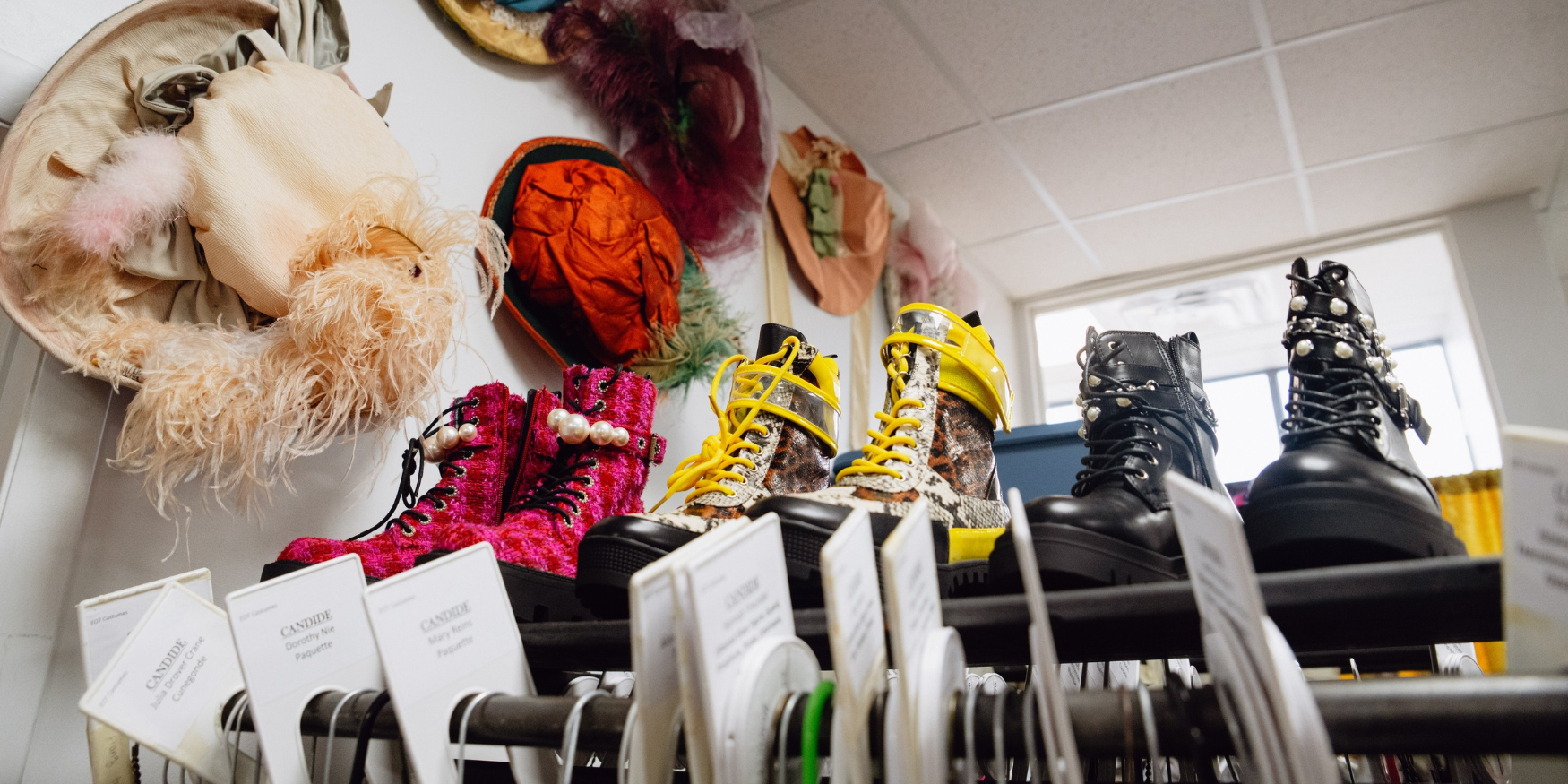
Before an opera reaches the stage, its characters take shape in rehearsals and practice rooms. But a few minutes from Eastman, a small costume shop is also hard at work. Here, an opera’s visual identity emerges as creative hands transform everyday garments into showstopping creations that are anything but ordinary.
Inside Eastman Opera Theatre’s (EOT) costume shop, clothes hang in narrow, color-coded rows, while tubs overflow with buckles, buttons, wigs, trims, and all manner of odds and ends. There is fabric to sort, dye, cut, and reshape; dressing rooms for fittings; a laundry; and a steady stream of costumes making their way toward the stage—and sometimes back again for one more adjustment.
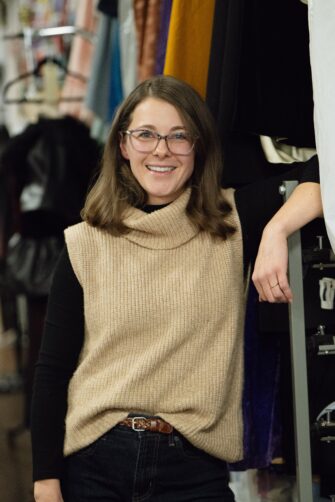
COSTUMES FROM THE GROUND UP: Costume designer Nicole LaClair joined Eastman in 2017. Photo Credit: Lauren Sageer.
For Nicole LaClair, Eastman’s resident costume designer, that process is as much about imagination as it is about sewing. Her path to the costume shop began in fine arts. At SUNY Geneseo, she studied studio art, concentrating on painting, watercolor, and figure drawing, before switching to theatre. She brought that artistic foundation with her to Eastman, joining EOT in 2017 to work in the scene shop, where she painted scenery, built sets, and made props before an opportunity led her into costuming and wardrobe. She now approaches each costume as a kind of sculptural artwork—and each character as a puzzle waiting to be solved. “You’re building these art pieces for the characters,” LaClair says. “You’re starting from the ground up, trying to figure out who these characters are, what they wear, what they do.”
The process begins with words. LaClair reads the opera’s libretto looking for anything that sparks an emotional response or gives her a sense of the world the characters inhabit. “I’m always looking for the little pieces within the text that I can latch onto,” she says, searching for colorful or descriptive language that might suggest a visual direction.
From there, the possibilities can go well beyond simply dressing a character in period clothes. LaClair considers herself an “avant-garde designer” and enjoys pushing traditional ideas about what an opera should look like. “Even if it is a historical piece, or if we’re referencing the period, how can we flip that or do something different?” she asks. “What drew me to operas in general is that they’re a little bit extra.”
That spirit of invention is especially useful when the costume shop’s resources—and budget—are finite. LaClair frequently looks through Eastman’s existing stock or reaches out to other local universities. This philosophy gives the costume shop something of an archaeological quality. Past productions are always present, hanging among the racks like ghosts waiting for the right opportunity to live again. LaClair might recognize a suit used years earlier and imagine it for a completely different role. “It’s exciting to pull from past productions and re-envision an outfit,” she says. “What’s the point of having something sit on a shelf for 10 years?”
LaClair doesn’t do it alone. She works alongside a team whose experience and specialized skills help bring each production to life. Claudette Hercules, Eastman’s head stitcher for more than 25 years, can “turn around a costume in under 15 minutes,” LaClair says. Leah Camilleri handles intricate beading and oversees the shop’s stock, with an encyclopedic knowledge of its contents: she “can tell you where anything is in the storage room and who wore it five years ago.” Megan Lancy takes on specialty fabric dyeing, alterations, large-scale projects (such as a stained-glass textile used in Candide), and, as LaClair puts it, “is the point person in the shop,” aware of every costume, where it is in the process, and what needs to happen next. Together, they make the most of the shop’s resources, finding new possibilities in garments and materials that might otherwise go unused.
TAKE A TOUR: Click the video above for a virtual walk through the costume shop! Video Credit: Jason Milton.
The cover image features EOT’s 2026 costume team, from left to right: Claudette Hercules, Nicole LaClair, students Caitlyn Babcock and Emma Wilansky, and Leah Camilleri.
This collaborative effort is at work in EOT’s fall 2026 production of Candide. The costume team is taking a punk, DIY approach, combining a 1970s-inspired look with elements drawn from the opera’s 18th-century setting. “We keep saying in the shop, ‘make it punk!’” LaClair says. “How can we have more fun with it; how can we push something just a little further.”
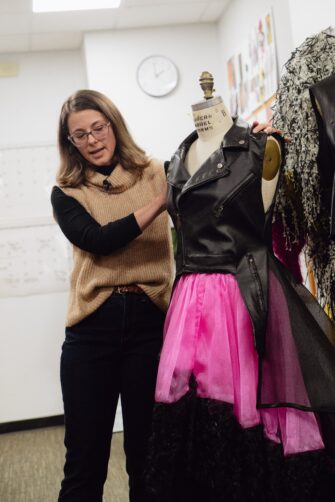
DRAMATIC TRANSFORMATION: LaClair reveals the leather jacket dress that will make it’s debut during the fall production of ‘Candide.’ Photo Credit: Lauren Sageer.
One of the production’s costumes began life in an entirely different opera: a men’s leather jacket from Die Fledermaus. The team transformed it into a fitted jacket dress, removing the sleeves, cutting apart sections, and rearranging the pieces. “You can still tell that it was a leather coat,” LaClair says, “but we’ve changed it so dramatically.”
But designing costumes is only part of the job. Eventually, the clothes must be worn. When the cast arrives for fittings, LaClair and her team need to know more than whether something looks right in the mirror. Can the singer sit comfortably? Dance? Crawl? Jump? Does a sleeve restrict movement? Is there enough room to breathe and perform? “It’s really important to ask the students what fits and what doesn’t,” LaClair says.
The fitting room becomes an extension of the rehearsal room. As students begin moving in their costumes, they start to understand how those clothes can change the way they inhabit their characters. LaClair says they can “start to embody their character right in the fitting room from day one.”
For recent Eastman graduate Emma Wilansky ’26E (MM), that process offered a new way to explore a role. Although she had always enjoyed making her own clothes and jewelry, she hadn’t considered working in a costume shop until she learned about the opportunity for student employment at Eastman.
While performing in In a Grove during her second year, Wilansky reached out to LaClair and got the chance to work on her own costume. “It was a truly immersive experience that let me explore my character in a way that I hadn’t had the opportunity to before,” she says.
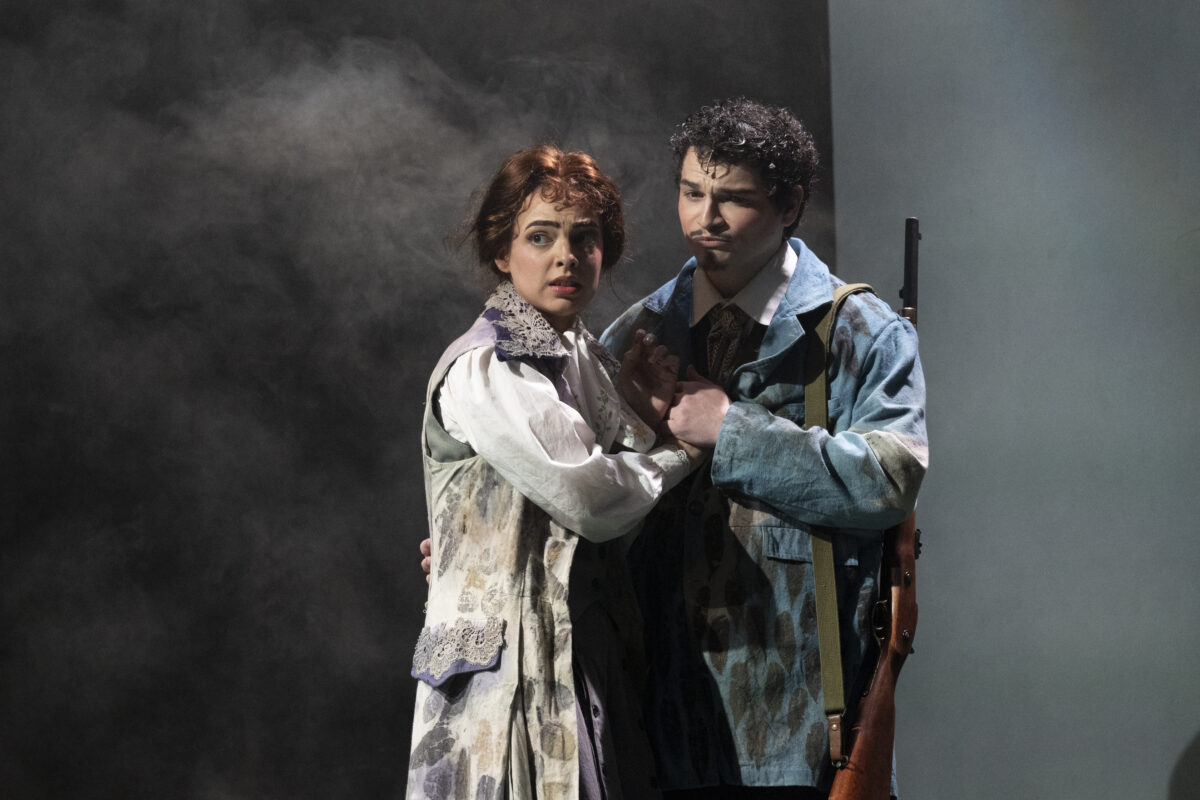
IN A GROVE: Emma Wilansky performed in the 2025 production of ‘In a Grove.’ LaClair hired an eco print artist to work with her team imprinting real leaves and floral patterns onto the costumes to give them a wild, organic appearance. “I was inspired by so much of the floral imagery in the text, and so I wanted to keep that. I wanted to reference how these characters live in the woods, to tell this story,” LaClair says. Photo Credit: Nick Samper.
The experience also gave Wilansky the confidence to experiment beyond the stage. She learned how to make alterations, operate the shop’s sewing machines, and, just as importantly, trust her own instincts. “I’ve had a lot of fun being on the other side of the creative process and found it equally as engaging as being a singer,” says Wilansky, who has since returned to her alma mater to assist with Candide.
As opening night approaches, dress rehearsals are the perfect opportunity to fine tune. LaClair often moves between the seats and backstage, watching how costumes look under stage conditions before returning to the shop to make final adjustments—a trouser leg shortened here, a dress tightened there, accessories finessed.
Current voice student Naomi Chad will also help backstage during Candide, assisting with quick changes and final fixes to hair, makeup, and costumes. “Being able to watch the show come together from multiple angles is such a cool experience,” she says. “I am able to understand and appreciate the work that goes into putting it together from a different perspective.”
Her work in the shop has also provided a practical education in sewing, from hemming to altering clothes—skills she has already begun using at home for herself and her family. “I would love to be able to stay involved in both sides of opera, but even if sewing becomes more of a hobby, it is an incredibly useful one to have,” she says.
For all the work that goes into creating a costume, the ultimate goal is for the audience not to notice the work at all. A successful costume simply becomes part of the character. “Costuming is such an intimate part of the production,” LaClair says. “When you wear something, it becomes a huge part of your identity as a character. It grounds that character and helps the actors portray them fully on stage.”
And when the final curtain falls, costumes return to the rack, but their story is far from over. That is part of the fun of the costume shop: nothing is ever quite finished. For LaClair, that constant reinvention is also part of what she hopes students take away from the experience. “I want to make sure students understand that we’re here to help them look their best and do their best on stage,” she says. “I always encourage students to speak up and be part of the collaborative process.”
After all, long before the lights come up and the orchestra begins, the characters of Eastman Opera Theatre have already been coming to life—one fitting, alteration, button, borrowed garment, and wildly reimagined leather jacket at a time.
Learn about studying voice and opera at Eastman by visiting our website.
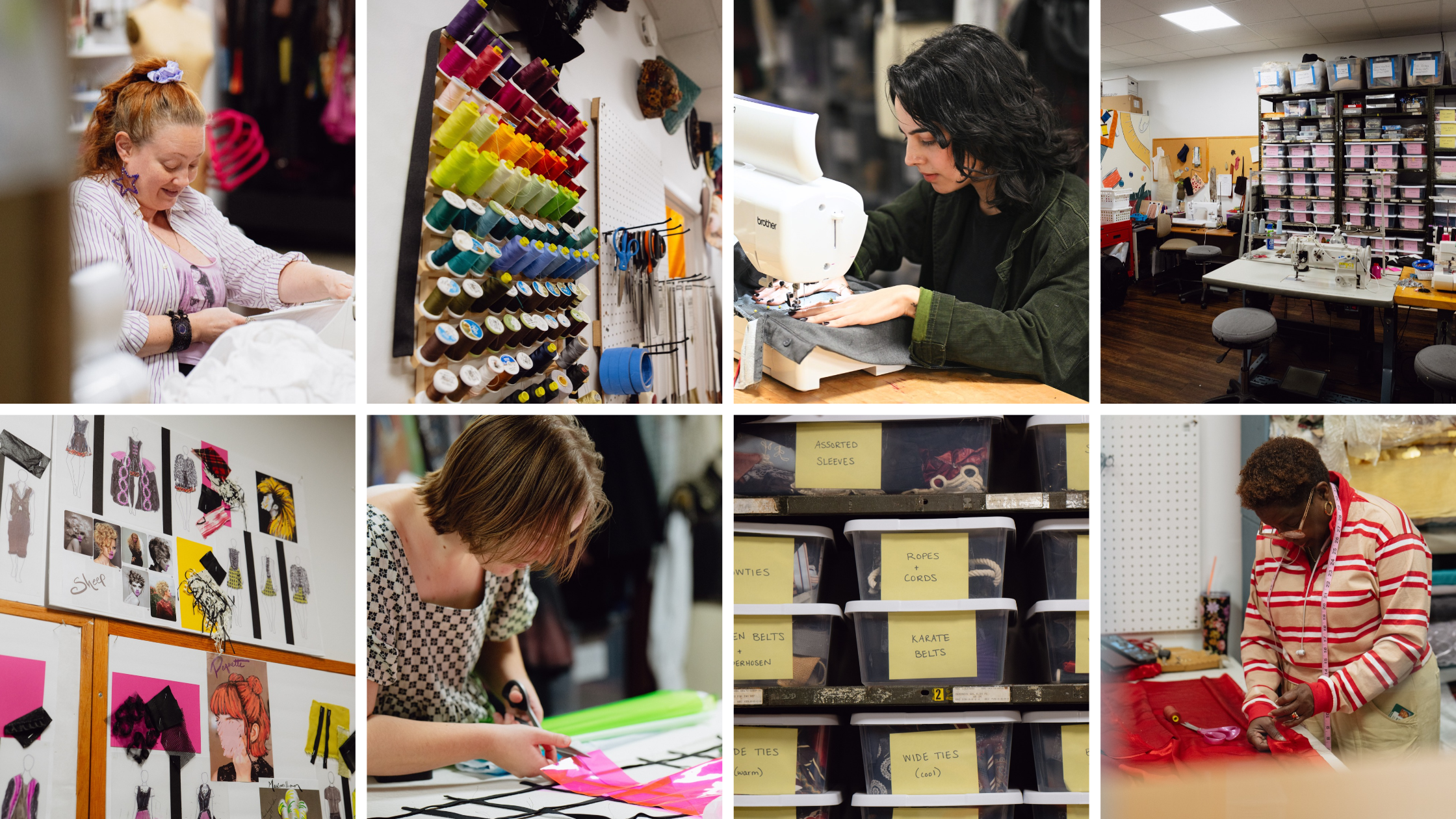
THE CREATIVE PROCESS: The shop overflows with buckles, buttons, wigs, trims, and all manner of odds and ends. Photo credit: Lauren Sageer.