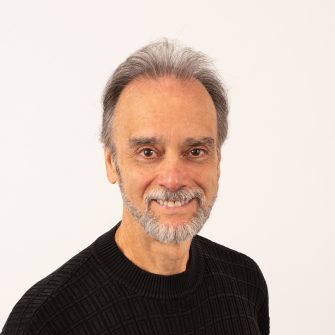
Professor of Piano Tony Caramia: exploring music of 1921
“I just come up with an idea, and see where it takes me,” says Professor of Piano Tony Caramia when asked about his process for creating a recital program. His “let’s see” approach has stood him in good stead over the years; he is well-known for his themed piano recitals, whether they are tributes to individual composers like Harold Arlen or Richard Rodgers, or a program of music with an overarching inspiration such as “summer” — or, to celebrate Eastman’s centennial year, music looking back a century.
Caramia and well-chosen musical friends will unveil From the Dawn of Eastman: Music composed or published in 1921 this Sunday afternoon in Hatch Recital Hall (see performance details below). As usual, he’ll present a remarkably varied potpourri of composers, musical styles, and genres. This approach requires thorough research, but it is a process he thoroughly enjoys.
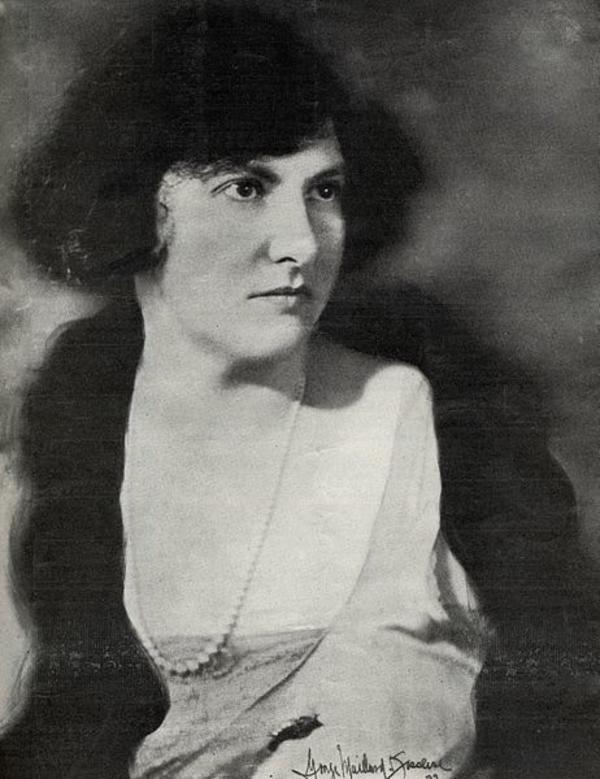
Composer Marion Bauer in 1922
He admits that his research into the music of 1921 resulted in a very mixed bag. For example, while he champions and frequently programs the music of women composers, 1921 did not produce any music that wowed him … with one outstanding exception. Sunday’s program includes four songs by Marion Bauer (1882-1955), an estimable composer in a dissonant, complex “modernist” style; her students included Ruth Crawford Seeger and Milton Babbitt.
Caramia knew nothing of Bauer’s music when he started out; but as he says, “I’m always happy to augment my knowledge,” and became an enthusiastic supporter. “She wrote in several different styles; I could easily do an entire program of Marian Bauer’s music, and she wrote many pieces appropriate to assign to my students.” Caramia will be accompanying soprano Elisa Noyes, whom he describes as “just perfect” in this unusual repertoire.
Vocal responsibilities on the first half of the program are shared by another Eastman professor, tenor Anthony Dean Griffey, who will sing The Land of Lost Content, a series of songs by another favorite of Caramia: the British composer John Ireland (1879-1962).
Another highly regarded “serious” American composer of this era represented on the program is John Alden Carpenter (1876-1951), whose Tango Américaine illustrates the growing influence of popular dance music on classical music, in America and elsewhere. But as Caramia points out, in 1921, American music was still finding an individual voice. For example, such composers as George Gershwin and Aaron Copland (aged 23 and 21 respectively) had written very little that we would consider quintessentially “American.”
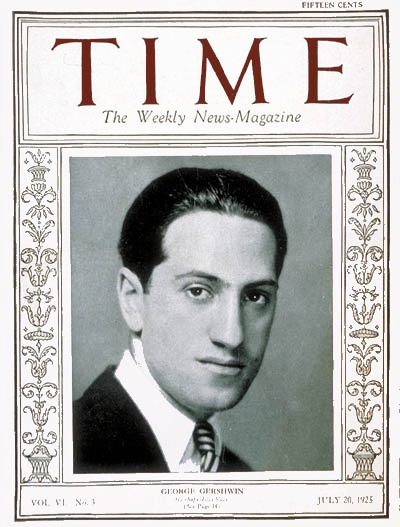
George Gershwin: a celebrity by 1925
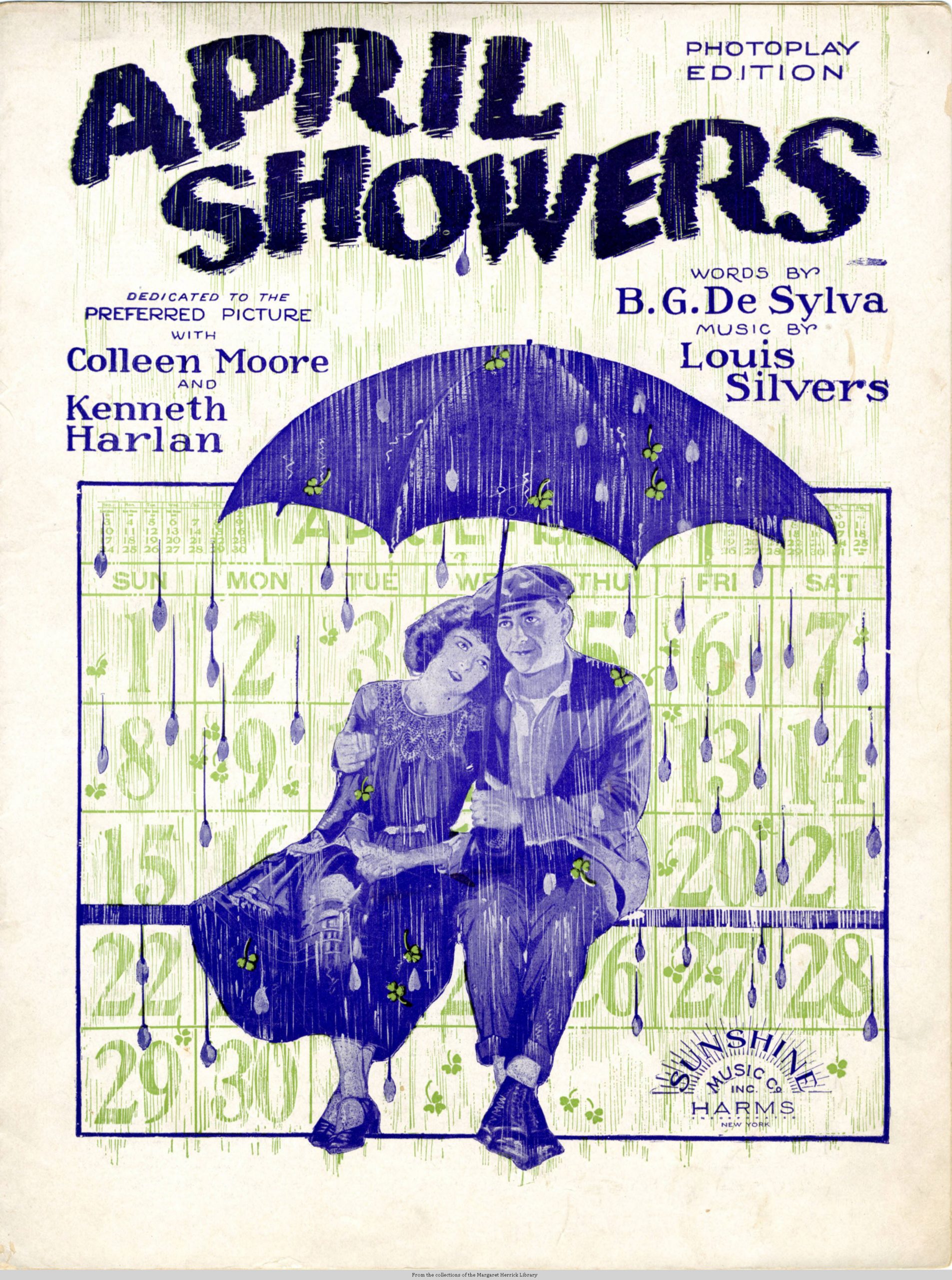
You may associate jazz with the “roaring Twenties,” but the decade was not roaring yet. The two Gershwin songs on the second half of this program – “Drifting Along with the Tide” and “Boy Wanted” – are, Caramia admits, “nice, but not really Gershwin.” More familiar to modern audiences might be Irving Berlin’s “All by Myself,” Eubie Blake’s “I’m Just Wild about Harry,” and the ballad “April Showers” (whose composer, Louis Silvers, won the first Oscar for Best Original Score).
Caramia has chosen some dynamite Rochester pop and jazz musicians to perform these familiar and unfamiliar tunes: vocalist Kristie Barr, bassist Kyle Vock, and trumpeter Mike Kaupa.
Tony Caramia and friends will present From the Dawn of Eastman this Sunday, October 31, at 3 p.m. in Hatch Recital Hall. The concert will also be live streamed; see the Concerts and Events listing for details and also the complete program.