
Hearing What Was Hidden in Plain Sight

This article first appeared in the Fall 2026 issue of NOTES, Eastman’s alumni magazine.
…
At 17, Joshua Conyers didn’t know he was holding the seed of a project that would take decades to realize. A voice student at Virginia’s Governor’s School for the Arts, Conyers was given a song called “Riding to Town” by composer Thomas H. Kerr Jr. He had first heard the song two years earlier, but now he would make it his own. It was a prized assignment from his teacher, reserved for promising young baritones. But what Conyers learned about the song would become vital. “I didn’t realize that Thomas H. Kerr Jr. was a Black composer,” Conyers recalls. “I also didn’t realize that that would be my first art song by a Black composer.”
Conyers learned the song for college auditions and carried it with him into his professional career. Years later, after establishing himself as an internationally recognized opera singer, recording artist, and educator, Conyers rediscovered the song in The Anthology of Art Songs by Black American Composers, a landmark collection first published in the late 1970s. As he turned the pages, he found himself confronting a realization that was both personal and professional. “I hadn’t really delved into African American music as a Black person, so I felt like I was doing a disservice to this music and to these composers who have written and been a part of the American canon for a very, very long time,” he says.
The discovery lingered, yet many of the songs in the anthology were rarely programmed, and some had never been commercially recorded. As assistant professor of voice at Eastman, Conyers wanted to introduce the work to students but often couldn’t find performances online. “We live in this digital age where anyone can go to YouTube hoping to find these songs and listen to them,” he says. “But there just aren’t that many.” Conyers hoped to rectify that.
What began as an idea for a personal project quickly grew into something much larger. Conyers initially imagined recording a selection of songs himself. But as he considered the breadth of the anthology, the range of voices required, and the educational opportunity it represented, his ambitions expanded. “It’s a crazy idea, I know,” he recalls. “But I thought it would be great if the whole school did this.” So, he brought the idea to Dean Kate Sheeran, who immediately saw its potential.
“Within my first few months as dean, Professor Conyers came to me with this idea. I was thrilled by both the album concept and his collaborative approach,” Sheeran says. “He presented a way to showcase the work of students and faculty in one project, and I knew we had to find a way to bring his vision to life. It’s especially meaningful that it became a truly university-wide effort.”
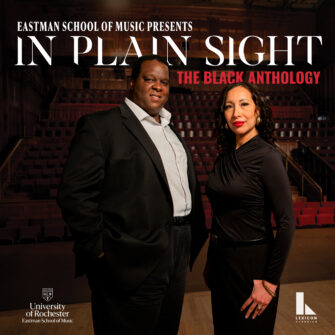
That vision ultimately evolved into In Sight: The Black Anthology, a sweeping Eastman initiative that brings together faculty and students, singers and instrumentalists, performers and producers in a concert and recording project devoted to works from the anthology. The project culminated with an album released August 21, 2026, on Lexicon Classics, and a performance in Kilbourn Hall on September 15, 2026, as part of the Eastman Presents concert series. The performers then take to the road for a concert at the Kaufman Music Center in New York City on October 16.
The title, In Plain Sight, reflects the project’s central premise. This “is not about recovering something forgotten. It is about shifting our attention,” Conyers says. “These songs have always been here, waiting not to be found, but to be fully heard. I want to celebrate that. I want to show people that this music is accessible. This music is a part of our canon. It is Black music. It is American music.”
As the project grew, Conyers became increasingly convinced that it could not belong to a single performer and invited many of his colleagues to participate. For Associate Professor of Voice Nicole Cabell ’01E, the anthology has occupied a similarly important place in her life since she first encountered the collection as a teenager. “The repertoire from this anthology has been a part of my life for close to 30 years at this point,” the soprano says. “It’s sort of the holy grail for me.”
As a student and young artist, Cabell was drawn to the repertoire not simply because of the composers’ backgrounds, but because of the music itself. “It is simply beautiful and incredibly rich, detailed, and intelligent music,” she says. That sense of artistic value lies at the heart of In Plain Sight.
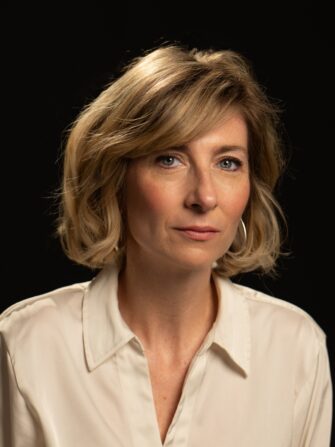
A BROADER SHIFT: Kiera Duffy enjoyed the opportunity to explore repertoire she had barely touched. Photo Credit: Lauren Sageer.
For Associate Professor of Voice Kiera Duffy, the project opened the door to a body of work she had encountered but never engaged with in a sustained way. “I knew about the anthology,” Duffy says. “But I was not deeply familiar with a lot of the songs in it. When Joshua asked me to be a part of this, it was an opportunity to explore repertoire that I had always intended to.”
Duffy sees the project as part of a broader shift within classical music, one that challenges long-held assumptions about whose stories belong on concert stages. “This project really moves the needle significantly forward,” she says. “To be a part of something that’s doing that was really important to me.”
One of the works Duffy recorded, “A Good Assassination Should Be Quiet” by David Baker, confronts the history of racial violence in America. Earlier in her career, she might have questioned whether she was the right person to perform such a piece, but that view has changed. “It was really an important experience for me to confront this story head on,” she recalls. “I felt a great sense of responsibility to the storytelling, a great humility in making sure that I tell the story authentically.”
At the same time, Duffy hopes the work sends a message to performers of every background. “One of the things that I hope this album will do, is that by showing people of diverse racial and ethnic backgrounds singing this repertoire, it will give implicit permission to performers—young and old, White, Black, Brown—to perform this repertoire.”
The project’s collaborative spirit extended beyond the singers. Associate Professor of Opera and Artistic Director of Eastman Opera Theatre Timothy Long ’92E (MM) joined as one of five faculty pianists, bringing both his expertise as a performer and his longstanding commitment to elevating underrepresented voices in classical music. Long immediately recognized parallels between In Plain Sight and his own work creating The North American Indigenous Songbook (also an Eastman Presents concert this season, taking to the Kilbourn Hall stage on January 31, 2027). “A lot of these people did not get their fair shake in their time,” he says. “When you come across music like this, you discover pieces that you never knew existed, and you ask yourself ‘why.’”
As he worked through the anthology, Long found himself repeatedly encountering music that felt both revelatory and frustratingly overlooked. “There were a couple of pieces that I was playing, and I just thought they were the most gorgeous pieces I’d ever played,” he says. “It’s such a shame that people have not had the opportunity to experience these.”
The experience also introduced him to composers whose work he plans to continue performing. The project’s significance extends beyond the recording itself—it lies in the possibility that students, teachers, and performers will encounter this music not as an exception, but as an expected part of the repertoire. That educational mission is central to Conyers’s vision.
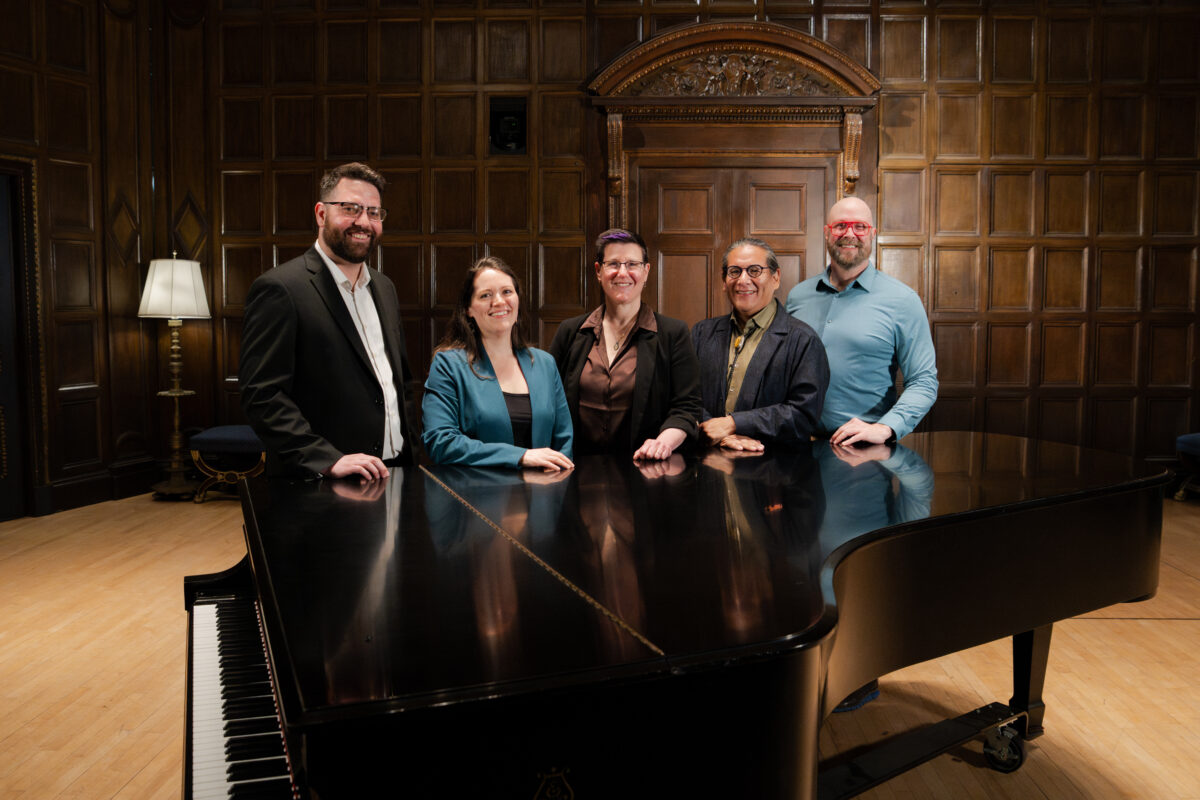
ACCOMPANYING: From left to right: pianists Brock Tjosvold, Chelsea Whitaker, Alison d’Amato, Timothy Long, and Wilson Southerland joined the project. Photo Credit: Lauren Sageer.
For the more than 30 student singers and percussionists who participated, this project offered a unique opportunity to contribute to a professional recording, and most importantly, to the first comprehensive recording of a critical body of American art song. This music deserves to be sung by students,” Conyers affirms. “And it deserves to be part of their training.”
Soprano Isa Apodaca recorded Florence Price’s “Night,” a work she had never encountered before. As she explored the poem’s depiction of night as a maternal, comforting presence, she found herself drawn deeply into the text. “It was really easy for me to connect with the piece,” she says. “Florence Price took this poem and shot it out of the water. It was an incredible setting.”
Apodaca, who studies with Conyers, says the experience reinforced a lesson he has emphasized throughout her time at Eastman. “He’s assigned me spirituals and songs from the anthology for years,” she says. “Singing songs by underrepresented composers has become a new passion of mine.”
For recently graduated soprano Nicole Khouzami ’26E (MM), the project highlighted both the challenges and freedoms that come with performing music that has rarely been recorded. “The most challenging aspect of learning the songs was not having anything to reference,” she says. “These songs have not been recorded, which is one of the great reasons why we’re doing this.”
Yet the absence of recordings also created unusual artistic freedom. “Because I had no reference, I could bring in my own ideas and not feel like I had to conform to anybody else’s interpretation,” Khouzami adds.
That spirit of discovery extended to faculty and students alike, as both were often encountering works for the first time, building interpretations together through discussion, coaching, and rehearsal. Khouzami recalls working closely with collaborative pianist Wilson Southerland, assistant professor of opera, as they sought to bring their own perspectives to the music. “We both brought our own life experience to the text,” she says, “and thought about how we could bring that into the music.”
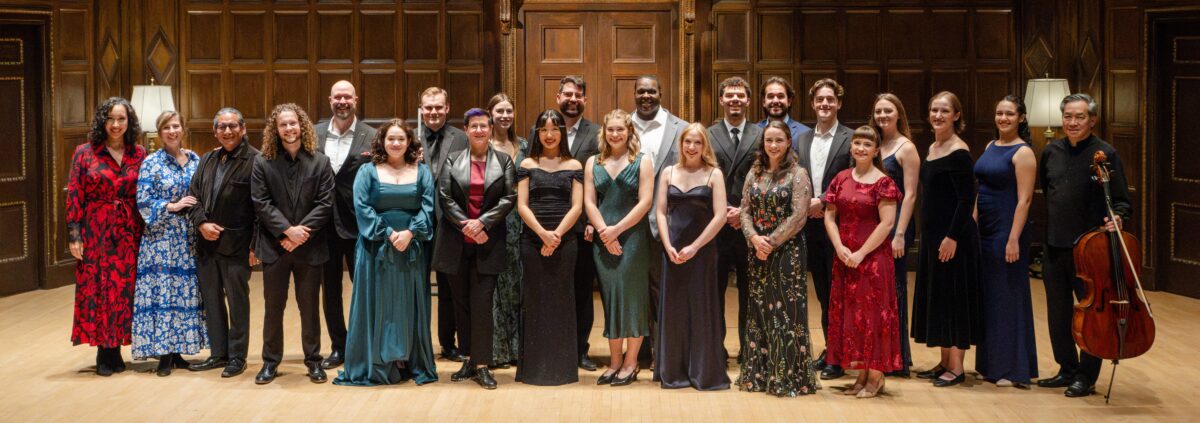
OPENING NIGHT: The faculty and students of ‘In Plain Sight’ premiered works from the album in Kilbourn Hall. Photo Credit: Lauren Sageer.
For undergraduate baritone Noah Carver, the project offered a chance to explore a deeply personal text centered on a parent’s love for a child. As he worked through “Two Songs for Julie Ju” by Noel Da Costa, he found connections to his own hopes for the future. “One of my greatest ambitions, one of the things that I want to do in life, is to be a father,” Carver says. “I see myself bouncing my little one when I sing those lines.”
“I feel very privileged and honored as an undergrad to be asked by Professor Conyers to be part of this,” Carver continues. “The best that I can do is to bring forth my interpretation of the piece, make intentional artistic choices, and channel the poetry and music into an expressive performance.”
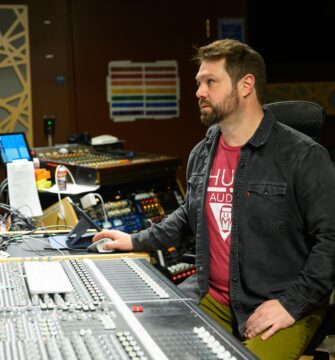
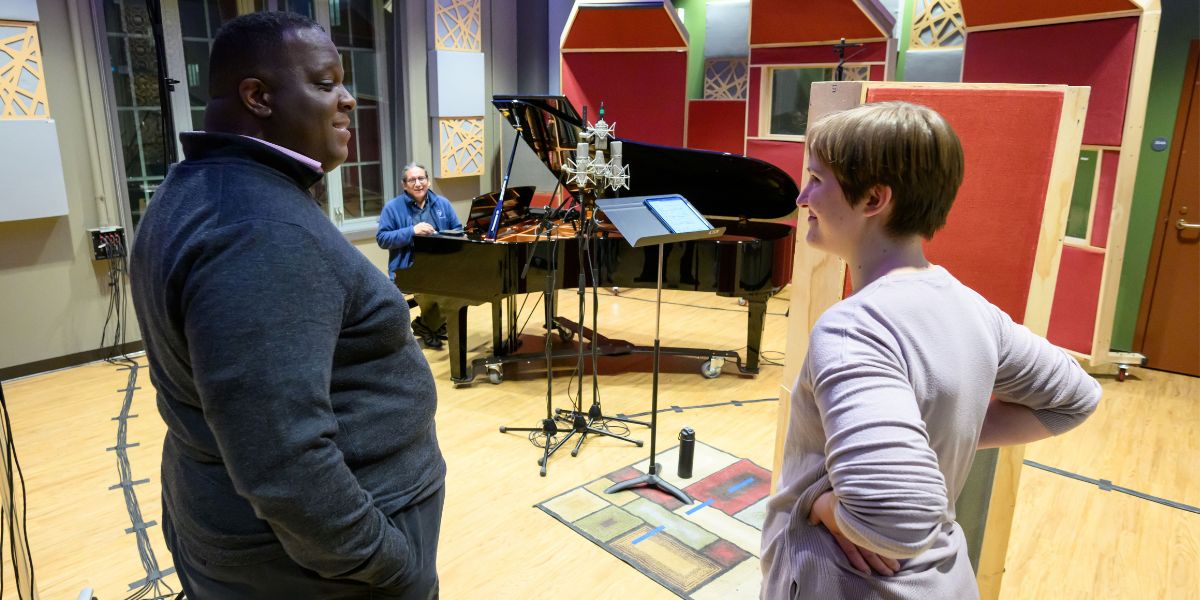
IN THE STUDIO: ‘In Plain Sight’ was co-produced by Stephen Roessner at the University of Rochester’s Gavett Audio Studio. Photo Credit: J. Adam Fenster.
The recording sessions represented an interdisciplinary educational experience. With the help of the University of Rochester’s Assistant Professor of Electrical and Computer Engineering Stephen Roessner ’14 (MS), ’23 (PhD), the anthology was recorded and produced over just nine days at Gavett Audio Studio, part of the Hajim School of Engineering and Applied Sciences on the University’s River Campus. For some students, it was their first time in a professional studio environment, requiring them to adapt to microphones, headphones, and the permanence of recorded sound. “It was very intimidating,” Apodaca admits. “I walked into a little room and was not expecting all of the microphones and wires and cords.”
The experience quickly became transformative, however. “I learned that my voice could adapt to different spaces,” she says. “I don’t have to try that hard. I can trust my technique and my body more.”
For Khouzami, the experience underscored the broader importance of the project itself. “We don’t spend a lot of time learning about Black composers,” she says. “I think it’s really important that we’re recording these works and getting them to live in a space that’s not just in a performance room.”
Taken together, those experiences reflect what Conyers hoped the project could achieve. While In Plain Sight seeks to expand access to an important body of repertoire, it also serves as a training ground for the next generation of performers—artists who will carry these songs into classrooms and concert halls long after the project concludes.
On stage this fall, the songs collected in the anthology will find their fullest expression yet. What began with a single conversation ultimately became an interdisciplinary collaboration that drew on the full breadth of the University of Rochester’s artistic community. This album and its premiere performances will serve as both a celebration of the music and a testament to what can happen when an entire institution comes together in service of a shared vision.
The Musicians of ‘In Plain Sight: The Black Anthology’
SINGERS
Isa Apodaca
Caitlyn Babcock
Norah Bailey
Macy Barry
Lora Bashmakian ’26E (MM)
Haley Boyd
Finn Bucci ’24E, ’26E (MM)
Nicole Cabell ’01E
Sarah Cao
Noah Tobias Carver
Owen Connolly ’26E (MM)
Joshua Conyers
Kiera Duffy
Elijah Gebers
Jillian Hope Griffey ’26E (MM)
Alicia Guan ’25E (MM)
Kai Harrington
Sophie Hilger
Mariana Iguavita ’26E (MM)
Nicole Khouzami ’26E (MM)
Victoria Lang
Jack Leslie
Abigail Liebegott ’26E
Sofia Martinez
Caleb Meyerhoff ’26E
Darrin Nicholson
Yunxin Dorothy Nie
Jordan Oney
Ashton Rapp ’26E
Emma Wilansky ’26E (MM)
Marissa Emmie Torii Williams
INSTRUMENTALISTS
PIANO
Alison d’Amato
Timothy Long ’92E (MM)
Wilson Southerland
Brock Tjosvold ’22E (DMA)
Chelsea Whitaker
PERCUSSION
Aidan Chase
Jin Dai
Anais Griffith-Oh
Myah Tokajer
Hudson Toler
CELLO
David Ying ’92E (DMA)
* Faculty members in bold.