
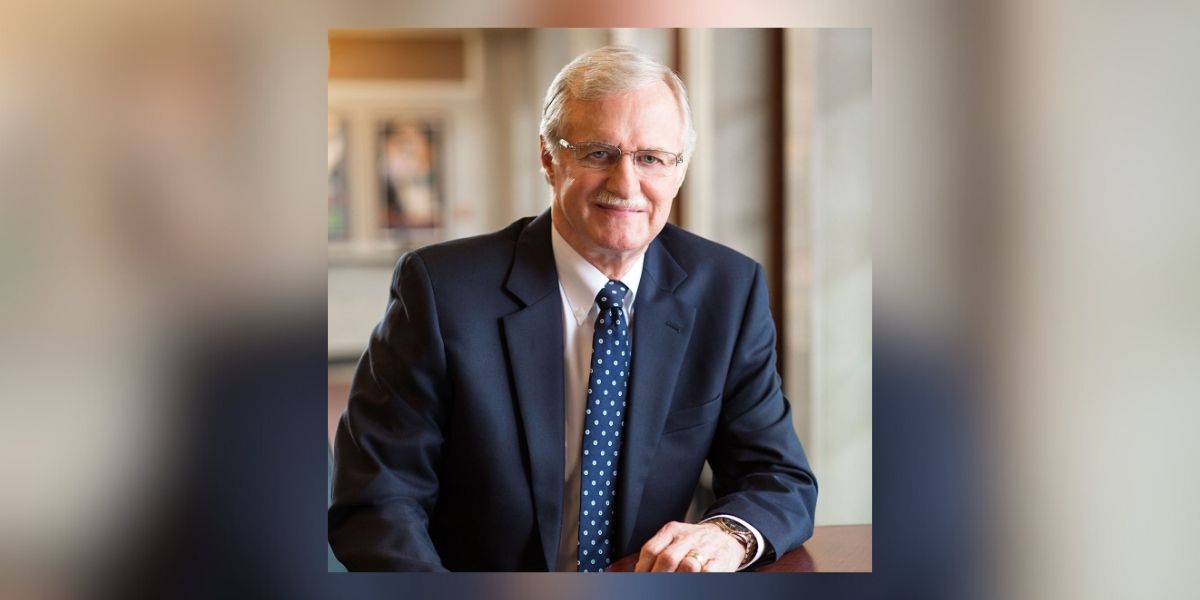
By Chenxin Han, MA student in Music Education
The Grunow Colloquium at the Eastman School of Music was established to bring leading thinkers and practitioners into conversation with students and faculty. In this interview with graduate student Chenxin Han, Professor Emeritus Dr. Richard F. Grunow reflects on the origins of the colloquium, its philosophical priorities, and his hopes for its future.
***
Origins of the Grunow Colloquium
The story of the Grunow Colloquium is closely connected to Dr. Grunow’s relationship with musicologist Glenn Watkins ’53E (PhD). The two met while Grunow was pursuing doctoral studies at the University of Michigan, and they developed a close professional and personal relationship. Watkins had maintained long-standing ties to Eastman and helped shape the idea for what became the Watkins Lecture Series—an annual event bringing exceptional figures in music and related humanistic disciplines to the school. The Grunow Colloquium, founded in 2016, shares a philosophy similar to the Watkins Lecture Series, functioning as a cross-disciplinary program that gathers distinguished educators, scholars, and performers for presentations and performances.
Grunow explains that the term “colloquium” was chosen intentionally. “While a lecture typically involves a guest presenting to an audience, a colloquium emphasizes dialogue and interaction,” he says. In the case of the Grunow Colloquium, invited guests do more than speak—they also work directly with students through workshops, rehearsals, or collaborative sessions.
At the time the colloquium was envisioned, one concern shaping its creation was the relative isolation of music education within what is a conservatory environment for many. Grunow believed that conversations about music teaching and learning should engage the broader Eastman community rather than remain confined to one department. The Department of Music Teaching and Learning (MTL) at Eastman emphasizes pedagogy informed by research and a belief that music should remain accessible throughout one’s lifetime. For Grunow, the colloquium offered an opportunity to highlight these priorities while inviting participation from across the school. The broader aim of the colloquium was to create a space where students and faculty from many disciplines (composition, humanities, musicology, music education, and performance) could engage with questions about how music is learned and taught. “Eastman is more than a conservatory,” he says. “It’s a multifaceted school of music with diverse academic and artistic perspectives.”
When asked what it means to have a colloquium established in his honor, Grunow responds with humility. “It is a genuine honor and a form of lasting contribution to the institution,” he says. More importantly, he sees it as representing an ongoing commitment to learning, emphasizing that meaningful teaching requires continual curiosity and growth.
Philosophical Priorities
At its core, the Grunow Colloquium is designed to foster interconnectedness within the Eastman community. Grunow believes that students should graduate “not only with specialized expertise but also with a broad and integrated understanding of music and education.” The colloquium reflects this philosophy by inviting speakers who engage multiple areas of musical practice and scholarship.
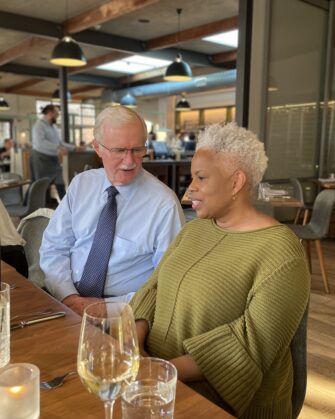
COLLABORATIVE SPIRIT: Dr. Grunow with jazz violinist Regina Carter during her visit to the 2023 Grunow Colloquium.
One of the goals of the series is to challenge traditional assumptions about music education. Guests are chosen not only for their expertise but also for their ability to inspire new ways of thinking about music-making and learning. For example, jazz violinist Regina Carter was invited in 2023. In addition to her artistry as a performer and improviser, Grunow notes that Carter’s “generosity and collaborative spirit” make her an especially meaningful role model for students.
The selection of speakers typically involves consultation between the MTL department chair and the school’s administration, with an emphasis on active engagement: making music together, exploring teaching strategies, and discussing how students learn. The colloquium also promotes conversations about diversity and multicultural perspectives in music education, exposing students to new musical traditions and professional pathways.
Grunow recalls that one guest in 2019, Eastman alumnus Charles Daellenbach ’66E, ’68E (MA), ’71E (PhD), a founding member of Canadian Brass and a graduate of the MTL department, offered insights that challenged narrow conceptions of music education careers. For Grunow, music education should provide a broad education that prepares students for many possible roles in the musical world.
Silkroad Ensemble
The upcoming collaboration with the Silkroad Ensemble reflects the colloquium’s emphasis on intercultural dialogue and collaborative learning. Founded by cellist Yo-Yo Ma, Silkroad has built an international reputation for bringing together musicians from diverse traditions to explore new artistic possibilities. For Grunow, the collaboration is especially meaningful because it allows students to interact directly with musicians who embody these values through shared musical experiences and creative exchange.
The following night, the Silkroad Ensemble, now under the leadership of two-time GRAMMY Award-winning singer and multi-instrumentalist Rhiannon Giddens, will perform their concert Sanctuary – The Power and Resonance of Ritual in Kodak Hall at Eastman Theatre.
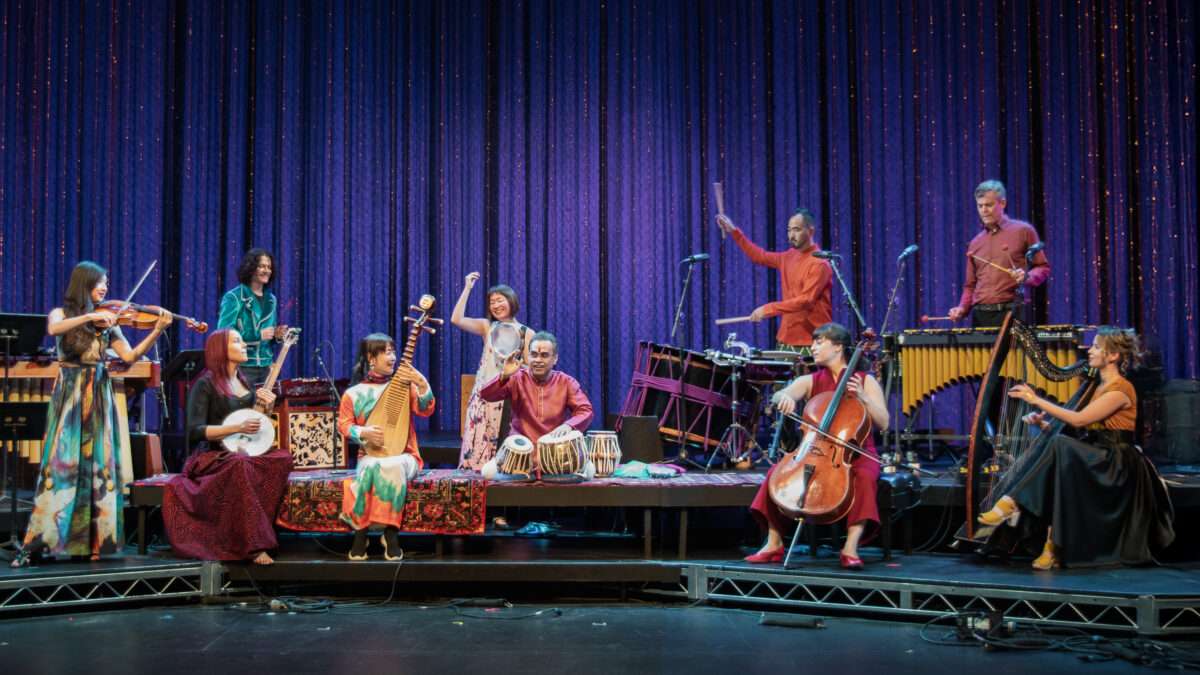
SILKROAD ENSEMBLE: Conceived almost 30 years ago, Silkroad is a touring ensemble comprised of world-class musicians from all over the globe.
Looking Forward
Grunow hopes the colloquium will continue evolving as a space for meaningful dialogue within the Eastman community, despite the challenge of attracting large audiences in a school where students and faculty often have demanding schedules.
For current music education students, Grunow offers practical advice: develop strong musicianship by listening widely, expanding your repertoire, and discovering areas of personal interest. “Every educator benefits from finding a niche,” he says, reflecting on his own focus on pedagogical approaches for beginning instrumental students.
Equally important is self-awareness. Students should recognize their strengths and areas for growth while learning from peers with different abilities and perspectives. Grunow also emphasizes the importance of singing, movement, and audiation. “Rather than merely imitating sounds, students must develop the ability to hear and understand music internally,” he says.
Ultimately, Grunow believes that effective music teaching must respond to the musical, cultural, and educational environments in which it occurs. The Grunow Colloquium, in his view, “represents an ongoing effort to explore those contexts and to encourage lifelong learning within the entire musical community.”
Grunow Colloquium
Featuring members of the Silkroad Ensemble
Wednesday, March 25, 2026
5:30 p.m. | Hatch Recital Hall
(Priority seating given to students)
Eastman Presents: Silkroad Ensemble with Rhiannon Giddens
Thursday, March 26, 2026
7:30 p.m. | Kodak Hall at Eastman Theatre