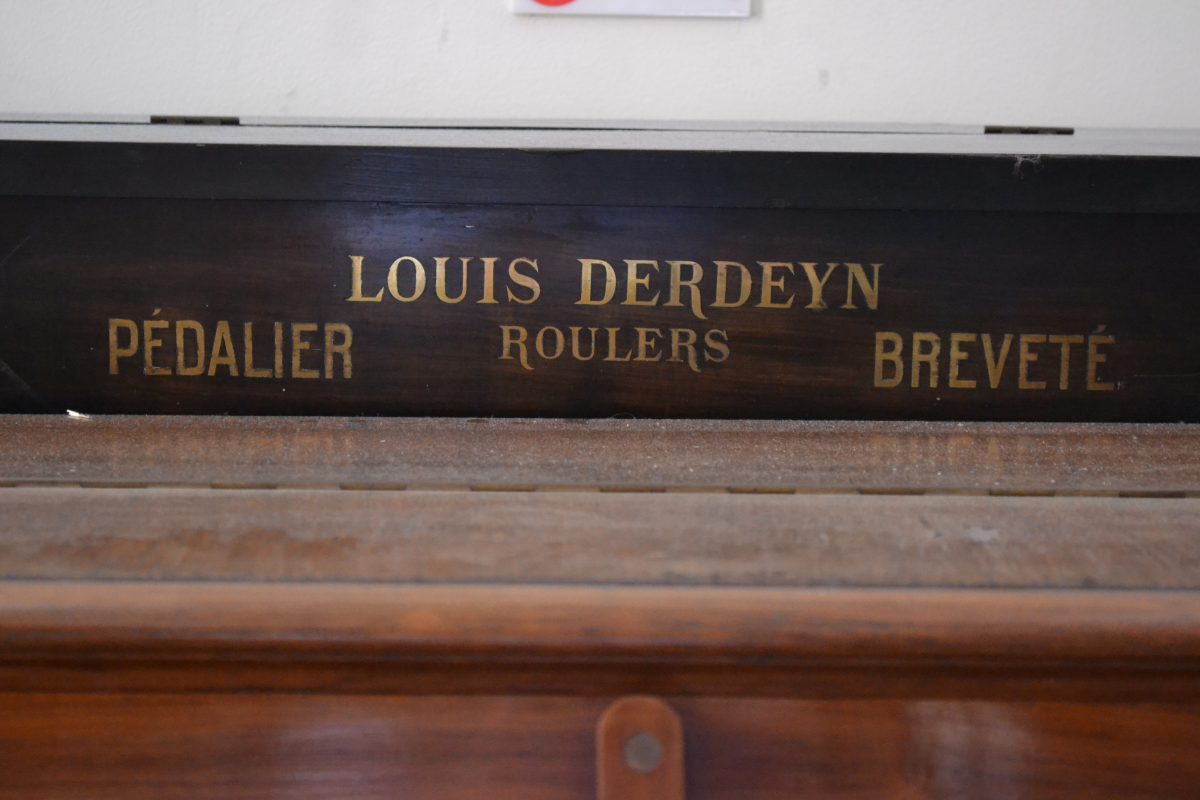
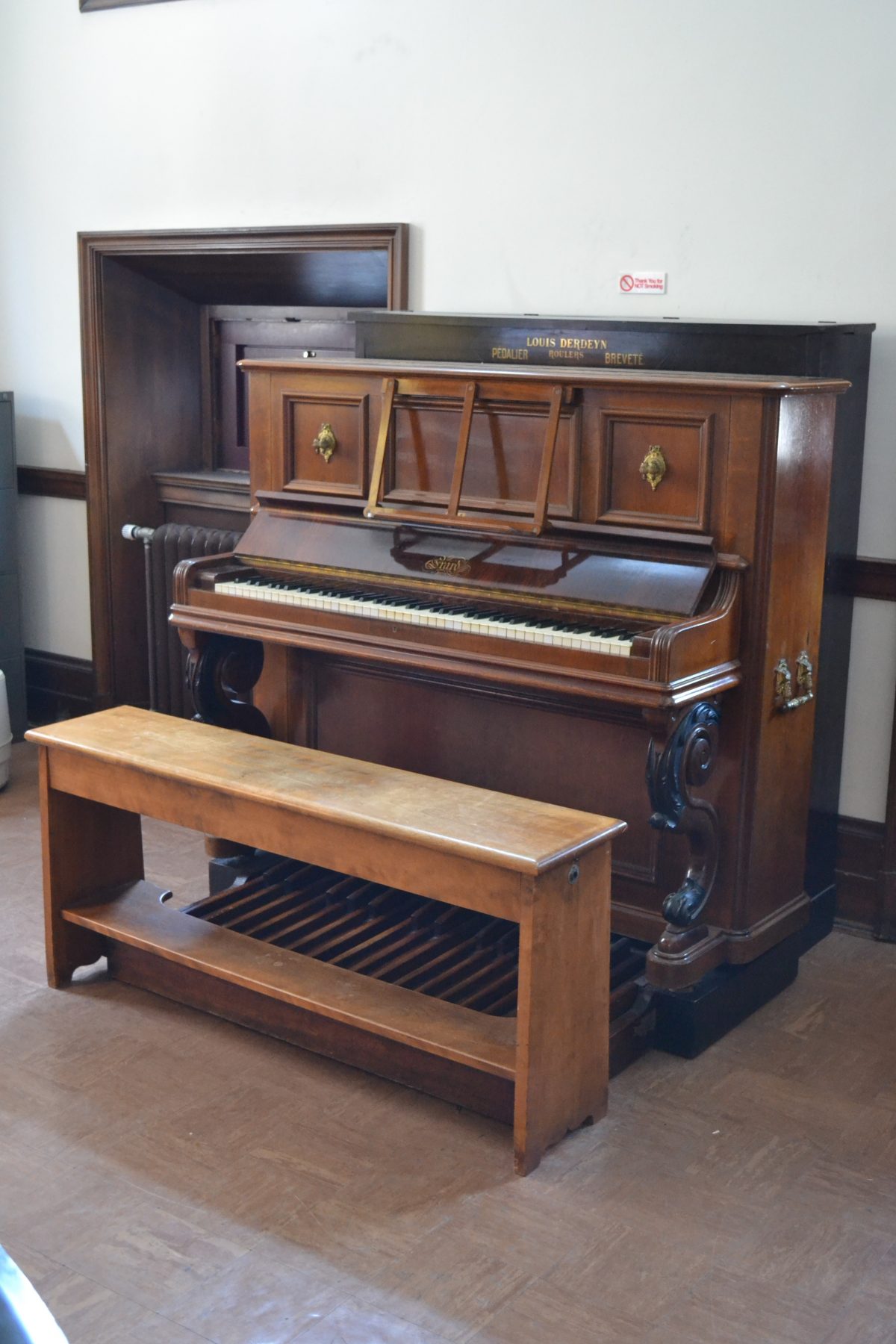
The most recent addition to Eastman’s collection of keyboard instruments is a 19th-century pédalier by the Belgian firm Derdeyn. While having some original repertoire (for example, pieces by Robert Schumann and Eugene Gigout), the pedal piano was an important practice instrument in the 19th century. While the Cavaillé-Coll organ at Ste-Clotilde, Paris, was being constructed and services were accompanied on the harmonium, Franck bought a pédalier to teach himself pedal playing in readiness for the completion of the grand orgue. Indeed, Tournemire also related the experience of working through his master’s Trois Chorals on the pedal piano; and the celebrated American pedagogue Arthur Poister, studying with Marcel Dupré in Paris, recalled the daily grind of eight hours at the pedal piano practicing Bach.
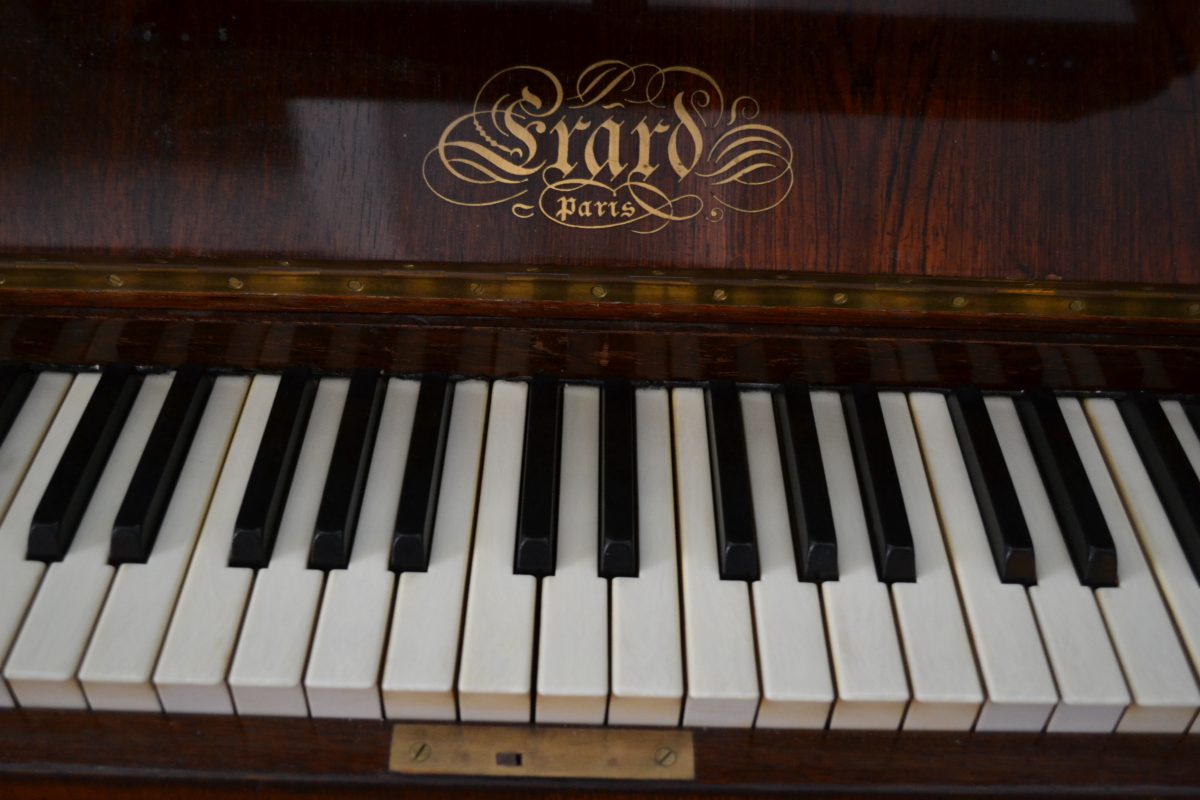
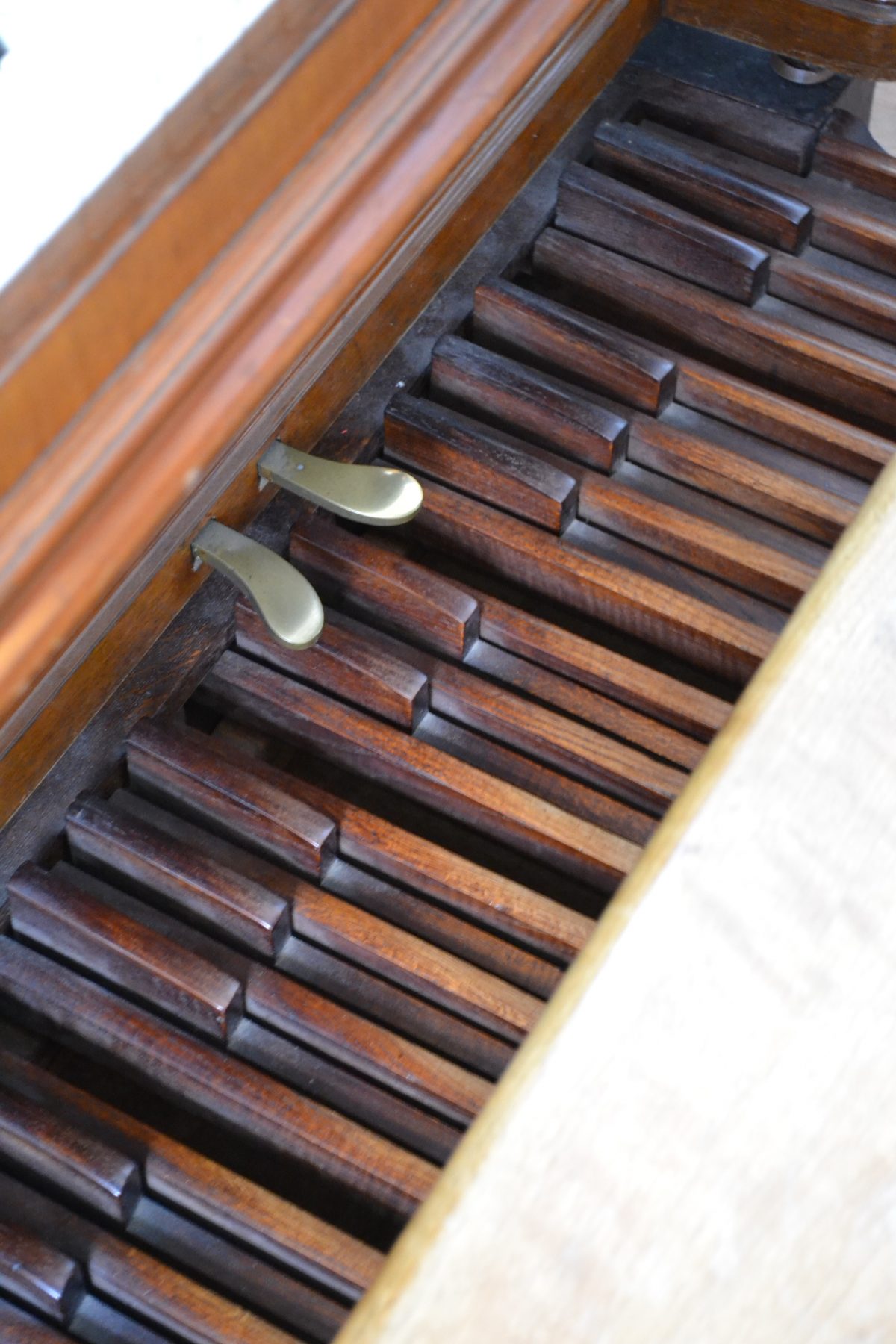
The pedal board itself (of the same dimensions as a 19th-century French organ) operates an independent set of hammers with their own strings and soundboard. The “manual” is an upright piano by Erard (Franz Liszt’s favorite manufacturer), which sits on top of the pédalier itself.