
Golden Jubilee: Mikhail Kopelman and Students Bring the Soul of Russian String Quartet to Eastman
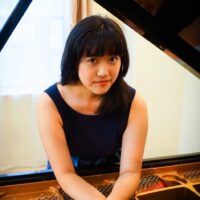
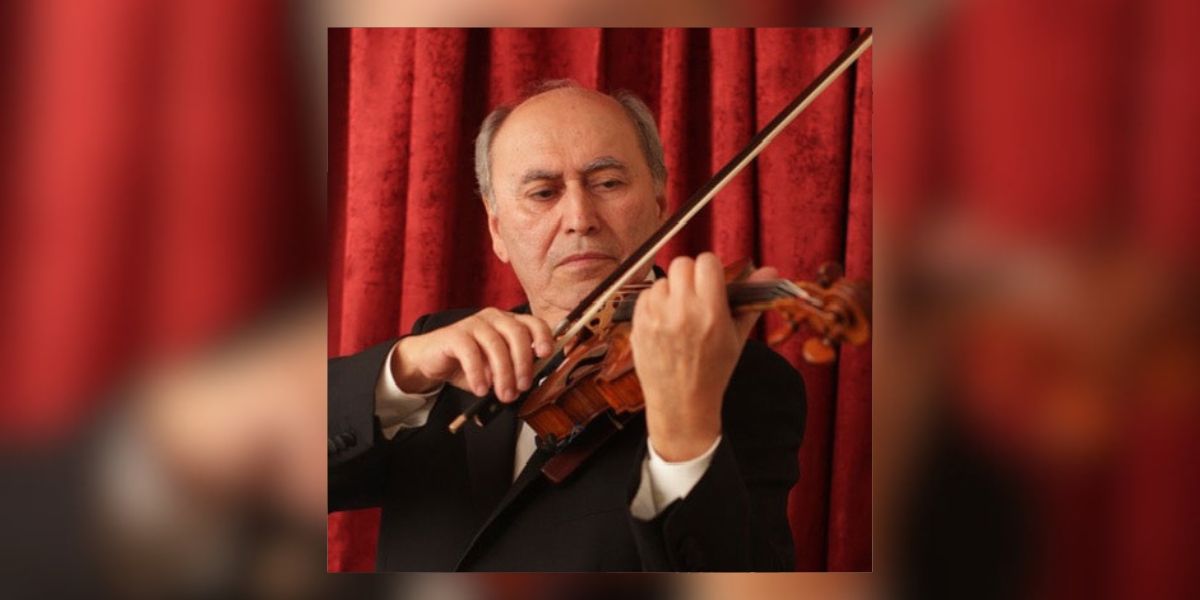
On Sunday, November 15, esteemed soloist, chamber musician, and Eastman Professor of Violin Mikhail Kopelman takes the afternoon stage of Hatch Recital Hall, alongside six of his chamber students, to celebrate 50 years of professional string quartet playing and over five decades of teaching, with a creative and personally reflective program of old-time Russian string quartets.
Born in the former USSR and trained at the Moscow Conservatory, Kopelman began his quartet career as the first violinist of the famed Borodin Quartet in 1976 at just 29 years old. He expresses how his two decades with the longstanding ensemble, formed three years before his own birth, represented his formative youth in all its angst and audacity. “To be a first violinist, you have to lead,” he says, as he reminisces on taking on the daunting cycle of the fifteen Shostakovich quartets. “It’s just written this way. If you’re shy, then you are not a first violinist. You have to become convinced of what you are doing.”
Honoring his beginnings, Kopelman dedicates the first half of the recital to the two quartets of Alexander Borodin—or one and a quarter. Joined by violinist Amelia Posner-Hess ’26E, violist Mateo Calderon, and cellist Ryan Post ’26E, they open the program with the String Quartet No. 1 in A Major, which he intentionally chose over the more famous String Quartet No. 2.
Kopelman enjoys working with students. For him, the close setting of chamber music fostered a unique dynamic as their collaborator and mentor in one. “And also, because I feel younger,” he adds with a chuckle.
Likewise, the students felt the same kinship, as Mateo Calderon shares. “We rarely get opportunities to work directly with someone of Professor Kopelman’s caliber in a chamber music setting,” Calderon says. “I appreciated how much freedom he gave us to develop our own musical identities. Professor Kopelman never made us feel as though there was only one correct way to approach the music. Instead, he encouraged us to explore our own interpretations and develop our individual voices.”
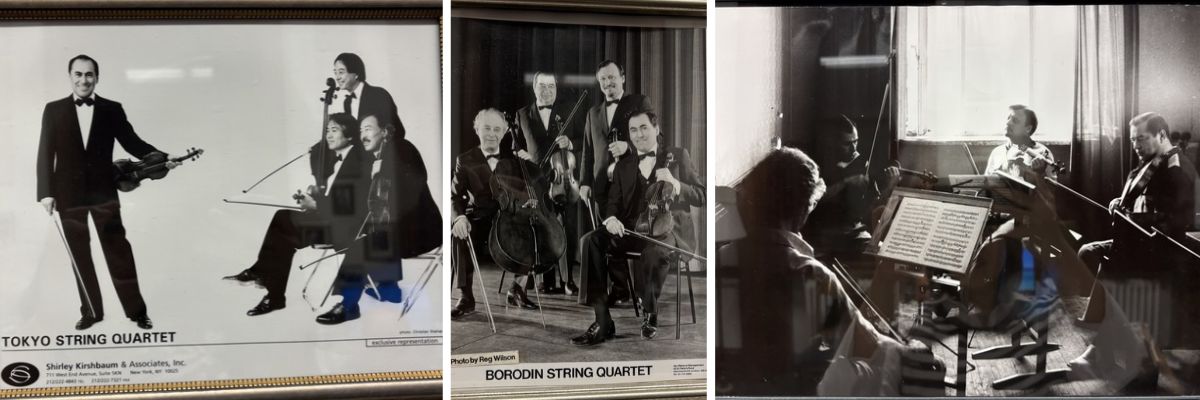
MEMORIES ON THE WALL: The walls of Professor Kopelman’s office at Eastman tell the story of his long career, from the Borodin Quartet in the 1970s through the Tokyo Quartet and on to the Kopelman Quartet (right), pictured here during their first rehearsal in Oviedo, Spain, in 2002.
In 1993, Kopelman and his family emigrated to the United States as refugees. He recalls this high-strung period of his life, grappling with consulates and visas while continuing to perform with the Moscow-based Borodin Quartet. He first encountered the American-based Tokyo String Quartet in a series of joint concerts in Vienna, where the Borodin’s Shostakovich cycle was paired with the Tokyo’s Beethoven cycle. Upon his retirement due to injury, Peter Oundjian personally vouched for Kopelman as his replacement, and after the three remaining members insisted on meeting him in Florence, Italy, where he was starting his to-be-final tour with the Borodin Quartet, he was in.
When Kopelman eventually broke the news to his Russian colleagues, they negotiated for him to complete the tour before leaving. For three months, Mikhail Kopelman carried two Stradivarius violins for two string quartets, a feat he surprised himself with, before his permanent departure from the Borodin Quartet in 1996.
Kopelman’s six years with the Tokyo Quartet opened a wildly different world. He explored their precise and grounded style through Beethoven, Haydn, and Mozart, which often clashed with the free and untethered Russian musical tradition he was accustomed to, but was also a beautiful exchange, as his Japanese colleagues tasted Russian lyricism in turn. “It was a good experience for me,” Kopelman affirms. “I took something from them, and I believe they also took something from me, too.”
Instead of ending with the first quartet’s resolute finale, Kopelman, Posner-Hess, Calderon, and Post will close the first half of the recital with the addition of the beloved Notturno in A Major from the second quartet, a love letter from the composer to his wife. As Kopelman says, “Because how could I not?”
“Russian music really has a beautiful soul. Emotional, sometimes overemotional,” Kopelman remarks. Hence, he devotes the second half of the recital to Pyotr Ilyich Tchaikovsky, the pinnacle Russian soul. For this segment, he is joined by three members of the Lazuli Quartet: violinist Claire Chien, violist Vivienne Lucier, and cellist Ariun-enerel Gantumur, as they present the full String Quartet No. 2 in F Major, which Kopelman reveals was the very first quartet he performed with the Borodin Quartet, all those fifty years ago.
With Kopelman eventually leaving the Tokyo Quartet and joining the Eastman faculty in 2002, he wondered if that was it for him and the quartets. One day, he received a call from cellist Mikhail Milman, longtime collaborator and student of his former Borodin colleague Valentin Berlinsky.
“Mischa, when will we start our quartet?” Milman asks Kopelman.
“Mischa, are you crazy? Fine, let’s make it a fantasy. Who would play viola?”
Milman was living in Spain alongside violist Igor Sulyga, and through their series of long-established rapports, the Mischa’s soon found their second violinist, Boris Kuschnir, in Austria.
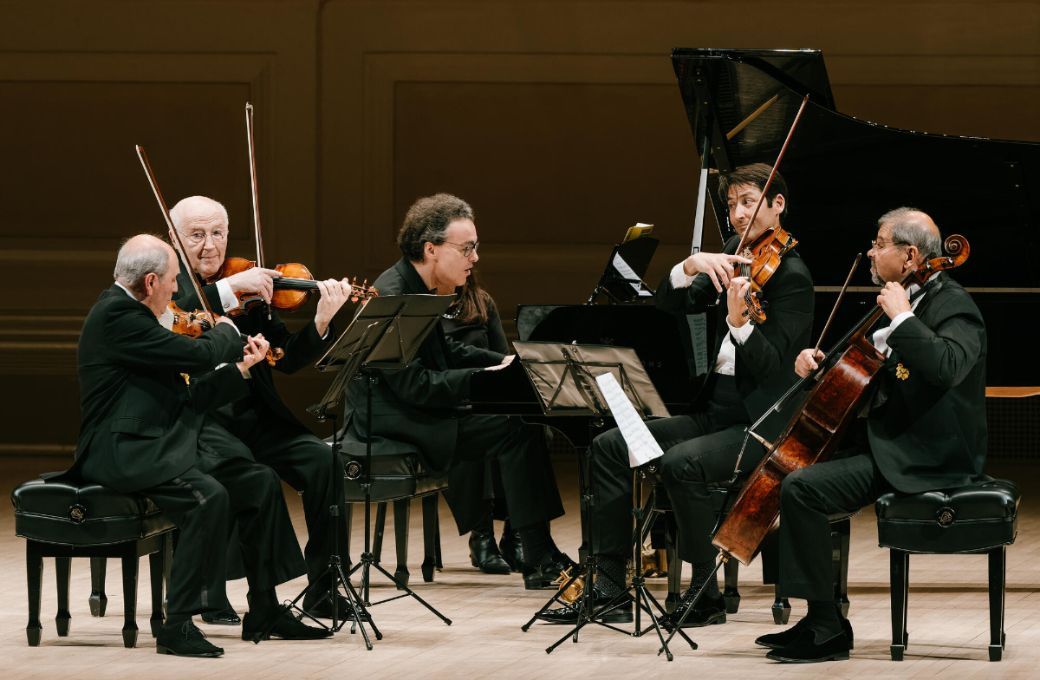
HONORING LEGENDS: In 2025, Kopelman (far left) and the Kopelman Quartet appeared with pianist Evgeny Kissin in Carnegie Hall, performing Dmitri Shostakovich’s Piano Quintet in G minor as part of Kissin’s Shostakovich celebration series. Eastman’s Professor of Viola Masumi Per Rostad (who is now a mentor to Calderon and Lucier, two of the student violists performing in the faculty recital), took the place of Igor Sulyga for the concert.
Thus, the Moscow-trained, internationally-based Kopelman Quartet was founded, with their heels dug into Russian repertoire. Kopelman had not made a single professional recording since his final album with the Borodin Quartet in 1993, of the three Tchaikovsky quartets and the sextet Souvenir de Florence, Op. 70—coincidentally, with Milman on second cello. The release of the Kopelman Quartet’s first discography in 2006, consisting of Tchaikovsky’s String Quartet No. 3 alongside Franz Schubert’s Death and the Maiden, marked a comeback for Kopelman and his Russian string soul.
As a final touch of poeticism, Kopelman and Lazuli will close the recital with the melancholic Andante cantabile from the String Quartet No. 1. From a restless and precocious young leader to a wise and witty sage, it seems Kopelman always had Tchaikovsky as his bookends, both as a new chapter and a grateful closure.
“We spend all our lives to be great at this. We spend more time with quartets than with our families,” Kopelman reflects, referring to the lifelong dedication to human expression as much as traveling overseas. While the majority of Europe delved into post-tonality and the gentrification of classical music, the Russians swore their lives to its magnitude and vulnerability, to live in no other way than to express the heart and soul to its bounds. And in the heart of downtown Rochester, Mikhail Kopelman and the soul of the Russian string quartet thrives with the wisdom and contentment of fifty fine-tuned years.
Faculty Artist Series: Mikhail Kopelman, violin
Sunday, November 15, 2026
3:30 p.m. | Hatch Recital Hall
(This is a ticketed event)