

By Anna Reguero, Jessica Kaufman, and Jonathan Heath
This article first appeared in the Spring 2026 issue of NOTES, Eastman’s alumni magazine.
…
For musicians, there are times when beautiful musicianship is a fight between the music and the body. Pianists contend with forearm pain from playing on weight-responsive keys; violinists suffer neck alignment issues tied to their playing position; flutists surrender the body’s symmetry by holding their instrument out to one side. When pain flares, it can be more than just a physical battle.
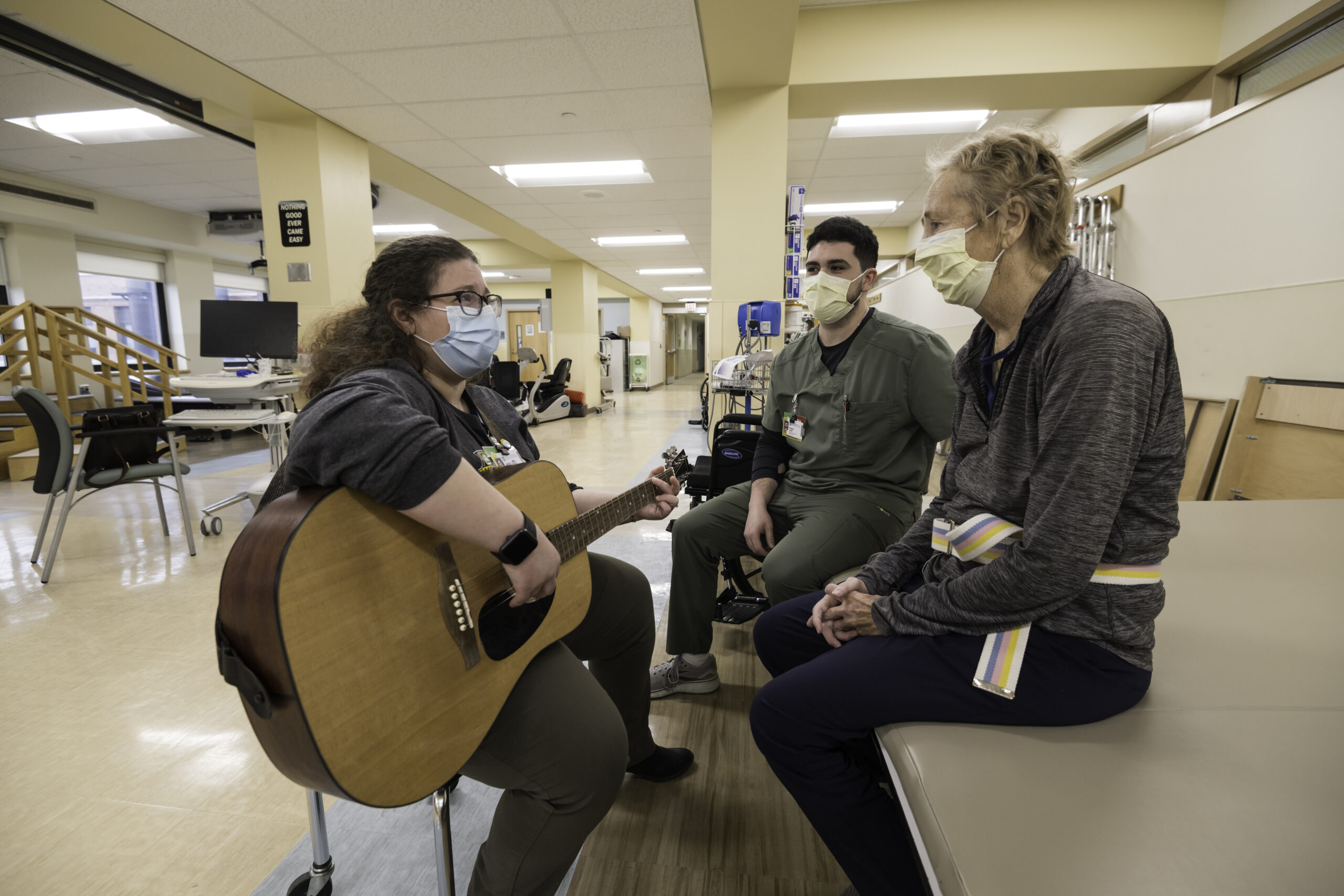
Despite these challenges, music can also be a powerful tool for healing. Research in neuroscience and medicine shows that music can influence brain activity, emotional regulation, movement, and recovery, shaping how people experience pain, stress, and illness. For musicians, this dual reality—music as both physical demand and therapeutic force—places their art at the center of a growing body of scientific inquiry that connects music, mind, and medicine.
For the last 40 years, the University of Rochester and Eastman have been at the forefront of treating musicians similarly to elite athletes, while also recognizing the broader role music plays in mental and neurological health.
That work includes on-campus support from the University Health Service (UHS), such as physical therapy and psychological services, which helped fuel some of the earliest performing arts medicine research in the 1980s and 1990s. Over time, Eastman has expanded those efforts through courses and workshops that teach posture, alignment, injury prevention, and strategies to sustain the physical demands of intensive musical training.
In 2019, Eastman partnered with the University’s Medical Center (URMC) to launch Eastman Performing Arts Medicine (EPAM), an initiative that further integrated medical professionals and services with Eastman’s artists to promote health, research, and clinical access. Gaelen McCormick ’92E, was named as head of the program from the onset, appointed to serve as a bridge between Eastman and URMC. In 2024, EPAM was designated an official center, and University of Rochester Trustee Evans Lam ’83, ’84S (MBA), committed $1 million to endow a new research position for the center called the Evans Lam Research Professor of Music and Medicine. In November 2025, Dr. David M. Greenberg was appointed to fill that role and will begin his tenure in 2026.
Such integration is possible because Eastman is part of a major research university with a leading medical school, all within Rochester’s city limits.
Professor of Music and Medicine
When Dr. David M. Greenberg arrives in Rochester to begin his role as the inaugural Evans Lam Research Professor of Music and Medicine, he will be doing more than occupying a title. Greenberg embodies a rare duality. On one hand, he is deeply analytical: a cognitive psychologist and neuroscientist steeped in pattern recognition, artificial intelligence, and rigorous data. On the other, he is a musician—a saxophonist trained in improvisational jazz at Rutgers University’s Mason Gross School of the Arts. He often frames the connection between these two aspects of himself in philosophical terms: “My cerebral life is mainly as a scientist, but in my heart and soul, I’m a musician.” To him, the act of discovery in music and in science are the same impulse: probing, listening, revealing.
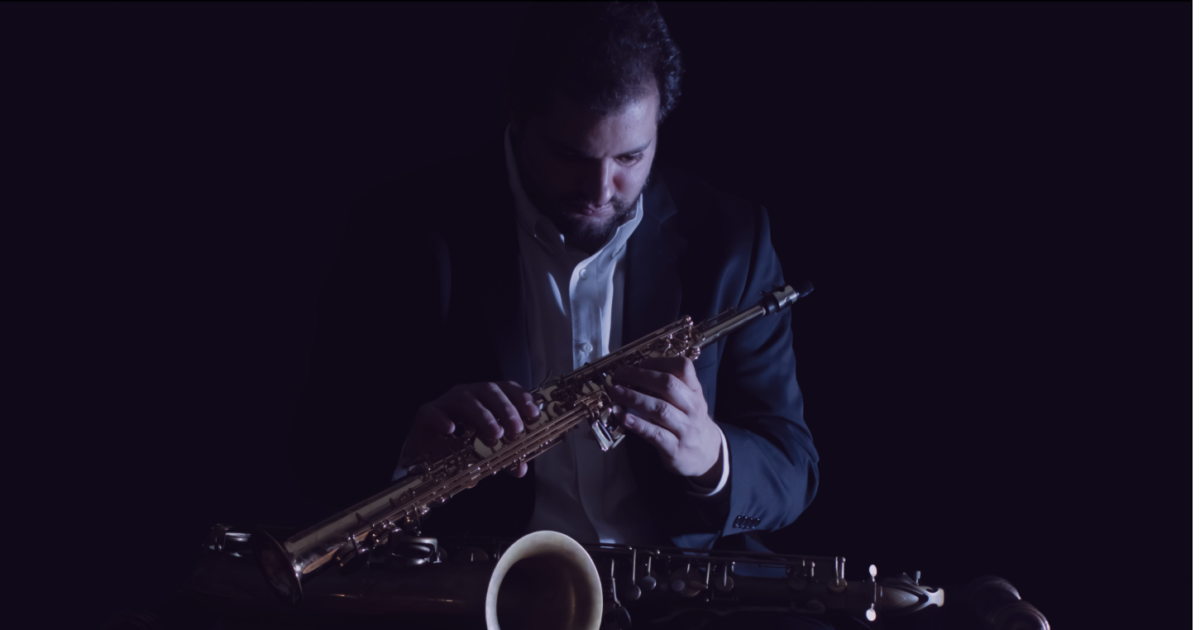
A RARE DUALITY: Greenberg is a scientist and a musician.
This fusion lies at the core of his appointment. As the first professor of music and medicine, Greenberg steps into a role with a beautifully simple title yet much deeper ambitions. He will serve not only as associate professor, but also as director of research. He’ll hold joint appointments in the Departments of Neuroscience and Health Humanities & Bioethics at the University of Rochester’s Delmonte Institute of Neuroscience, and in Music Theory at Eastman.
Greenberg himself expressed gratitude for Lam’s vision and support, calling the role “a rare opportunity—unimaginable just a few decades ago—to advance a truly scientific understanding of music and its therapeutic potential, and to translate those discoveries into health innovations that will improve lives for generations to come.”
At Eastman and EPAM, Greenberg sees enormous opportunity. He talks about music not just as art or recreation, but as precision medicine—music that is tailored to the individual, their neurocognitive profile, their emotional state, even their diagnosis. “One of my biggest challenges will be saying no to things,” he admits. “There are so many interesting types of research studies that it’s truly infinite.” With his background in machine learning, artificial intelligence, big data, and rigorous scientific methods, he’s well positioned to chart a research strategy that spans everything from mental health to social medicine—even spiritual medicine.
Greenberg likes that “music and medicine” is unambiguous. To him, it signals a clear mission. From that simplicity, he intends to stretch into many interconnected domains: mental health, brain health, social medicine, and more. He wants to understand music not just in traditional terms—genre, tempo, “happy” or “sad”—but in its microscopic acoustic details, how those shape our brain’s response, and how we can harness that knowledge therapeutically.
His arrival has the potential to deepen and broaden EPAM’s impact. The center already supports pilot research projects in collaboration with the URochester Aging Institute and the Pluta Cancer Center. EPAM also provides music therapy for hospital patients, treats performing artists with physical injuries, and embeds live performances in healthcare spaces.
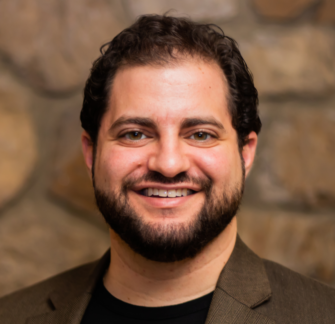
PROFESSOR OF MUSIC AND MEDICINE: Dr. David M. Greenberg
“With Dr. Greenberg at the University of Rochester, we look forward to growing the body of evidence for how music impacts health and wellbeing,” Gaelen McCormick says. “For instance, we know that people with Parkinson’s disease will walk with a more fluid stride when they are listening to music. The rhythm helps override neural pathways that cause gait freeze. But knowing this isn’t enough—we need to understand more about how this happens. Dr. Greenberg is exactly the right person to collaborate with our incredible community of researchers, artists, and educators to grow the field of music and medicine.”
Greenberg imagines Rochester becoming a global hub for music-and-medicine research—attracting collaborators, scholars, and clinicians who are working at this intersection. He wants to lead interdisciplinary efforts, secure large-scale funding, and publish robust, high-impact studies.
But Greenberg is not just after data—he’s after meaning, memory, healing. His work is deeply humanistic. He wants to build bridges: between musician and scientist, between hospital and concert hall, between past and future. His appointment marks a milestone for Eastman, for EPAM, and for the broader field of music in health. He brings rare credentials: cutting-edge computational research, proven leadership in both industry and academia, and a deeply personal musical story.
“Dr. Greenberg is uniquely qualified with his varied experience in neuroscience, psychology, and his personal background as a musician,” shares Kate Sheeran, Joan and Martin Messinger Dean at the Eastman School of Music. “His appointment, and the incredible research it will bring, will have a deep and lasting impact on healthcare and the ways we can improve people’s lives.”
As Greenberg prepares to embark on this journey, he carries with him a simple, profound belief—that music is not just an art form, but a transformative science. And in Rochester, he may well have found the perfect place to bring those things together.
Gathering the Data
If Rochester is that place, it’s because of the pioneering work of those who laid the groundwork Dr. Greenberg will build on. Eastman and the University’s progressive programs in musician health and wellness are due to the longtime efforts of physician Ralph Manchester, the former vice provost and director of UHS at the University of Rochester, who retired in June 2024. Manchester arrived in Rochester in 1983 after his residency training and took a position with the UHS, which combined patient care and teaching. Shortly after he started, a physician position at Eastman became available.
Like Greenberg, Manchester is also a musician—he grew up playing trumpet and euphonium in high school and remembered how he got a bloody mouth while playing in marching band with braces. He became interested in the unique challenge of treating musicians. At Eastman, he encountered students who were struggling with upper extremity (arm and hand) problems, vocal issues, and performance anxiety. And there was no standard of care to draw on when treating them. “I realized that we had the opportunity to study a defined population,” Manchester says. “We know who an Eastman student is, we know what instrument they’re majoring in, and that they have prepaid access to come into the health service for any kind of health problem they have. So, we have a good capture of what’s going on.”
By reviewing Eastman patient charts, Manchester and his colleagues generated incidence data to understand injury prevalence by instrument and gender. For instance, they found that for every 100 musicians, 8.5 on average develop a performance-rated problem each academic year at a rate that is twice as high for women. And certain instrumentalists are more prone to injury, such as violinists and pianists. But organists, who press keys that aren’t weight-sensitive, have a significantly lower injury rate than pianists. The instrumentalists with the highest rate of injury? Harpists. But since there are relatively few harpists, it’s harder to generalize about the cause. Injury rates spike in September and April, when students return to Eastman from the summer and right before juries, respectively.
“As more data became available, it became more obvious that you can’t just expect someone to keep their arm in a fairly weird position for six or eight hours a day and have the fingers do amazing things and think that everything will be fine,” he acknowledged.
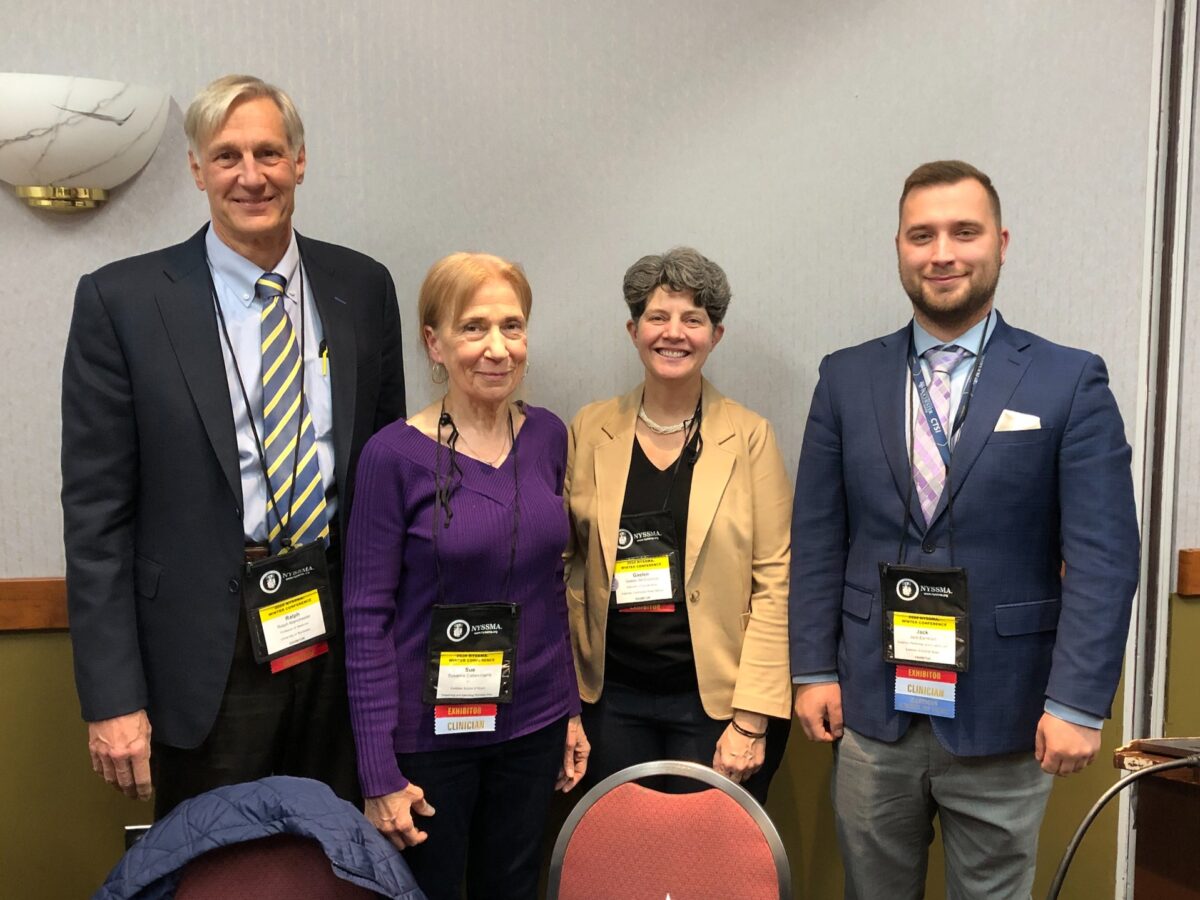
A TEAM EFFORT: From left to right: Ralph Manchester, MD; Susanne Callan-Harris, PT; EPAM Director Gaelen McCormick; and Jack Earnhart all spoke at the 2024 NYSSMA Conference.
Preventing Injury
When a professional athlete gets hurt, they have a cadre of doctors, athletic trainers, physical therapists, psychologists, and other therapies at their disposal. They also have contracted limits on practice times to limit injury, among other preventative measures. That’s why in the early 2000s, Eastman began developing injury prevention services on campus for its musician “athletes.”
In the case of musicians, “what they get is a physical therapist who sees them after the fact, when they’re already at a point where they can’t play,” says Susanne Callan-Harris, one of Eastman’s two on-site physical therapists through UHS. Although all students can access physical therapy, thanks to the advantageously structured University health plan that covers virtually unlimited sessions and other specialist appointments for only a $10 copay, the challenge of musician health at Eastman has consistently been in reaching the students before they get injured.
Callan-Harris and Eastman’s UHS team continue reimagining the school’s wellness initiatives to reach more students. Callan-Harris goes into first-year colloquium classes, and guests have been brought in to discuss wellness-specific practices. Wellness activities and fairs are offered throughout the academic year. There is a voluntary “Ergonomics Training Intensive,” a four-module workshop. Students can take Alexander Technique, a posture-focused method to alleviate strain, and yoga, which helps students move joints in new ways to help relieve tightness and increase limberness. Posted around the school are QR codes that direct students to warm-up and cool-down resources and exercises online before playing.
Additionally, EPAM, which collaborates with UHS on wellness efforts, offers free hearing screenings every month, “since it’s not like a muscle, you can’t recover it,” says McCormick. Special earplugs, which preserve hearing while playing or listening to music, are also available to students.
McCormick was uniquely qualified to lead as director of EPAM. An Eastman alumna, she played double bass with the Rochester Philharmonic Orchestra for over 20 years before developing hearing loss and being diagnosed with Ménière’s disease. She began a career shift into arts administration and nonprofit leadership and began volunteering at the hospital as a lobby musician. Her perspective on both sides of music and medicine has greatly aided in her role. “Another way EPAM is involved in our community is serving performing artists in their wellness needs,” shares McCormick. “Any musician with an injury which is impeding their ability to perform is able to call our hotline and be connected to one of our specialists, who will see them within 48 hours. This is quite unusual and an excellent service for musicians anywhere in the US.”
Crafting Custom Solutions
Jack Earnhart ’25E (MA), a recent graduate student in Eastman’s Music Teaching and Learning department, now working towards his doctorate at the University of Rochester’s School of Medicine & Dentistry, is focused on translational science—decoding performing arts medicine research into actionable advice for musicians and teachers. While at Eastman, he completed ergonomic research with support from the UR Health Lab and Dr. David Mitten’s mentorship, and created ergonomic devices tailored to individual musicians’ needs in collaboration with Callan-Harris.
Earnhart also brought his innovative adaptive brass mouthpiece-making business to Rochester, with a desire to extend manufacturing to custom adaptive devices, enhancing opportunities for musician wellness. Because instruments stress bodies in unnatural ways, there has been a market for devices that improve an instrument’s ergonomics. Several adaptive devices for a variety of instruments are available to Eastman students through UHS’s Ergonomics Lending Library.
But the devices for loan are generally one-size-fits-all, and “everyone’s different,” says Earnhart. His business, The Earnhart Company, makes custom adaptive brass mouthpieces. He takes specific acoustic measurements from the player and, on computerized machinery, sculpts designer mouthpieces for his clients. Variables are isolated and controlled throughout player testing, a data-forward approach. It’s a collaboration with the player since, he says, “you can theoretically make an acoustically ‘perfect’ mouthpiece-horn system, but when a player is added to the system, the equation becomes more difficult. Everybody plays the mouthpiece a little bit differently.”
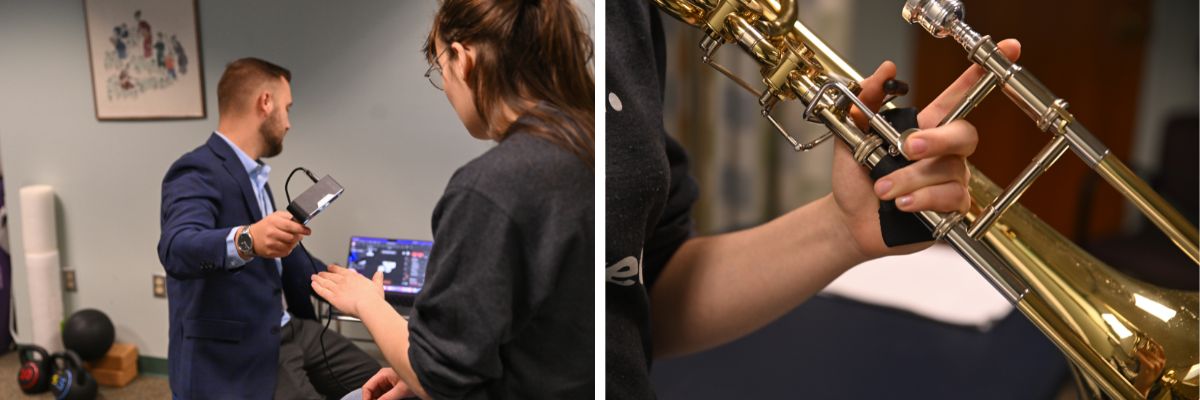
ACTIONABALE ADVICE: Left: Earnhart using a structured light scanning device to take measurements of a bass trombonist’s hand. Right: A custom-made ergonomic device by Earnhart helps with weight and hand positioning on the bass trombone. Photo Credits: Kerry Lubman.
The latest goal of UHS—with Earnhart’s assistance—is to create custom adaptive devices for students. They already have scanning technology—called structured light scanning—a handheld device that takes measurements around the body, which are then uploaded to a computer. From there, the data can be used to prototype a device that fits “like a glove” to the patient, which is then printed on a 3D printer. The results so far have been astounding.
Eastman’s investment in musician health has grown from early chart reviews and preventive workshops into an expansive network of clinical care, research, and innovation—and the arrival of Dr. Greenberg marks a new phase in that evolution. His appointment strengthens EPAM’s scientific reach and deepens its connection to the lived experience of musicians, ensuring that future discoveries are rooted in rigorous data as well as practical need. “This is an energizing moment for EPAM and for our entire community,” says Dean Kate Sheeran. “With Dr. Greenberg joining the team, we’re stepping into a new era of possibility—one built on the years of thoughtful, collaborative work that have already strengthened EPAM from within. This combination provides the momentum to take significant steps in the future.”
As EPAM, UHS, and Eastman faculty continue developing tools, training, and research that support performers, Greenberg’s work promises to bring new insight into how music affects the brain, the body, and well-being. Together, these efforts position Rochester as a leader not only in cultivating musical excellence, but in safeguarding the health of the artists who create it.