

This article first appeared in the Fall 2025 issue of NOTES, Eastman’s alumni magazine.
…
Eastman alumni Jason Treuting ’99E, Kelly Hall-Tompkins ’93E, Vincent Lenti ’60E, ’62E (MA), and Melissa Ngan ’02E reflect on their careers—and how Eastman has stayed with them.
What do a Grammy-winning percussionist, a classical violin soloist, a historian and author, and a musical entrepreneur have in common? Each launched their career at Eastman. Though their professional lives now span genres and disciplines, the thread connecting them is unmistakable. These four alumni have carved out singular careers—some by tradition, others by invention—but each credits Eastman with shaping their sensibilities and cultivating a lifelong creative community. Whether onstage or behind the scenes, they exemplify the many ways an Eastman education becomes more than a degree—it’s a launchpad, a toolkit, and a blank page to start writing your own story on.
JASON TREUTING ’99E
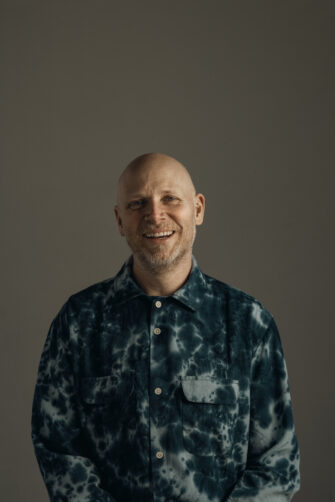
THE PERCUSSIONIST: Jason Treuting has been with Sō Percussion since their founding at Eastman in 2000.
For Jason Treuting of Sō Percussion—the boundary-pushing chamber quartet known for its adventurous collaborations and genre-blurring performances—Eastman in the late 1990s was a place of transformation.
A self-described “late bloomer,” Treuting began classical percussion relatively late, having started on drum set in high school. His teacher gave him a list of music schools to consider, but emphasized, “If you get into Eastman, you have to go to Eastman.” For a kid from the suburbs of Southern California, the idea of Rochester—particularly in the snow—felt worlds away. But once on campus, Treuting was swept into a whirlwind of musical discovery: jazz gigs at Java’s, hip-hop bands, experimental ensembles, and classical marimba studies. “Music was happening everywhere!” he recalls with a grin.
That expansive musical environment was fed by a forward-thinking faculty, including legendary percussion professor John Beck ’55E, ’62E (MM), and a reenergized jazz department. Treuting especially remembers Beck’s openness, which allowed students to shape their own experiences—exploring everything from jazz and gamelan to contemporary chamber works. The result was a creatively rich and deeply self-directed education.
More than any one genre or skill, what resonated most with Treuting was Eastman’s progressive mindset. Beyond preparing students to perform—it taught them how to build a life in music. “What struck me was the realization that musicians have to learn how to make their own career paths,” he says. “There used to be this idea of a pipeline to an orchestra job, a teaching job, a soloist career—but if that was ever a thing, it wasn’t going to last. You had to be more entrepreneurial.”
That mindset shaped Treuting’s post-Eastman career. He’s built a reputation not just as a performer, but as a musical thinker, collaborator, and creator. And he remains deeply connected to the Eastman community—not just out of nostalgia, but because, as he puts it, “Eastman webs are thick. You can’t walk around New York without bumping into someone from Eastman.”
Treuting and his partner, violist Beth Meyers ’00E, ’00, ’02E (MM), live in Brooklyn, where Sō Percussion is based and where many of his Eastman-era collaborators continue to shape his artistic life. For them, staying connected isn’t about tradition—it’s about sustaining a creative ecosystem.
Now celebrating Sō Percussion’s 25th anniversary, Treuting reflects on the group’s unorthodox beginnings. What started as a scrappy, self-organized ensemble has grown into a force of contemporary music. The group’s name—suggested by Treuting’s sister, a translator living in Japan—comes from a Japanese word meaning “to offer sound.” That ethos has carried through their work, which ranges from concert halls to collaborations with pop artists.
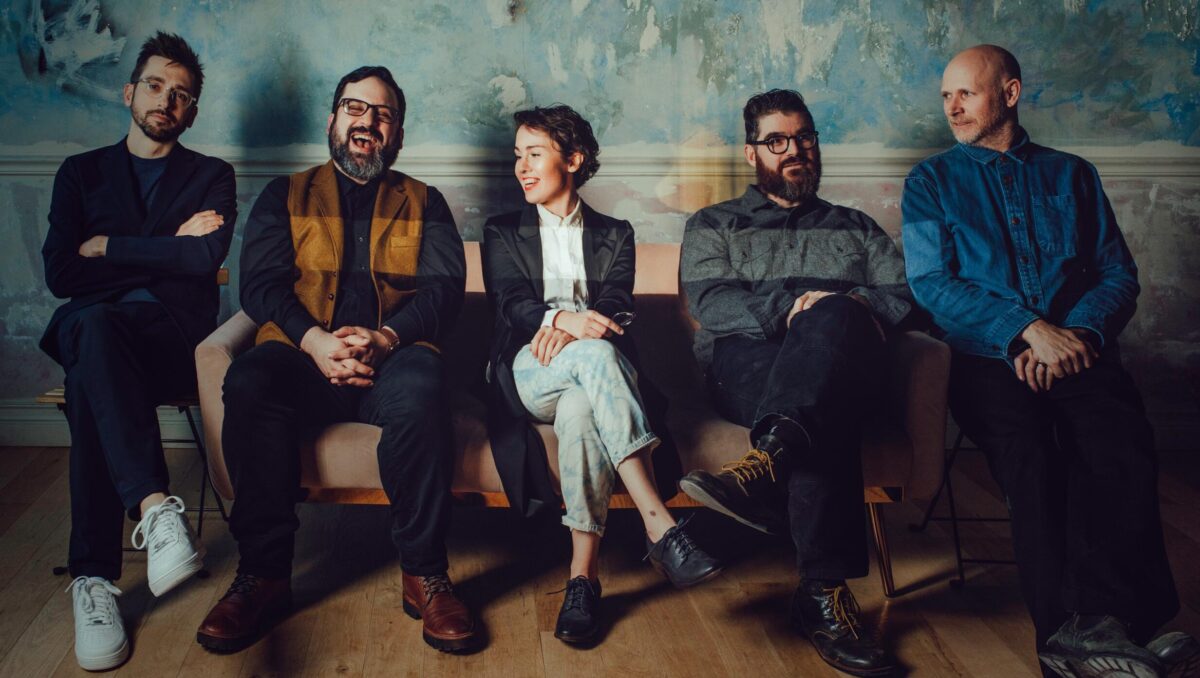
PRETTY THEATRICAL: Sō Percussion returns to Eastman with Caroline Shaw and Ringdown on March 25, 2026.
In 2025, Sō Percussion earned its first Grammy for Rectangles and Circumstance, a collaborative album with American composer Caroline Shaw. On March 25, 2026, the group returns to Kilbourn Hall with Shaw and Danni Lee Parpan, the other half of Shaw’s electronic-pop duo Ringdown, to perform songs from the album.
“The show is pretty theatrical,” Treuting explains. “There’s some simple staging, video, and lighting, all approached with a DIY sensibility. The performance grows over 75 minutes—from just one person on stage, to all of us on stage; from no lights, to big video projections on the walls.”
Treuting was especially eager to bring the project to his alma mater. “We thought it would be so cool to see what’s happening at Eastman right now—and to bring this show with us.”
KELLY HALL-TOMPKINS ’93E
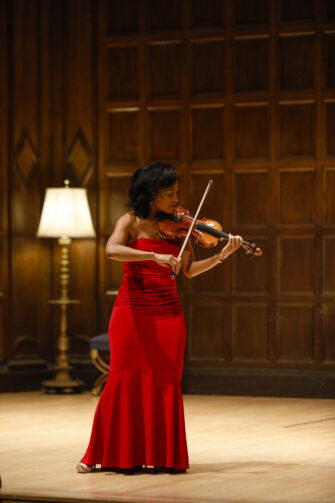
THE SOLOIST: Kelly Hall-Tompkins performed at Eastman during Black History Month in 2023. Photo credit: Matt Wittmeyer.
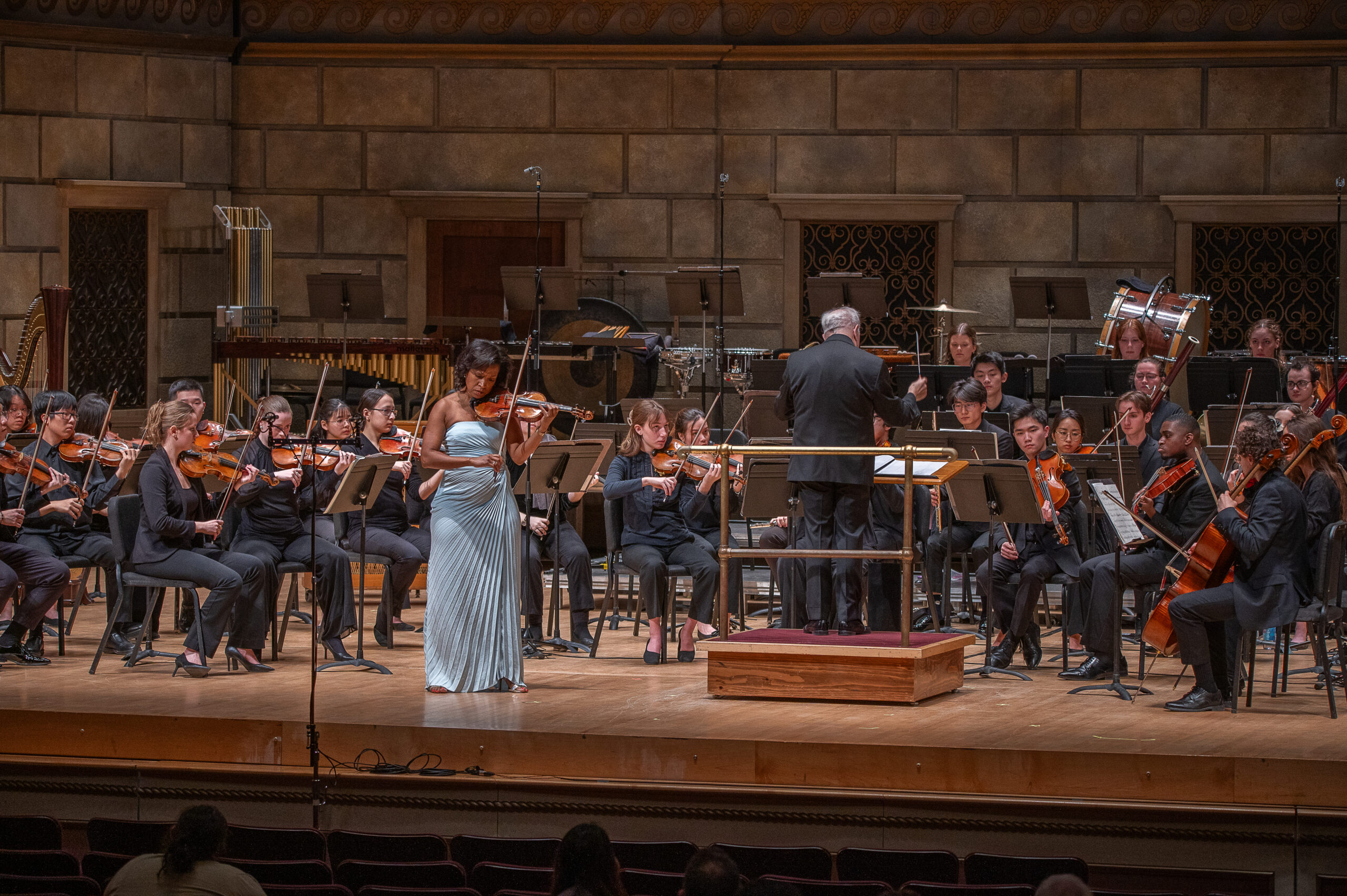
As Treuting gears up for his return to Eastman, violinist Kelly Hall-Tompkins is still savoring the afterglow of her own recent appearance, where she performed the Rochester premiere of Body in Motion, a violin concerto written for her by composer Jeff Beal ’85E. The project began during Eastman’s centennial celebration, where Hall-Tompkins met Beal and his wife, Joan Beal ’84E. The two had been quiet admirers of her work for years—Beal first noticed her during a performance that followed her being named a Distinguished Alumni Award recipient in 2021.
Before the weekend was over, the seeds of collaboration had already taken root. Beal offered to compose a concerto; Hall-Tompkins agreed on the spot. When they realized they both had worked with conductor Leonard Slatkin, they invited him to complete the trio. Just fifteen months later, the three premiered Body in Motion with the St. Louis Symphony. “We are not ‘someday-people,’” Hall-Tompkins quips. “We’re ‘make-it-happen-people.’”
Performing the piece again in Kodak Hall at Eastman Theatre this past March marked her first time playing as a soloist at her alma mater. “It was wonderful to bring that whole process full circle,” she says, noting the deeper resonance of returning to the stage where her artistic identity began.
Hall-Tompkins is the first professional musician in her family. A native of Greenville, SC, she sought a rigorous musical experience and visited nine schools before choosing Eastman. Her instincts proved right. “There’s something different about Eastman,” she says. “It’s a marriage of a very high level of academic education combined with a penetrating sense of artistry.”
She still sees that unique Eastman spark in her peers today, especially in New York City, where she lives and works. “I not only run into them, but I have occasion to seek them out,” she adds. Her professional orbit continues to include Eastman alumni—not just on stage, but behind the scenes as well.
Hall-Tompkins founded Music Kitchen: Food for the Soul to bring live classical music to people experiencing homelessness. Now in its 20th season, the initiative has featured more than 200 musicians. For the 15th anniversary, she conceived and premiered Forgotten Voices, a song cycle based on comments from shelter guests, performed first in shelters and later at Carnegie Hall. Several Eastman alumni helped bring the project to life, including Pulitzer Prize–winning composer Kevin Puts ’94E, ’99E (DMA); soprano Adrienne Danrich ’93E; and Chris Carbone ’93E, an Eastman tuba major turned arts attorney.
Her connection to Eastman runs even deeper—her husband Joseph Tompkins ’92E is also a fellow alum. “I was only looking for Eastman alums for that role,” she jokes.
Though Hall-Tompkins initially imagined an orchestral career, her path shifted. “There’s nothing that’s a given about a music career,” she reflects. She credits a pivotal moment of self-discovery, as well as a quote she once heard from Oprah Winfrey: “You can’t wait for the parachute to appear and then jump. You have to jump first and then the parachute will appear.”
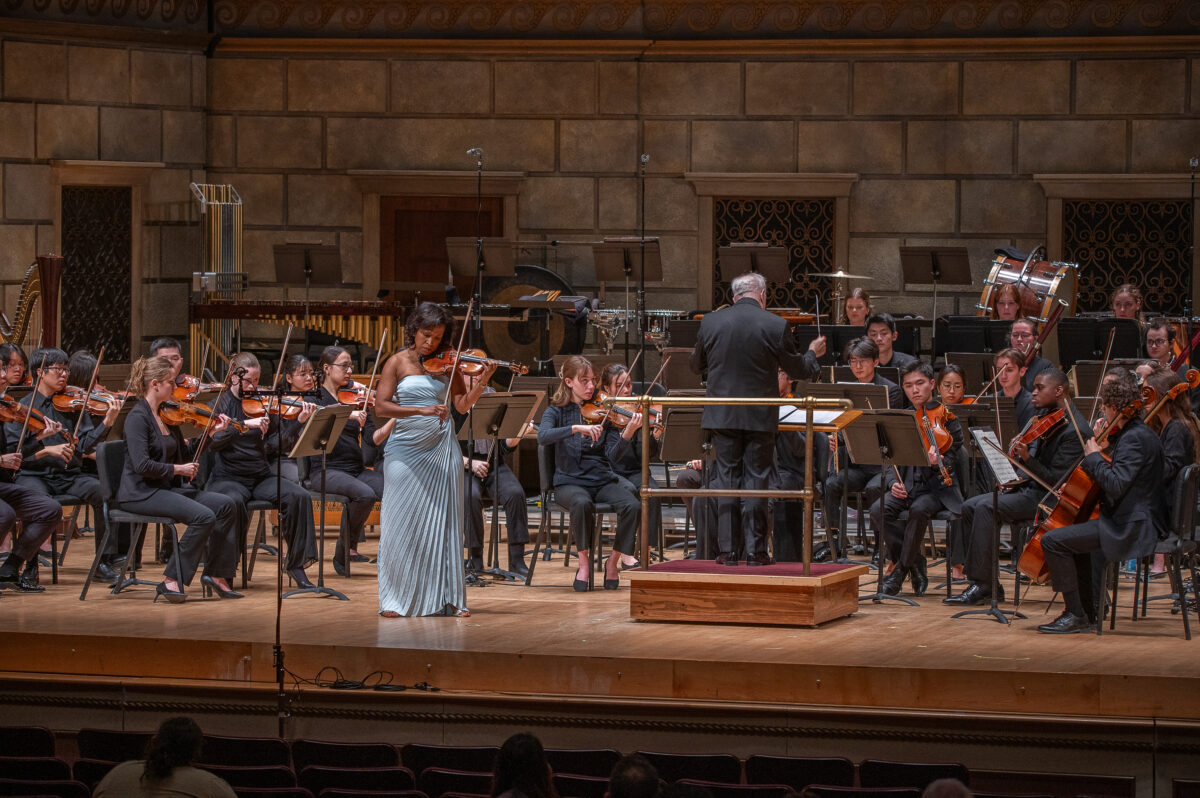
BODY IN MOTION: Hall-Tompkins took to the Kodak Hall stage with conductor Leonard Slatkin for the Rochester premiere of Jeff Beal’s concerto. Photo credit: Keith Bullis.
Since that leap, her solo work has flourished. She created an album born from her time as the featured violinist in Broadway’s Fiddler on the Roof and, more recently, has performed the Wynton Marsalis Violin Concerto nearly twenty times, including the Lucerne Festival premiere and an upcoming Netherlands debut. Her performances draw on a life immersed in everything from Bach to American roots music. “I’m like a kid in a candy store,” she says. “I thrive on creating projects, wonderful collaborations, doing new things, and playing great music in great spaces.”
Hall-Tompkins has returned to Eastman continuously in the three decades since her graduation and is thankful for that fact. “I’m glad to have had a reason to visit regularly,” she says. “To see how the place has stayed the same, but also how it has grown and changed. It has kept all the things that I think are so unique and special, keeping the soul of the place while also adapting and expanding.”
VINCENT LENTI ’60E, ’62E (MA)

THE HISTORIAN: Vince Lenti’s retirement portrait hangs in the Cominsky Promenade. Photo credit: Kurt Brownell.
One Eastman alumnus who has never left is Vincent Lenti. “When I look at my involvement at the school, which has been a continuous one since 1956, I never really left,” he says. “It’s probably the most improbable journey of anybody who ever graduated from the Eastman School of Music.”
Lenti taught at Eastman for more than six decades, including 57 years as a full-time member of the piano faculty—a remarkable milestone, especially considering that he wasn’t a piano major (both his undergraduate and graduate degrees were in music theory). But Lenti wouldn’t change a thing, saying, “The student body here has always been a source of inspiration and joy to me.”
During his time at Eastman—as student, professor, and now historian—Lenti has witnessed sweeping changes. When he began his undergraduate studies, Howard Hanson was still the school’s director, and Lenti would later become one of the final faculty members hired during Hanson’s tenure. He studied German with Eastman graduate Jessie Kneisel, Class of 1928 and 1930 (MA), and recalls icons like Emory Remington and Oscar Zimmerman not as names on plaques but as colleagues in the halls. “You didn’t have to go up to the Cominsky Promenade to look at portraits and wonder who these people were,” he says. “They walked the corridors of Eastman!”
Over the years, he has celebrated appointments and retirements, mourned the loss of beloved faculty, and watched the school evolve to meet the needs of each new generation. And as the campus changed, so did his role—eventually becoming Eastman’s official historian in 2002. His interest had begun informally, sparked by the storied list of artists who had performed at Eastman, from Fritz Kreisler to Rachmaninoff. That curiosity led to his authorship of a three-volume history of the school; the final installment published in 2022 to coincide with Eastman’s centennial.
Lenti has also witnessed change in the broader musical landscape. “It was a very different world when I graduated in 1960,” he reflects. “The job market was wide open. I don’t know of anybody I graduated with who didn’t walk into a job right away.” Orchestras were expanding, colleges were hiring, and a general sense of optimism pervaded the profession. Today’s challenges, he notes, are more complex—but Eastman has evolved in step. He credits the school’s strong humanities offerings, innovative curriculum, and emphasis on leadership and entrepreneurship as key to preparing graduates for a more varied and dynamic career path.
Approaching his 87th birthday, Lenti continues to write and reflect, a lifelong passion made even more poignant by his early struggles. “When I was in third grade, they told my parents I would never learn to read,” he recalls. “Well, I obviously learned to read—and to write.”
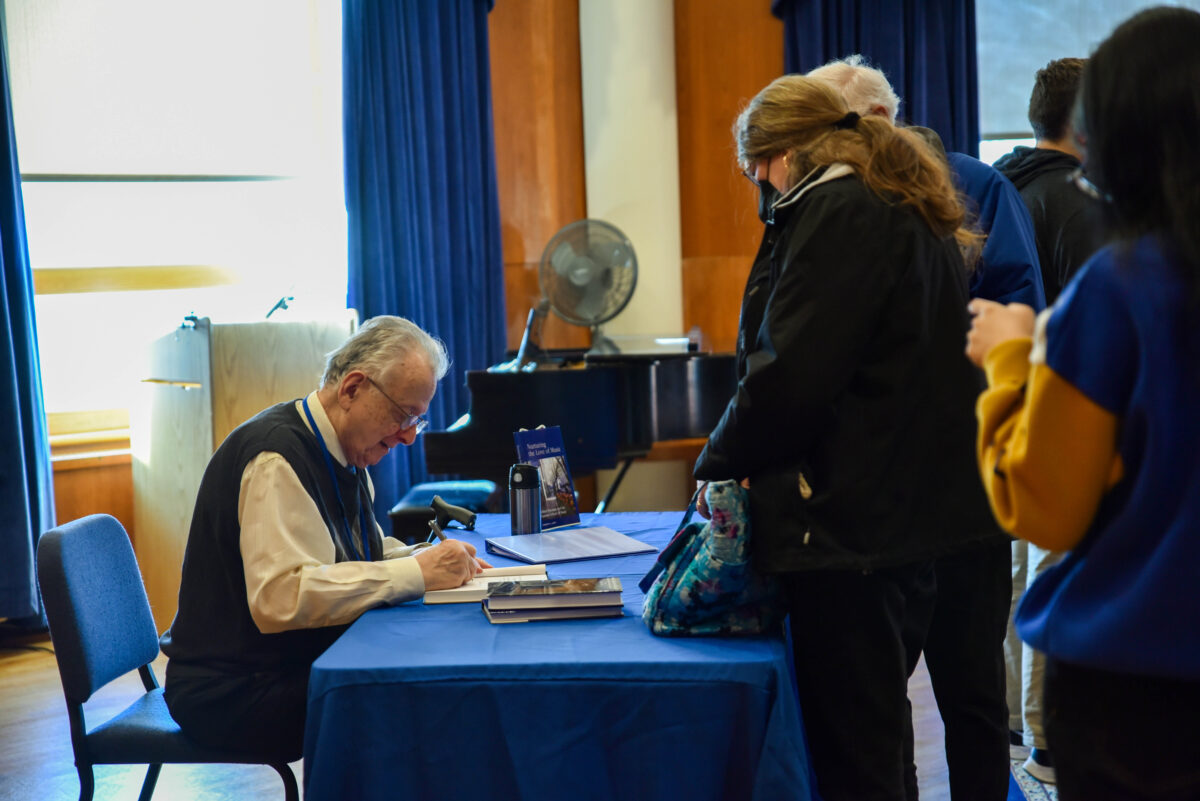
A SCHOOL’S LEGACY: Lenti signs copies of ‘Nurturing the Love of Music,’ the third book in his history of Eastman, in 2022. Photo credit: Luke Juntunen.
His most recent project, A Romantic Symphony: The Autobiography of Howard Hanson, adds another improbable chapter to his legacy. Hanson began writing his memoir shortly after retiring in 1964 but abandoned it when publishers lost interest. More than 40 unedited chapters went into hibernation, collecting dust until they arrived at the Sibley Music Library, where Lenti encountered them while conducting his own research. Archivist David Peter Coppen urged Lenti to consider preparing the manuscript for publication. After reconciling various drafts and annotating the text with characteristic precision, Lenti produced three bound copies—one for the Dean’s office, one for the library, and one for his own archive.
He thought that might be the end of it—until Coppen shared that researchers were regularly requesting access to the manuscript. Encouraged by the interest, Lenti approached Meliora Press at the University of Rochester. The result was the official publication of A Romantic Symphony, a long-overdue window into one of Eastman’s most defining figures.
MELISSA NGAN ’02E
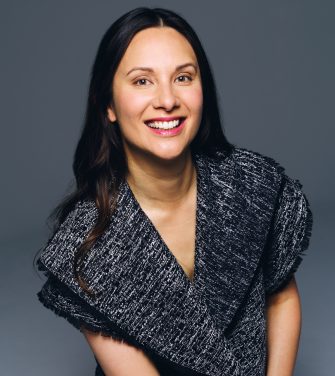
THE ENTREPRENEUR: Melissa Ngan remains connected to the Institute for Music Leadership.
Lenti’s legacy is one of stewardship—of stories, traditions, and the human connections that form Eastman’s heart. While his path remained anchored in Rochester, other alumni have taken the Eastman spirit far beyond its walls. One such voice belongs to Melissa Ngan.
Her Eastman story began, quite literally, in the mail. “I remember someone sent me an article about Eastman’s arts leadership program with the note, ‘Have you seen this?’” she says. That newspaper clipping moved the school to the top of her list. Though her family feared a music career meant “a lifetime of pasta from a box in a leaky basement,” Ngan auditioned for Professor of Flute Bonita Boyd ’71E and left feeling deeply seen as a musician. When she first stepped into Kodak Hall, the decision was sealed.
She arrived intending to pursue a dual degree in flute performance and economics. But the pull of the arts leadership program—then in its early years—quickly became the main attraction. “I loved that it opened up an endless curiosity,” Ngan recalls. She enrolled in everything from entertainment law and music production to writing and public relations, driven by a hunger to understand what it really meant to live a life in music.
What she found at Eastman wasn’t just world-class training on her instrument—it was a community that encouraged experimentation. “I knew I was getting a very broad view of the field and what my place in it could be,” she says. Ngan filled her time with extra chamber ensembles and side projects, including managing PR for friends’ performances. She began applying the lessons she was learning in real time and discovered a growing entrepreneurial drive.
That drive launched her into her first professional role with the Civic Orchestra of Chicago. There, in addition to performing, she worked through a program called Musicorps (now Civic Fellows) that brought concerts to parks and public spaces. “It was the first time I was playing for people who weren’t there to judge me or hire me,” she says. “Those were some of the most meaningful musical experiences of my life—and they changed my trajectory.”
In 2005, she founded Fifth House Ensemble, a Chicago-based chamber group that has spent 20 years pushing the boundaries of artistic collaboration. Musicians joined forces with dancers, actors, graphic novelists, video game designers, bluegrass bands, and more, to explore what music could do—and who it could reach.
Today, Ngan is four years into her role as president and CEO of the American Composers Orchestra (ACO), where she’s leading a national movement to connect composers, orchestras, and communities in deeper, more transformational ways, while asking how creative practices can advance societal goals. Under her leadership, ACO is reimagining orchestral music as a space not just for listening, but for public dialogue and creativity.
“Artists are witnesses to our time,” she says, “but they are also an incredible source of invitation for the public to express themselves and to see and hear one another in new and meaningful ways.”
Through it all, Eastman remains a constant thread. From performing in a concert honoring Bonita Boyd’s 40th anniversary in 2017 to mentoring students and helping launch the Institute for Music Leadership’s (IML) online master’s in music leadership, her involvement has come full circle. “When [IML Director and 2003 Eastman alum] Rachel Roberts called me,” Ngan says. “It was such a great opportunity to come back on faculty and create a class that was all about imagination and new ideas and making those ideas real in the world.”
This thinking has helped Ngan reframe the idea of success. No longer worried about eating pasta every day, she, like many alumni before and after, has written a story that reflects an ethos that values artistic excellence alongside a spirit of experimentation.
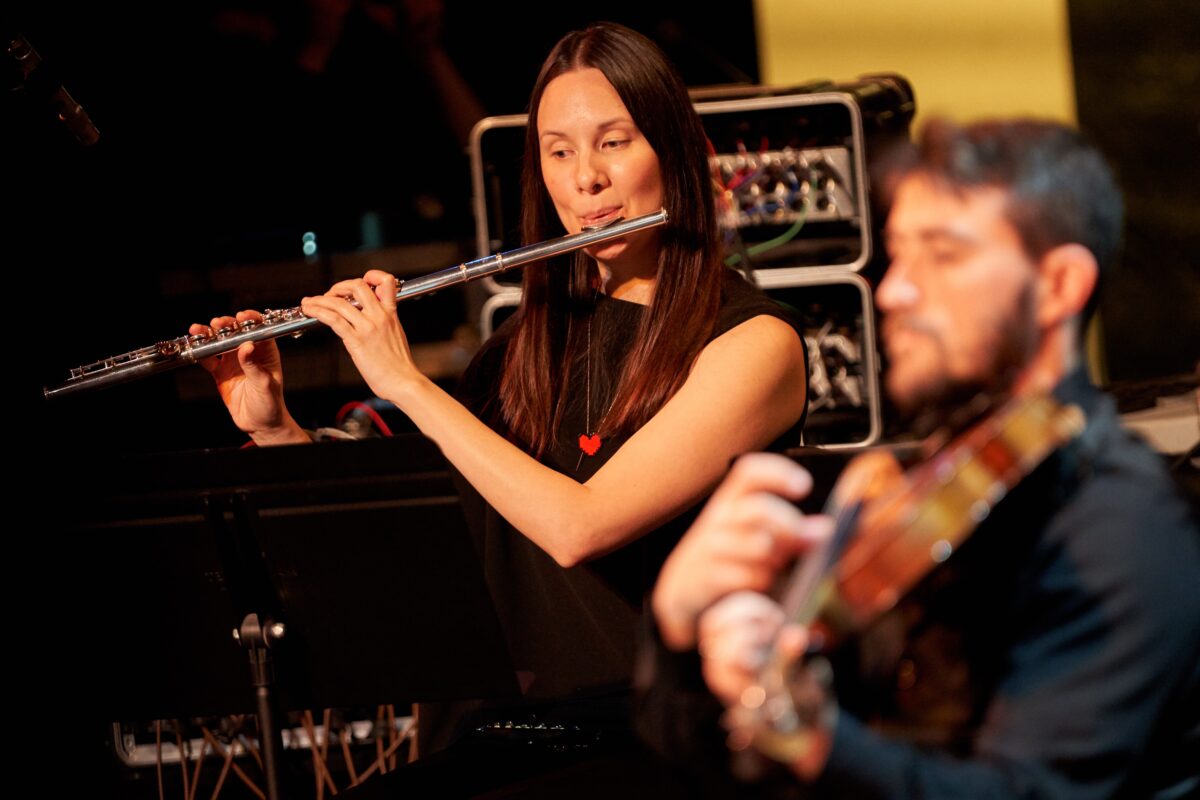
REFRAMING SUCCESS: Ngan performing with Fifth House Ensemble at the Studebaker Theater in Chicago.
Eastman alumni around the world continue to challenge the idea that success can only be found behind a music stand or in an audition room. Their paths—and the spirit behind it—is a reminder that music, when embraced fully, can lead just about anywhere.