

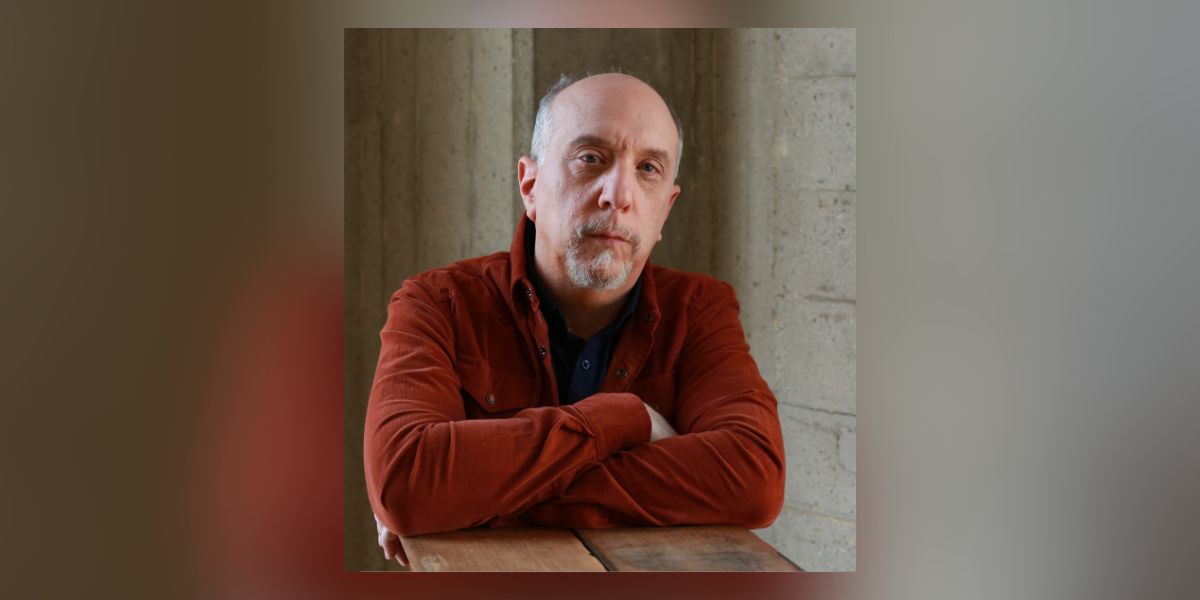
American composer and Eastman alumnus Steve Bramson ’83 (MM) calls the upcoming production of his new opera CLICK! a “homecoming.” A New York City native with a rich musical upbringing, Bramson initially pursued a degree in economics before Eastman drew him back to his first love—music—a turning point that launched an Emmy Award–winning career in composition. Since then, he has scored hundreds of primetime television episodes and numerous feature films.
“As you can imagine, having the premiere of CLICK! at Eastman is very, very special to me,” Bramson says. “I remember holding my first- and second-year recitals in Kilbourn Hall, where the opera will be staged. I guess it’s kind of a homecoming for me.”
CLICK! tells the story of Hungarian photographer André Kertész, a pioneering modernist whose lyrical vision forever changed the language of photography. Over a career spanning seven decades, Kertész captured the quiet poetry of everyday life—shadows on Parisian streets, reflections in still water, and the tender details of domestic solitude. With his wife Elizabeth, he moved from Hungary to Paris and later to New York City, navigating the upheavals of war and exile to pursue a creative life. A contemporary of Robert Capa and Man Ray, his influence can be traced through generations of photographers who followed.
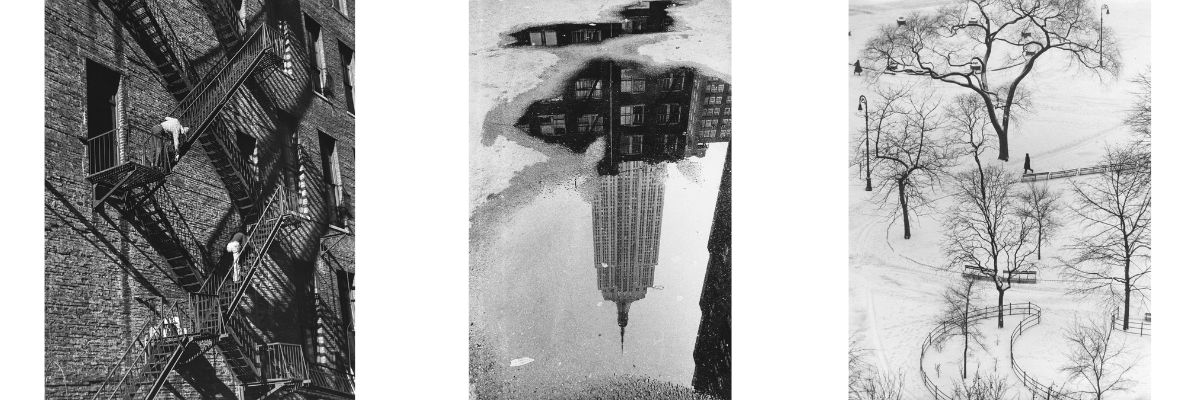
THE LANGUAGE OF PHOTOGRAPHY: André Kertész captured the quiet poetry of everyday life. Photos courtesy Estate of André Kertész © 2025
Bramson describes his opera as tonal and lyrical, shaped by what he calls “a compelling and colorful soundscape.” Drawing inspiration from key moments in Kertész’s life, each scene takes on its own musical hue. Echoes of Hungarian folk melodies color Kertész’s early years, while the lilting rhythm of a traditional barcarolle ripples through the Venetian passages—a reflection of the photographer’s evolving inner landscape.
With a libretto by Gayle Hudson, CLICK! brings all these moments to life. Now, Kertész’s story and photographs take to the stage for their world premiere at the Eastman School of Music, directed by Patrick Diamond, Eastman Opera Theatre’s director of production, and conducted by Timothy Long ’92E (MM), professor of opera.
Ahead of his return to Eastman for opening night, Bramson shares what inspired him to create this portrait of an artist whose vision still resonates nearly a century later.
What drew you to the story of André Kertész as the subject for an opera?
“I’ve long admired Kertész’s photographs, but it was the discovery of his later work, collected in the book The Polaroids, that caught my attention. In the foreword, Kertész authority and curator of his estate, Robert Gurbo, recounts what we now call ‘The Glass Bust Story.’ It was this that sparked the idea of a musical piece. After the death of his wife Elizabeth, Kertész discovered a small glass figurine that reminded him of her profile. Back in his apartment, he began photographing it with a Polaroid camera he’d once ignored. That simple act reawakened his creativity, dormant since Elizabeth’s passing. The story deeply moved me, and when Gayle Hudson began sending me her writings, it became clear this could grow into a full-fledged opera.”
What moments or emotions did you feel were essential to capture?
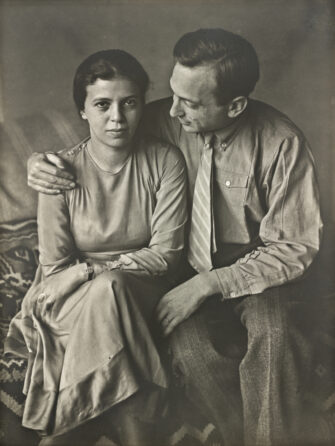
AN ENDURING LOVE: André and Elizabeth photographed in Paris in 1933. Photo courtesy Estate of André Kertész © 2025
“Gayle’s libretto, drawn from her research on Kertész’s life, shaped the story. From our early discussions, three central ideas emerged. First, to capture and present his relentless creative spirit, pushing against forces like a collapsing Europe before World War II and the challenges of an immigrant’s life in the strange and often unwelcoming world of New York City during and after the war. Second, his profound but complicated marriage to Elizabeth. Their ambitions were often at odds, yet he depended on her deeply; so much so that with her death he was set adrift and abandoned his art until rediscovering it much later in life. And third, the creative spark within all artists, a force that resists suppression. For nearly three decades Kertész worked in fashion photography at the expense of his art, until shortly before Elizabeth’s death when he finally declared, ‘Enough!’ and returned to it.”
Describe the musical choices you make throughout.
“My style takes shape gradually. Early melodic and harmonic ideas emerged as I absorbed Gayle’s words, and those ideas grew into the piece’s vocabulary. I usually begin with the vocal line, shaping it to the text, with harmonies developing along the way. My style is heavily influenced by the language of jazz from my early days—the harmonies, rhythms, and the Great American Songbook—though the score itself isn’t ‘jazzy.’ Those roots intersect with my background in musical theater and concert music.
“The score was first written for full orchestra, but we later created a version for smaller ensembles to suit the opera companies we had talked with. At Eastman you’ll hear the chamber version: sixteen players—six winds, harp, piano, percussion, and seven string players.
“One special feature is Elizabeth’s role. She both sings and narrates moments when she and André were apart. Because she was a pianist, I chose to underscore her spoken passages with solo piano, setting them apart from the sung text.”
Did working on this opera change the way you see photography—or how you experience storytelling through sound?
“Immersing myself in André’s world deepened my appreciation for his work, and I discovered images I’d never seen before. I’ve always marveled at the power of a single masterful photograph—its composition, balance, perspective, and color. Those same qualities live in music, too. In CLICK!, Elizabeth challenges André for ‘posing’ his subjects rather than ‘capturing the moment,’ and I think he did both. The magic comes when a spontaneous image captures light, balance, and emotion all at once—an instant composition with lasting resonance.
“I like to think about the power of sound. Even a single sustained tone can transform a moving image for the viewer. It doesn’t have to do anything—its presence alone changes how we experience a scene. What happens next, how the composer shapes that sound, opens infinite possibilities. When visuals and sound merge, the result can be transcendent, whether in opera, film, television, or theater.”
How has your Eastman education shaped your career?
“Eastman was profoundly important—it changed my life’s direction. Though I’d been involved in music from a young age, I hadn’t planned on pursuing it professionally until I went to Eastman after college and attended the legendary Arrangers’ Holiday led by Ray Wright ’43E [former professor of jazz studies and contemporary media and co-chair of the conducting and ensembles department]. That summer made me realize this was what I wanted and needed to do. It took a few years to prepare my portfolio, but being accepted into the master’s program in Jazz Studies and Contemporary Media was transformative.
“Those two years were intensely inspiring. Everything about the experience was powerful: the teachers, my colleagues, the other students, and the facilities themselves. The rigor, collaboration, and creative energy at Eastman shaped not only my ability but also my outlook—and gave me lifelong friends. There is no question that the skills and discipline I acquired prepared me for the career that lay ahead and contributed to the success I’ve had. It’s also where I met composer Laurence Rosenthal ’47E, ’51E (MM), an Eastman alum who became a major influence after I moved to Los Angeles.”

THE COMPOSER AT WORK: Bramson conducts a recording session in Warsaw, Poland, for ‘Last Call,’ a film about the final days of poet Dylan Thomas starring Rhys Ifans and John Malkovich. Photo courtesy of Steve Bramson.
What do you hope the audience takes away from the experience?
“I hope those unfamiliar with André Kertész discover his work, and that everyone connects with the story’s humanity—navigating a passionate but complicated relationship, pursuing one’s dreams, and facing life’s inevitable obstacles. Above all, I hope they feel the triumph of the creative spirit that lives in all of us.”

Watch the preview and go behind the scenes as Eastman Opera Theatre (EOT) brings CLICK! to life. Hear from Patrick Diamond, EOT’s director of production, and student performer Elijah Gerbers, who portrays the older Kertész, on what makes this story so compelling.
For a deeper look at André Kertész’s enduring influence on American photography, the George Eastman Museum presents American, born Hungary: Kertész, Capa, and the Hungarian American Photographic Legacy, on view through March 1, 2026.
Eastman Opera Theatre: CLICK!
Thursday, October 30 and Saturday, November 1, 2025
7:30 p.m. | Kilbourn Hall
*The featured image of Steve Bramson is credited to Lesley Bohm.