
This article first appeared in the Spring 2025 issue of NOTES, Eastman’s alumni magazine.
…
by Anna Reguero
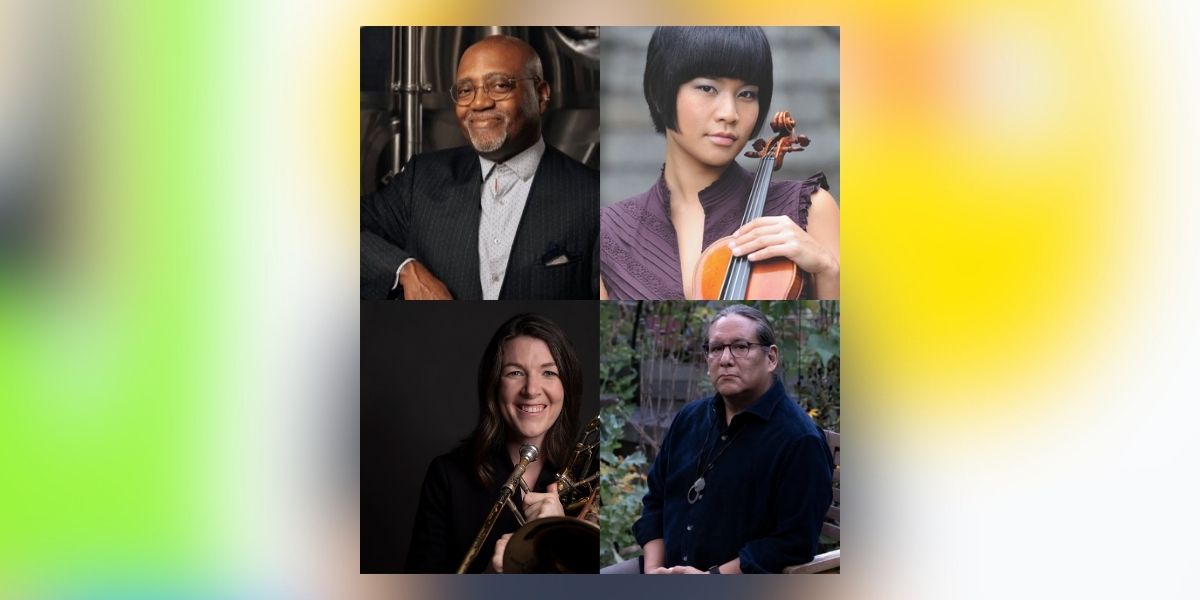
For many Eastman alumni, music’s transformative power catalyzes social change—bridging divides, amplifying underrepresented voices, and creating opportunities for communities where music has traditionally been inaccessible. In this article, we highlight four exceptional Eastman graduates who are applying their musical expertise to enrich their communities and reshape the cultural landscape. From a groundbreaking venue that supports music education through craft brewing to a foundation dedicated to elevating Native American musicians, a school for refugee students that helps them learn music and life skills, and an organization advocating for gender and queer inclusivity in brass performance, these alumni demonstrate that music is not merely an art form—it’s a vehicle for change. In each of their stories, we observe a reflection of Eastman’s influence, which inspires and cultivates leaders who use their talents to improve the world around them.
WILLIAM EDDINS ’83E, ’86E (MM) – METRONOME BREWERY
The idea came to him in the shower. It was a beautiful June day in 2020, following the George Floyd protests in May that took place merely a mile from his Minneapolis home, and conductor William Eddins was thinking of two things: why he wasn’t spending time outside on his hobby, brewing beer, and how to nurture future citizens through music to create more understanding across identity barriers.
While aimlessly staring at the bathroom tiles, the two ideas fused like magnets. So, he called his brewing buddy Matt Engstrom with his concept: “We’re going to found a brewery. It’s going to be a for-profit entity. When we get profitable, we’re going to take our money, and we’re going to support music education for underprivileged kids here in the Twin Cities metro area.”
Together, they founded MetroNOME Brewery, which opened in February of 2022. A major roadblock was checked off in 2021 when a space already outfitted as a brewery (one that went under during the pandemic) became available. It conveniently had an extra room downstairs that was perfect for hosting concerts. The space changed the business model to one that included presenting music. Eddins had the perfect name for the cavernous space: Fingal’s Cave. “Any Eastman grad that walks in goes, ‘yeah, I get the reference,’” said Eddins.
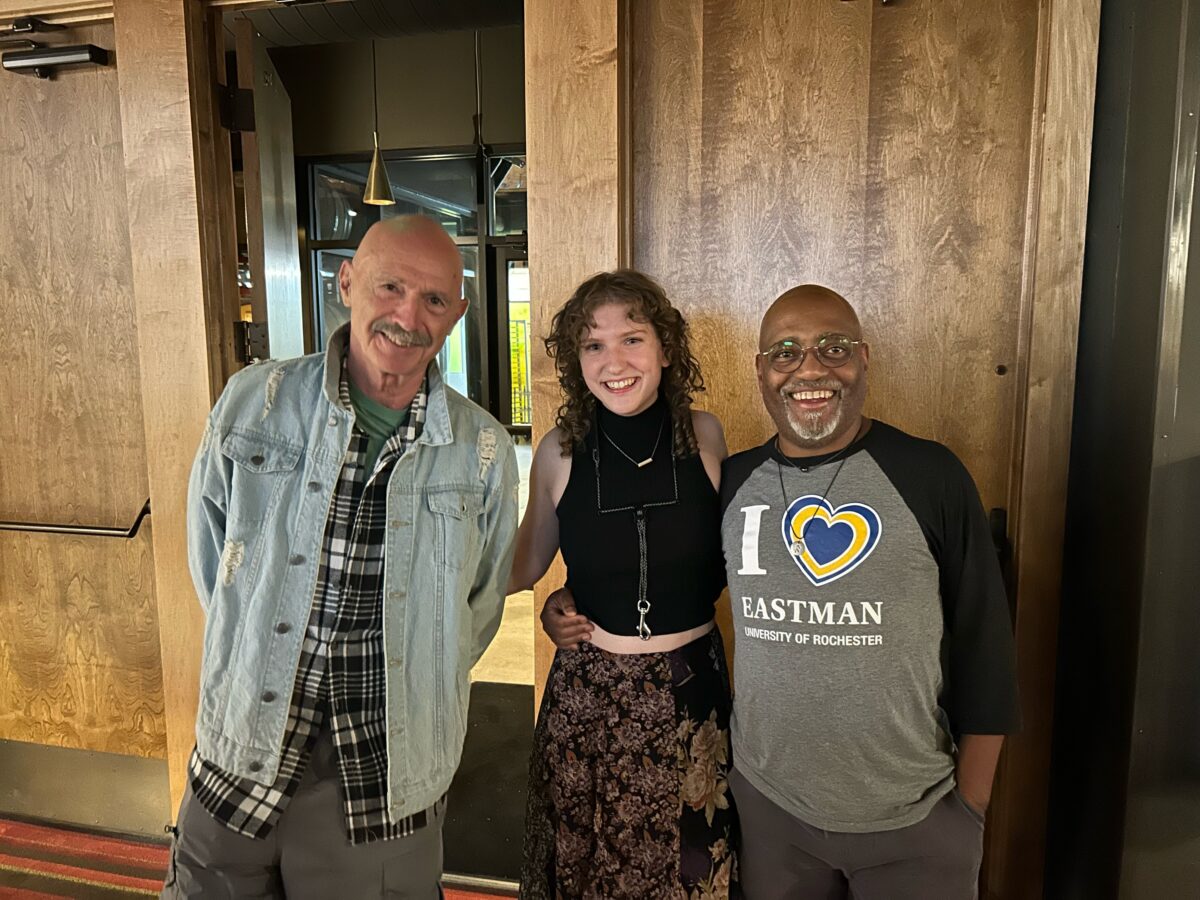
Eastman alumni Tony Levin ’68E (left) and Sarah Navratil ’24E with William Eddins in Fingal’s Cave at MetroNOME Brewery (St. Paul, MN) in July 2024.
The space has become one of the most active small venues in the upper Midwest. Between November and December 2024, the space hosted over 60 concerts. “We have become this center for small audiences of all types, classical, jazz, rock, punk, funk, world,” he said. “I don’t care what I put into my facility as long as it’s good and they understand what our mission is.”
Part of that mission is the MetroNOME Foundation, which, as the brewery becomes more and more profitable, will be a charitable foundation to support music education in their city. For now, though, they support music education by offering space for youth music groups to perform, as well as host performances from some of the area’s major non-profit music organizations. So far, they’ve collaborated with the Minnesota Orchestra, Minnesota Opera, Saint Paul Conservatory of Music, Saint Paul Conservatory for Performing Artists, independent music studios, and more.
A piano major, Eddins found his passion for conducting at Eastman, where he conducted everything from student-organized ensembles to the school orchestras. “I didn’t know it at the time, but all those experiences allowed me to find my musical voice,” he recalls. “I rely on the training that I received at Eastman every single day.”
TIMOTHY LONG ’92E (MM) – NORTH AMERICAN INDIGENOUS SONGBOOK
Conductor, composer, and pianist Timothy Long, an associate professor of opera and the artistic and music director of opera at Eastman, is 100 percent Native American. His mother belongs to the Choctaw Nation, while his father was from the Muscogee Creek Nation. His tribes were displaced during the Trail of Tears, when the government forcibly relocated Native American tribes east of the Mississippi River. They eventually settled in Oklahoma, where Long was raised.
His mother, who first encountered Beethoven while recovering from tuberculosis in a Native American hospital as a child, introduced Long to music. His father further supported his creative streak, ensuring Long became expressive and outspoken rather than inhibited. Long first heard the piano— his primary instrument—in church, where his grandfather was the minister.
Timothy Long
Despite his background, he never pursued projects that connected his native Indian roots to his work in Western art music until he was tapped in 2016 to conduct the premiere performances of Missing, an opera co-commissioned and co-produced by Pacific Opera Victoria and City Opera Vancouver. The opera told the story of the over 5,000 cases of missing Indigenous women and girls across Canada and Alaska, which has been called, by the Canadian National Inquiry into Missing and Murdered Indigenous Women, a “race, identity, and gender-based genocide.” In each city where the opera was performed, the company would do a private performance for the victims’ families, most of whom had never been to an opera or classical music performance.
“It changed me,” said Long. “I realized at that moment how privileged I was and how millions of people who are just like me don’t have that privilege or even a voice. And it became very important to me to give them a voice, or at least a presence. If I can symbolize that presence for other people in the country, so they think about us, I will serve a purpose.”
When the Black Lives Matter movement emerged in 2020, Long received numerous requests from individuals wanting to highlight underrepresented Native American performers and composers. In response, he conceived a foundation to support Native American musicians, offering scholarships, grants, and, most importantly, a new collection of vocal works called the North American Indigenous Songbook. The foundation, named after his father-in-law and supporter Randy Plimpton, is known as The Plimpton Foundation. Together with Eastman alumnus Anna Louis Martin ’22E (MM), director of operations at Plimpton, and Peggy Monastra ’92E (MA), vice president of G. Shirmer/Associated Music Publishers, they were able to commission and secure composers for the project, which included works by composers such as Tim Archambult, Sage Bond, Raven Chacon, Connor Chee, R. Carlos Nakai, Charles Shadle, and even Long.
The North American Indigenous Songbook premiere took place at National Sawdust on November 16, 2024. The performance sold out a week in advance thanks, in part, to a significant feature in The New York Times. A large Eastman contingent was also in attendance to support the project: Joan and Martin Messinger Dean Kate Sheeran ’02E, Eastman National Council member and alumna Joan Beal ’84E, as well as members of both Friends of Eastman Opera and Eastman’s vocal and opera department. Alumna and Rochester native Jazmine Saunders ’22E, a Metropolitan Opera Lindemann Young Artist, and mezzo-soprano alumna Hai-Ting Chinn ’95E were among the performers. There was also a significant Native American presence at the concert. “It was one of the most important things I’ve ever done,” reflected Long.
Since the National Sawdust performance, he has received several requests to bring the performance to other venues and hopes to publish the repertoire created through The Plimpton Foundation.
YUKI NUMATA RESNICK ’03E – FOUNDER OF BUFFALO STRING WORKS AND DIRECTOR OF ARTS AND CULTURE AT THE COMMUNITY FOUNDATION FOR GREATER BUFFALO
Yuki Numata Resnick’s path to starting Buffalo String Works began when she was an Eastman student in the early 2000s.
The University of Buffalo (UB) enlisted Eastman students for their faculty’s new music ensemble, so Resnick and her friends often joined in these performances. Later, while Resnick was a member of the New World Symphony, UB needed a last-minute violinist for a concerto with the faculty ensemble, so they reached out to her. This led to her becoming an adjunct professor and she was ultimately awarded a full-time position.
While on faculty at UB, a colleague’s wife, who was a public-school music teacher, received funding to bring UB professors to perform and interact with the kids. Resnick and her colleagues brought an all-Brahms concert of chamber music to share.
“This group of kids that we played for in Buffalo, they were really different. And we always tell this story as founders—we played this slow movement in Brahms, and we asked the kids, ‘What does that make you think of? How did that make you feel?’ And this little boy kind of peeked out from under his desk and was like, ‘It sounds like love.’ To have a young child be able to articulate that so beautifully and simply really hit us.”
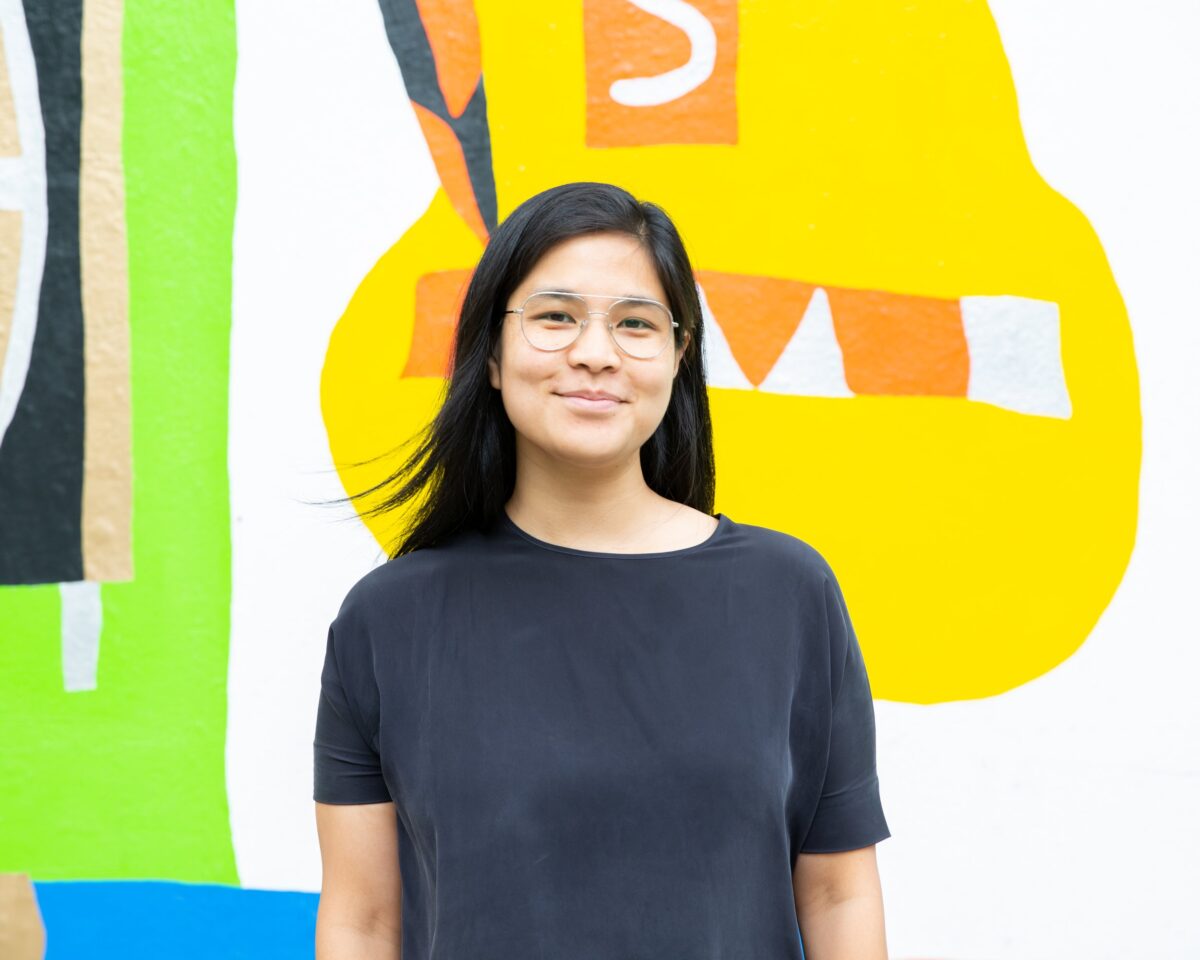
Yuki Numata Resnick
The school was on the west side of Buffalo, a center of refugee resettlement, and the school’s population was a potpourri of languages and cultures. With little prior exposure to live classical music, the kids stayed long after the concert to ask questions, filled with curiosity.
“It was so inspiring for us to be with this group of kids, some of them from all over the world, so that was the accidental kickoff for Buffalo String Works.”
This was March 2014. By September 2014, Resnick and her co-founders opened the doors of Buffalo String Works, serving 17 violin students. Buffalo String Works was formed in the spirit of El Sistema, using music as a vehicle for holistic development. “We really wanted whatever they learned in the music classroom to bring that back into their homes, back into their communities.” Through music, students would learn problem-solving, negotiation, listening to others, and more.
The relationships forged resulted in more than just music learning—the families leaned on Resnick and her Buffalo String Works staff as a trusted resource where families could ask for the help they needed to access basic services for things like housing.
By the time Resnick left the organization in 2023, the school had grown to 185 children playing violin, viola, cello, and bass. They recently sent 16 kids—mostly refugees—to Paris, France, for a music exchange. They even have a student who went through the program pursuing a music degree.
Resnick is now in a new role in Buffalo that impacts organizations like the one she created: director of arts and culture at the Buffalo Community Foundation, an entirely new position where she manages the foundation’s grant programs for arts organizations over the eight counties of Western New York, including Monroe County (where Eastman is located). Being able to sit in a funder position is this huge privilege and honor,” she said. “It also just gives me a very different lens on the nonprofit sector as a whole.”
CATIE HICKEY ’07E – BRASS BEYOND BINARIES
In February of 2024, alumna Catie Hickey hosted the first installment of her Brass Beyond Binaries organization’s Winter Warm-up Solo Days, a chance for brass players under 18 to perform. A trumpet student got up to play and decided it was the right moment to come out as trans. “I don’t know how else more objectively you can state, this is why we’re doing what we’re doing,” Hickey said.
Hickey is a freelance trombonist across Chicago, with adjunct appointments at four area schools. After a string of employment that didn’t align with her values as a gay woman, she ended up in Chicago just in time for the pandemic and the concurrent social unrest. It was a chance to ask, “What would I do in a perfect world? How could I connect, mentor, and empower many of the people coming up in this industry that I’ve spent so much time working in?”
With initial funding from her mother-in-law and help from her Eastman School of Music connections—including trombonist and sackbut specialist Liza Malamut ’06E, who secured some extra funding from her ensemble, the Newberry Consort, and administrative support from Priscilla Yuen ’11E (MM), an assistant professor of collaborative piano at Eastman—she began Brass Beyond Binaries to support and connect gender-expansive brass players through workshops and performances. It started with a four-day summer trombone retreat in 2023 with 10 participants and grew to 15 participants for the summer of 2024. Hickey is hoping to have 25 for this coming summer. Her Eastman connections continue to help her develop the organization.
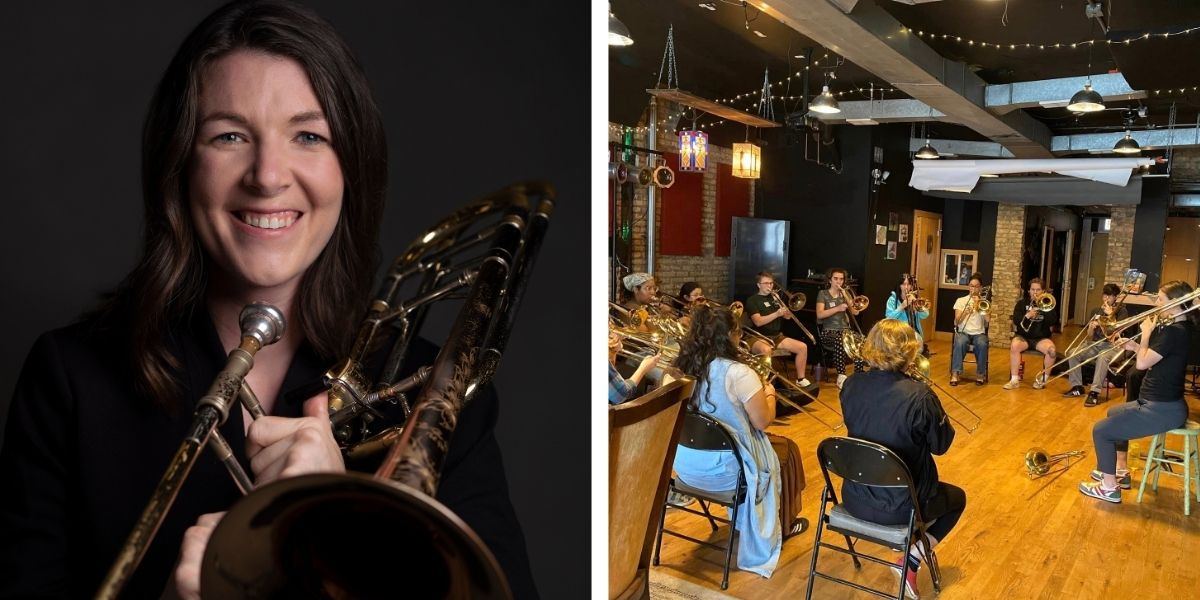
Left: Catie Hickey. Right: Hickey leads a Brass Beyond Binaries trombone workshop.
The organization has also added year-round opportunities for brass players of various ages. In addition to collegiate summer workshops—which will also feature horn and tuba workshops this upcoming summer—Brass Beyond Binaries organizes Winter Warm-up Solo Days and a Gender-Friendly Jam Session, which occurs every few months and features a femme house band. The jam is open to everyone since Hickey wants “everyone in the room learning how to listen to each other.”
Initially conceived casually as “Not Dude Camp,” Hickey realized the importance of including any brass players who don’t identify as cisgender males. Consequently, Hickey embraced “gender-expansive” as a more inclusive and fitting terminology.
“That’s the best term I found. How can we create solidarity? How can we create an organization that supports both women in brass but also all these queer identities. How can we create a space of safety to say, ‘We’re going to meet you where you’re at because you have value.’? And we’re going to focus on creating individual relationships.”
Hickey came to Eastman as a straight, self-taught jazz trombonist, and she left as an out gay woman with an increased range as a player. She plays music across genres, from orchestral music to Broadway pit work to moonlighting in jazz ensembles. That range, she says, is unique to students who come out of Eastman. But at Eastman she was a woman in predominantly male areas of brass and jazz. “It was exhausting,” she recalls. “I’m just beginning to understand how and why.”
Brass Beyond Binaries creates the kinds of safe spaces she never had, to discuss identity in the brass world and find community. And the word is spreading. While conducting an honors jazz band recently, there were two girls who found her during the lunch break to introduce themselves and express interest in the organization.
“That kind of grassroots work feels like the sign of progress,” she said. And creating the organization has helped her continue to find her voice within a male-dominated brass world. “It’s very much this feedback loop of the more folks I see who are starting to emerge and use their own voices, the more it empowers me to use mine in places where they aren’t yet.”